Draw Media
News / Kurdistan

Kurdistan urges swift action to recover billions in lost oil revenues

APIKUR welcomes Iraq-Turkey pipeline readiness but emphasizes need for resolving contractual issues, citing $1 billion monthly revenue loss for Iraqis. The Association of the Petroleum Industry of Kurdistan (APIKUR) welcomed the recent announcement by the Minister of Energy and Natural Resources of Turkey at ADIPEC in Abu Dhabi, with respect to the readiness of the Iraq-Turkey pipeline (ITP) and its resumption of operations. APIKUR views this development as a crucial step towards the long-anticipated recommencement of international crude oil exports from the Kurdistan Region. In a statement issued 3 October, APIKUR emphasized the importance of resolving outstanding contractual issues before its member companies can resume oil production for pipeline exports. Myles B. Caggins III, spokesman for APIKUR, expressed concern over the ongoing delays in reopening the Iraq-Turkey pipeline and resolving the contractual entitlements issue. He noted, “The delays in re-opening the Iraq-Turkey pipeline and resolving IOC contractual entitlements are costing Iraqis an estimated $1 billion per month in lost revenues. APIKUR members are keen to work with the Governments of Kurdistan and Iraq to reinstate these revenues and even increase them through maximizing production. We believe this can be done quickly and efficiently, after payment arrangements are agreed and existing contractual arrangements are respected.” According to the production sharing contracts (PSCs) held by IOCs, they have the right to receive their respective shares of crude oil and can independently sell these entitlements. However, the lack of agreement on payment terms has forced APIKUR member companies to seek buyers who can guarantee timely payment, including upfront payments. These PSCs are legally governed by English law, with dispute resolution procedures set out in international arbitration at the London Court of International Arbitration. In August, APIKUR urged both the Iraqi federal government and the Kurdistan Regional Government (KRG) to uphold the contractual rights of International Oil Companies (IOCs) and ensure their inclusion in the execution of the budget and forthcoming hydrocarbon legislation. APIKUR emphasized that the implementation of the recently approved Iraqi budget and the proposed oil and gas bill must safeguard IOCs’ entitlement to cost recovery and a share of profits.  

Read more

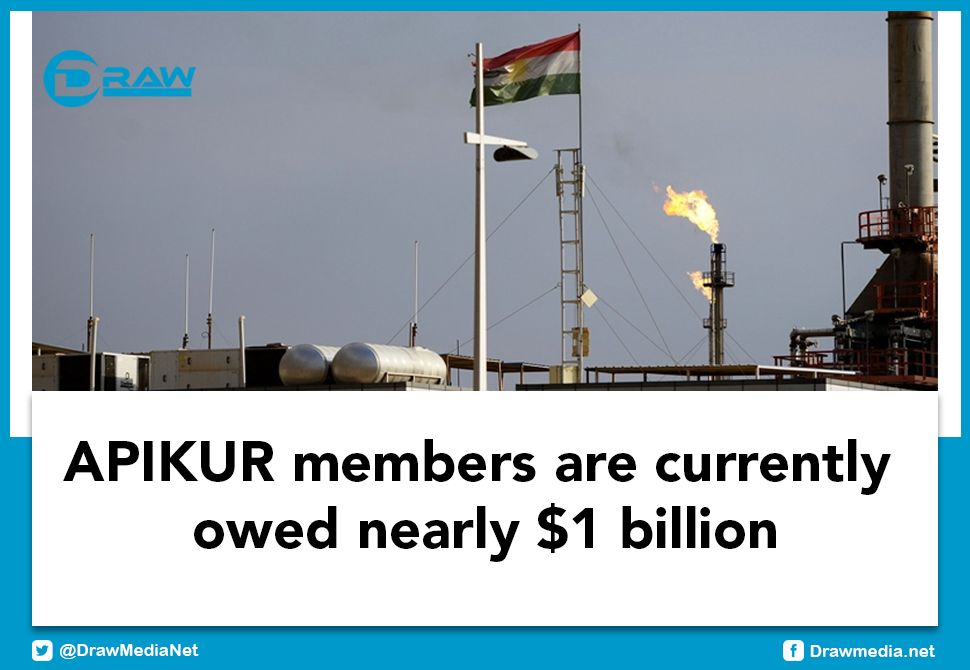
APIKUR members are currently owed nearly $1 billion

The Association of the Petroleum Industry of Kurdistan ('APIKUR') notes that the Minister of Energy and Natural Resources of Türkiye has stated that the Iraq-Türkiye pipeline ('ITP') is ready to resume operations. APIKUR welcomes this development, which can be a step towards the long-awaited recommencement of international export of crude oil produced in the Kurdistan Region. APIKUR reiterates that, even if the ITP reopens, the member companies of APIKUR will not be in a position to produce oil for pipeline exports until it is clear how International Oil Companies ('IOCs') will be paid for their contractual entitlements of oil already sold and delivered for export in the past and for future sales of such oil for export. APIKUR members are currently owed nearly $1 billion in overdue and unpaid arrears. IOCs holding production sharing contracts ('PSCs') have the right to, amongst other things, take in kind and separately sell their respective entitlement shares of crude oil. Absent agreement on payments as set out above, our member companies will have to sell their contractual entitlements of crude oil to buyers who can give certainty of payments for oil deliveries, e.g., through upfront payments. The PSCs in question establish contractual rights that are governed by English law with dispute resolution via international arbitration at the London Court of International Arbitration. “The delays in re-opening the Iraq-Türkiye pipeline and resolving IOC contractual entitlements are costing Iraqis an estimated $1 billion per month in lost revenues,” said Myles B. Caggins III, spokesman for APIKUR.“APIKUR members are keen to work with the Governments of Kurdistan and Iraq to reinstate these revenues and even increase them through maximizing production. We believe this can be done quickly and efficiently, after payment arrangements are agreed and existing contractual arrangements are respected.” APIKUR again calls on all parties to urgently engage with each other in a constructive manner to put in place mutually beneficial commercial solutions that will encourage international investment for the benefit of all Iraqis.

Read more

How to Stop Iraqi Kurdistan’s “Bleeding”

Bilal Wahab Federal pressure and disastrous internal missteps have brought the KRG to the brink, raising the need for more active U.S. mediation. In a recent letter to President Biden that was soon reinforced by three U.S. lawmakers, Prime Minister Masrour Barzani of Iraq’s Kurdistan Regional Government expressed his alarm over the region’s survival. Noting that the KRG is “bleeding economically and hemorrhaging politically,” he laid the blame on Baghdad’s “dishonorable campaign” against Erbil. Barzani has a point—federal authorities have indeed been undoing the KRG’s hard-won autonomy in the years since the Islamic State fell and the Kurds launched an unsuccessful independence bid. Most notably, Baghdad has recentralized policymaking in the capital and blocked Kurdish oil exports amid a decade-old dispute over energy management.  Yet Barzani’s narrative does not tell the whole story. The United States has long supported Iraqi Kurdistan’s autonomy, security, and development, fostering greater stability and pro-American sentiment. At the same time, however, Washington has overlooked the KRG’s vulnerabilities—namely, the internal divisions, corruption, and democratic backsliding that have diminished Erbil’s reliability and brought on the current existential crisis. The United States has a strategic interest in continuing to promote a stable and prosperous KRG, but it cannot do so without addressing the region’s internal problems. A Multipronged Push… After the KRG’s ill-fated independence referendum in 2017, Baghdad dramatically accelerated its efforts to erode the region’s autonomy—partly through military action, with significant help from Iran and Turkey (see below). The Shia political camp behind the current government of Prime Minister Mohammed Shia al-Sudani also holds a grudge against the main Kurdish parties for complicating its gradual takeover following the 2021 election. Power has since tipped definitively in Baghdad’s favor, with the Federal Supreme Court (FSC), parliament, and Iran-backed militias siding against the KRG on oil issues and steadily weakening its authority. For instance, officials in Erbil have cited half a dozen FSC cases since 2017 that rolled back the KRG’s constitutional rights. In February 2022, the region’s oil and gas industry was ruled illegal. A year later, Ankara closed its pipeline to northern Iraq after losing to Baghdad in arbitration, halting KRG oil exports that first began flowing in 2014. The KRG has lost $5 billion in revenue since the pipeline closed, along with precious bargaining power in Baghdad. Its oil and gas facilities have also been hit repeatedly by militia rocket attacks. In addition, the FSC and parliament recently derailed a budget deal between Prime Ministers Sudani and Barzani, citing the KRG’s lack of financial transparency. As a result, Erbil has been unable to pay public salaries for three months—a stark contrast to its aspirations for independence just a few years back. Some politicians in Baghdad are also seeking to shut down the region’s diplomatic outposts in up to fourteen countries. On top of militia violence, the KRG is also under attack from its neighbors Turkey and Iran, who have intensified their drone and missile strikes against armed Kurdish opposition groups. When Turkish officials visited Iraq last month, they did not pledge to end these attacks or resolve the oil dispute; instead, they pressured the KRG to cooperate against Ankara’s domestic nemesis, the Kurdistan Workers Party (PKK). Iran has issued a similar warning: disarm local Iranian Kurdish groups that oppose the regime in Tehran or face broader military intervention. Thus cornered, the KRG has let Iraqi border guards take over from the Peshmerga—a decision that had the side effect of surrendering half the region’s customs revenue to the federal government. ...Against a House Divided Rather than uniting to withstand Baghdad’s escalating encroachment, the two main Kurdish parties, led by the Barzani and Talabani families, have been locked in a bitter struggle for power and resources, using politics in Baghdad, Ankara, and Tehran to undermine each other. This has made the KRG less secure and less capable of protecting its rights, essentially squandering Erbil’s democratic credentials among its people and U.S. officials. The two parties are now in a state of cold war, behaving as foes rather than coalition partners. Internally, they failed to hold KRG elections in October 2022 as scheduled, opting to extend their term instead—a move that the FSC rejected as illegal. Without a valid electoral commission, the KRG has forfeited its ability to organize local polls in preparation for the new target date of February 2024, ceding that power to Baghdad.  On the economic front, the KRG has neglected investment opportunities and wasted its oil money on public jobs and pensions, mostly for ruling party loyalists. The result is a huge and costly bureaucracy—in a region of 5.5 million people, the KRG has an astounding 1.4 million employees and pensioners on its rolls at a cost of $750 million per month. Notwithstanding the need for austerity measures on that front, the KRG cannot pay these individuals in the immediate term without oil revenue and must fall back on Baghdad’s national budget. As such, the KRG’s dream of independence is now a fight for survival, and the angry public has reacted with protests. Erbil has cracked down on this dissent, and some Kurdish parliamentarians have called for expelling the U.S. consul-general for criticizing the KRG’s record on human rights. Washington’s Role In 2016, Congress mandated that the Pentagon dispense $20 million per month for Peshmerga salaries to help stave off instability and encourage security reform. In return, Erbil promised to bring the mostly partisan force back under unified command and away from the two ruling parties. Seven years later, however, only a third of its estimated 160,000 fighters report to the KRG’s Ministry of Peshmerga Affairs, a body that has been without a minister for a year due to continued political infighting. Washington cannot afford to let the KRG or the rest of Iraq slide into chaos or conflict. As elections approach, the risk of ethnic violence looms—the recent deadly clashes in Kirkuk are a warning shot in that regard. The threat of an Islamic State comeback is also real if coalition and Iraqi forces ease pressure on the group, as U.S. officials readily acknowledge. Washington therefore needs to reengage with the Kurdish and Iraqi governments, not as a passive advisor but as an active mediator and guarantor. In particular, it should help Kurdish factions reunite, reassert their voice in Baghdad, and regain their public’s confidence. This includes using lessons learned from the end of the Kurdish civil war in 1998 to mediate between the Kurdish parties today. Earlier this month, Prime Minister Barzani and Deputy Prime Minister Qubad Talabani paid a joint visit to Baghdad and secured a loan for KRG salaries; Washington should take follow-on steps that support such collective efforts. Finally, Prime Minister Sudani’s expected White House meeting with President Biden needs to include high-level KRG representation. This would signal that the United States recognizes the Kurds as essential partners in federal Iraq’s future. More broadly, by helping the Kurds help themselves, Washington can put a floor on the KRG’s losses and secure the region’s long-term interests in a stable, democratic Iraq. 

Read more

Iran Is Exploiting Divisions and U.S. Inaction in Iraqi Kurdistan

Foreign Policy In a private letter delivered to the White House earlier this month, the prime minister of the Kurdistan Region of Iraq warned that Kurdistan—and Iraq’s post-2003 federal system—faces imminent collapse unless the United States intervenes. Masrour Barzani sent his extraordinary warning amid mounting political and economic challenges for the autonomous region and an increasingly belligerent government in Baghdad. The Kurdistan Regional Government (KRG) is important to U.S. interests in several ways. Its Peshmerga forces are key partners in the fight against the Islamic State and other extremist groups and crucial to the West’s counterterrorism efforts in both Iraq and Syria. The region has historically constituted a buffer against tumult and turmoil in the rest of Iraq, providing a safe haven for nearly 1 million internally displaced people and refugees, while also containing the ascension of militant Iran-backed militia groups responsible for conducting numerous attacks on Western forces. However, with Washington now preoccupied by its intensifying rivalry with China and the war in Ukraine, little attention is being paid to Kurdistan. Sensing America’s focus is elsewhere, the KRG’s rivals, including militia groups designated as terrorists by the United States, have started circling. Kurdistan’s collapse would spell upheaval and chaos with implications stretching well beyond Iraq. The KRG has endured a string of troubles in recent years. Soon after Barzani took office in 2019, his cabinet was confronted with a pandemic, a military escalation between the United States and Iran and its affiliated militias, and an economic crisis after oil revenues took a huge hit when crude prices plummeted in 2020. Kurdistan has also been undermined by the rivalry between the two largest political parties, Barzani’s Kurdistan Democratic Party (KDP) and the Patriotic Union of Kurdistan (PUK). Their division weakened the Kurds’ bargaining power in Baghdad during negotiations over forming an Iraqi government after the 2021 parliamentary elections. Iran and its allies, including the Popular Mobilization Force (PMF)—the 200,000-strong  umbrella militia organization—exploited Kurdish discord by allying with the PUK to expand their influence over the Iraqi state. Iran-backed groups have also consolidated their control over the Iraqi judiciary, paving the way for a February 2022 ruling that Kurdish oil exports through Turkey were illegal. This influenced an international arbitration decision a year later that came to the same conclusion. Since then, Kurdish oil exports have stopped, crippling the region’s economy and impacting global energy markets—a win for the PMF and its hopes of neutering Kurdistan’s economic independence. Earlier this month, Iran-aligned groups massacred Kurdish protesters in the disputed oil-rich city of Kirkuk, which Kurdish forces had withdrawn from in 2017 after the PMF mobilized its militias with federal government backing. As part of an agreement between Iraqi Prime Minister Mohammed Shia al-Sudani and Barzani, the KDP was to return to a base in the city, but the PMF moved to torpedo this by blocking a highway connecting Kirkuk to Erbil and other Kurdish provinces in August. The disruption to the lives of people who rely on the highway daily prompted the protests. Following the massacre, the Federal Supreme Court in Baghdad, which is aligned with the PMF, suspended the order for the KDP’s return. The divisions between the KDP and PUK have deeply undermined the KRG. Indeed, fraternal rivalry has been the Kurds’ Achilles’ heel for decades. Between 1994 and 1998, the two parties fought a civil war for control of the region, which was finally resolved through U.S. mediation. Their 1998 peace settlement paved the way for a strategic agreement that became the basis for Kurdistan’s golden era after the U.S.-led invasion of Iraq in 2003, which gifted the Kurds outsized influence over the Iraqi state, expanded their autonomy, and precipitated an unprecedented economic boom. While today’s rivalry represents a clash of personalities within a new generation of Kurdish leaders, it also reflects the two parties’ respective trajectories since 2003. The KDP owes much of its power to its long-standing organizational discipline, which has delivered it electoral success and allowed it to control the prime minister’s office since 2012. The PUK, on the other hand, has been factionalized almost since its inception in the 1970s. In 2021, Bafel Talabani launched a coup to oust his cousin Lahur as co-chair of the party and head of its counterterrorism and intelligence forces. These violent dynamics have degraded the PUK’s ability to present a serious alternative to the KDP. Instead, it has opted for spoiler tactics, working with Iran-aligned groups in Baghdad to undermine its rival politically and economically. The PUK leadership regularly courts Iran-aligned individuals and factions sanctioned by the U.S. Treasury Department, sometimes against the backdrop of missile and drone attacks on Kurdistan by these groups. This raises serious questions for Washington and its relationship with the party, but also for the PUK itself. Looking to Iran and Baghdad may help the PUK reassert itself locally, but undermining Kurdistan as a whole to weaken the KDP is dangerously myopic since it relies on the good faith of the PMF, and it is potentially existential as it risks gambling the autonomy of Kurdistan in the long term. Kurdish woes and Iranian encroachment into Kurdistan have far-reaching implications for U.S. interests. The KRG is a vital ally in the campaign to secure the enduring defeat of the Islamic State. Intra-Kurdish divisions, Iran’s attempts to subjugate the Iraqi state, and Kurdistan’s economic turmoil all undermine the U.S. campaign against the Islamic State and empower Iranian-backed militant groups designated by Washington as terrorists. The U.S. base in Erbil province is one of Washington’s most important military bases and listening posts in the Middle East, serving as a special operations hub and a staging site for operations in both Iraq and Syria. The very presence of this base requires a political order that is conducive to maintaining the U.S.-KRG partnership, something Iran is hoping to weaken and, eventually, demolish by instrumentalizing the PUK. Iran has proved willing to play the long game to supplant the United States in Kurdistan, as it has done in Baghdad over the past two decades. Washington must, therefore, step in to pressure the PUK into ending its collusion with Tehran. The PUK and its leadership risk breaching U.S. sanctions that are designed to inhibit the capabilities of the designated Iran-aligned groups and officials the PUK partners with. These sanctions could underscore an effort by Washington to establish red lines for the PUK, both to contain Iran’s encroachment and to protect the credibility of its sanctions infrastructure. Washington must also discourage the PUK from threatening to return Kurdistan to the dual administrative structure of the 1990s, which would effectively dissolve the autonomy of Kurdistan and its hard-won rights under the 2005 Iraqi constitution. This system saw the two ruling parties govern their stronghold provinces as two separate administrations and empowered Iraq’s neighbors, while undermining U.S. strategic interests in Iraq and the region. Regional actors such as Turkey can also be brought into play. Ankara has escalated its drone attacks on the fighters and affiliates of the Turkish-Kurdish rebel group, the Kurdistan Workers’ Party (PKK), who have found refuge in Sulaymaniyah, the PUK’s stronghold province. That has destabilized the province and added to the party’s woes, despite the PUK’s efforts to discourage further strikes. The PUK cannot force the PKK to withdraw, since this would trigger a violent conflict, but it can ill afford further Turkish attacks. However, it could strike a bargain with Ankara premised on a commitment to end its collusion with the PMF, which has PKK affiliates within its ranks. This would ensure that the PUK no longer directly or indirectly enables the PKK. It diminishes Iran’s influence, alleviates Turkish apprehensions, and reduces the geopolitical tensions that result from Turkish incursions. Moreover, Washington has failed to resist or condemn Baghdad’s punitive measures against the KRG’s economy, which have been engineered by Iran-aligned groups through the subjugation of the judiciary in Baghdad. The suspension of Kurdistan’s oil exports has also stopped 500,000 barrels per day of Kurdish oil from reaching global markets: some 10 percent of Iraq’s total exports, or 0.5 percent of global production. This has reverberations well beyond the region; Europe has relied increasingly on Kurdish oil since Russia’s invasion of Ukraine. The U.S. has so far been a bystander to both the intra-Kurdish escalation and Iran’s encroachment. Washington may believe that these problems are internal Kurdish matters, but this is a mistake. The ascension of the PMF and, therefore, its ability to exploit Kurdish discord can be directly tied to the legacy of U.S. engagement in Iraq over the past two decades, including Washington’s acquiescence to the group’s takeover of Kirkuk in 2017. The KRG has proved resilient, but this has its limits. A full collapse of the region’s economy would ultimately force it to capitulate to Iran. In practice, this means giving Iran a greater say over the contours of the KRG’s institutions, its armed forces, borders, and, most importantly, the future of the U.S. base in Erbil. Preventing this would require the United States to mediate intra-Kurdish tensions to unify Kurdish ranks in Baghdad to protect the KRG’s autonomy and restore its budgetary entitlements and its right to electorally contest disputed territories such as Kirkuk without being subjected to the coercive tactics of the PMF—while maintaining a healthy democratic rivalry at home. If Washington is serious about safeguarding its interests, it could start by convincing the PUK that its best hope of reversing its decline is by addressing its internal crisis, and not by turning to Iran—a self-defeating exercise. The PUK will struggle to match the KDP’s political supremacy: At best, it can hope to slow its rival’s ascension. At worst, its collusion with Iran gambles the fates of both the party and Sulaymaniyah. Secondly, the U.S. could focus its mediation on Kurdistan’s gas reserves, potentially addressing global shortages in the long term while propping up the KRG’s economy. The KDP has the political and constitutional legitimacy to move the sector forward and attract investors—but gas reserves are located primarily in PUK-controlled areas. The U.S. could encourage dialogue over developing these gas fields and securing Kurdistan’s position in what the International Energy Agency has described as a “golden age” of natural gas. It is precisely here—at home, and not in Baghdad or Tehran—where the PUK, with U.S. support, can push for its economic stake through a comprehensive arrangement with the KDP that includes a revenue-sharing agreement. Such a transactional engagement could be a stepping stone toward a wider settlement. The PUK blames the KDP for hoarding revenues and the fact that Sulaymaniyah has lagged behind other provinces, but that argument is weakened when Sulaymaniyah’s degradation is a reflection of the degradation of the PUK. The correlation is not coincidental. By continuing with its current path, the PUK risks detaching Sulaymaniyah’s 700,000 inhabitants from the economic transformation being led by Barzani, which will only add to the frustration of its supporters. That reform agenda could rescue Kurdistan from dependence on oil by diversifying the economy, improving efficiency, and promoting good governance. The alternative for the United States—standing by and watching the collapse of the KRG—would be a disaster for Iraq’s Kurds and for U.S. interests in the region. The KRG’s fate will play an important role in determining the contours of the wider Middle East.  

Read more

Six months have passed since the suspension of the Kurdistan Region's oil

Draw Media The International Chamber of Commerce in Paris issued a 277-page resolution on February 13, 2023 and on March 25, 2023 officially suspended oil exports from the Kurdistan Region. According to the decision of the International Arbitration Chamber in Paris, the Kurdistan Regional Government is a constitutional and legal government within Iraq, but can not transport oil through pipelines, because the Kurdistan Region is not part of the IPT agreement, (the agreement was signed between Turkey and Iraq in 1973 on the oil pipeline). Six months have passed since the Kurdistan Regional Government (KRG) and the Iraqi government reached an agreement, but oil exports have not yet resumed. Suspension of oil and financial losses Here we highlight the financial losses caused by the suspension of oil in the region during (25/3/2023 – 25/9/2023). in a way; ? From (25/3/2023 – 25/9/2023) that is (6) months that oil exports have been suspended. ? Based on Deloitte data before the suspension of oil exports, "an average of more than 12 million 461 thousand barrels of oil have been exported monthly." ? That is, within (6) months, the oil exports would have reached more than (74 million 766 thousand) barrels of oil. ? The average price of Brent oil during (25/3/2023 – 25/9/2023) was (82 dollars and 38 cents). ? If the region had sold its oil at a discount of $15, as happened in the second and third quarters of 2022 then; ? The average price of oil sold in the Kurdistan Region would have been (67 dollars and 38 cents). ? The total value of oil exports was (5 billion 51 million 146 thousand) dollars. • If (54%) of the revenue would go to the expenditure of the oil process, it would be equivalent to (2 billion 727 million 619 thousand) dollars. • Accordingly, the amount of (2 billion 323 million 527 thousand) dollars at a rate of (46%) would be returned to the general treasury of the Kurdistan Regional Government.

Read more

United states CG met with several independent media outlets

United states Consul General Mark Stroh met with journalists from several independent media outlets including Draw Media to learn about their work, the media landscape, and challenges faced by independent media. The United states Consul General commended the journalists on their ongoing efforts to provide impartial coverage of the politics, economy and society of the region. We continue to be concerned about recent backsliding on press freedom, including arbitrary detention, warrantless device searches, and lack of implementation of the IKR Press Law and Access to Information act.

Read more

August production surges as KRG fields partially revive

Iraq Oil Report  Fields in Kurdistan are raising production and selling into the local market, as output increases despite the ongoing northern pipeline closure. Iraq’s crude oil production rose sharply in August as fields controlled by the Kurdistan Regional Government (KRG) increased output, reaching just under half of their total combined capacity. Nationwide output averaged 4.71 million bpd, up from 4.56 million bpd in July, according to Iraq Oil Report calculations based on field-by-field data. The gains were achieved despite the continued shutdown of the northern export pipeline, which has prevented the KRG from exporting its crude to world markets since late March.

Read more

In letter to Biden, Barzani warns of Iraqi Kurdistan's collapse, urges mediation

al-monitor - Amberin Zaman KRG Prime Minister Masrour Barzani's letter to Biden is aimed at jolting the administration into action as tensions rise between Erbil and Baghdad. Kurdistan Regional Government (KRG) Prime Minister Masrour Barzani has appealed to President Joe Biden to intervene in a deepening crisis with the central government in Baghdad, airing fears that the Kurdistan Region might even collapse as an entity if the crisis is left unchecked, Al-Monitor has learned. In a letter dated Sept. 3 that was addressed to Biden and delivered to the White House last Sunday, Barzani wrote, “I write to you now at another critical juncture in our history, one that I fear we may have difficulty overcoming. …[W]e are bleeding economically and hemorrhaging politically. For the first time in my tenure as prime minister, I hold grave concerns that this dishonorable campaign against us may cause the collapse of … the very model of a Federal Iraq that the United States sponsored in 2003 and purported to stand by since.” “We believe that your administration retains significant leverage with Baghdad,” Barzani said of Washington’s ability to diffuse the crisis. The cri de coeur comes amid escalating tensions between Erbil and Baghdad over budgetary allocations, oil sales and territories that both sides claim for their own. Barzani reiterated his calls for further US engagement to help resolve the disputes in a meeting on Monday in Erbil with US Ambassador to Iraq Alina Romanowski. With Washington’s attention focused on China and the conflict in Ukraine, Barzani’s letter is meant to jolt the administration into action before a descent into violence. That very specter loomed in the contested oil-rich province of Kirkuk last week when Kurds and Arabs allegedly bused in by Iran-backed Shiite militia groups clashed over a court decision preventing Barzani’s Kurdistan Democratic Party of Iraq (KDP) from reclaiming its headquarters in the regional capital. Four Kurds died in the protests that were eventually quelled by federal forces deployed to the city. “We are asking where the hell is the United States,” said a Kurdish official speaking not for attribution to Al-Monitor. The State Department declined to comment on the letter. A White House official speaking on background said, “We do not comment on private diplomatic engagements.” The White House had not responded to Barzani’s letter as of the time of publication of this article. Broken promises, broken trust Since US forces birthed the creation of a putatively democratic Iraq with the 2003 overthrow of Saddam Hussein, the sides have tussled over what share of Iraq’s budget should go to the Kurds, with successive governments in Baghdad typically failing to hand over the amount of money agreed to at any given time. This, in turn, has left the KRG struggling to pay public sector employees who are due $625 million every month. In recent years, the refusal has stemmed from Baghdad’s view that the Iraqi Kurds have since 2014 been “illegally” selling Iraqi oil produced in the Kurdistan Region via Turkey without the central government’s consent. Iraq took the matter to an international court of arbitration, and Turkey was slapped with a $1.5 billion fine earlier this year when the Paris-based International Chamber of Commerce ruled in Baghdad’s favor. In response, Turkey halted the flow of some 400,000 barrels per day of Kurdish crude and a further 75,000 barrels per day of Iraqi crude from the Kirkuk fields. Ankara is demanding that Baghdad waive the fine and drop another arbitration case pending against it in order to resume exports from the Turkish port of Ceyhan, leaving the Kurds deprived of at least $5 billion in revenue since exports ceased. The KRG has since agreed with Barzani’s words to make “extraordinary concessions in the negotiations with Baghdad in the hope of securing our future.” However, Barzani told Biden, “I regret to inform you that they have done the opposite. Our goodwill in agreeing to market our oil through the federal government in return for a just share of the federal budget has been blatantly forsaken.” The figure for oil revenues promised to the Kurdistan Region following talks in April between Barzani and Baghdad was $900 million per month. Yet the federal government has parted with far less, even as the Kurds have sent Baghdad the 85,000 barrels of crude every month pledged under that deal without receiving a penny for it, Kurdish officials say. On Sept. 2, federal authorities informed the KRG they would be willing to disburse $380 million per month in loans. Iraqi Kurdish officials have long aired frustration at what they say is the United States’ growing indifference to their plight, with letters going unanswered and senior US officials no longer engaging with the same frequency as they did under the previous administration when, for instance, the energy secretary would have monthly telephone calls with Barzani. “The American mantra is ‘we are not an occupying force anymore,’” the official briefing Al-Monitor said. “The basis of our engagement in the post-2003 order was entirely predicated on the agreement that the United States would act as the guarantor of the federal model. And up until [the full US withdrawal in] 2011, when that line was tested, the Americans would step in. The Americans were the guarantors, the honest brokers.” The official explained, “We are asking the United States to take a principled position on the agreement we had at the beginning [in 2005] on three key issues: oil, the budget and territory." “Shotgun wedding, amicable divorce” Ken Pollack, a former CIA intelligence analyst and senior fellow at the American Enterprise Institute who has written extensively on Iraq, agrees that the status quo is unsustainable and could lead to renewed civil conflict in Iraq. A weaker Iraq means a stronger Iran, which goes against US interests. But Washington’s interest in the country has taken a back seat to other pressing files. “Is Iraq a bigger priority for the United States than, say, Saudi-Israeli rapprochement? It’s hard to say that it is,” Pollack told Al-Monitor. Yet while the Kurds “get it intellectually,” Pollack contended, “emotionally they don’t.” They very much want to believe that the United States is still fully committed. Preserving that impression at the very least will cause Baghdad, Iran and the Kurds’ other large meddlesome neighbor, Turkey, to back off. Either way, Pollack concluded that the best solution for Iraq and the Kurds was an amicable divorce. “It was a shotgun wedding to begin with,” Pollack said. An administration official who spoke on condition of anonymity to Al-Monitor noted that the KDP and its chief rival, the Patriotic Union of Kurdistan (PUK), needed to settle their own disputes “before pointing fingers at us.” The two parties went to war in the early 1990s, and the distrust runs so deep that they have yet to unify their respective peshmerga forces under a single command. Rampant corruption — with much of Kurdistan’s wealth concentrated in the hands of the Barzanis and the Talabani family that runs the PUK — is feeding popular disaffection and dampening dreams of independence. At the same time, mounting repression of journalists has dented the Kurdistan Region’s claims that it is “the other” and hence better Iraq. An Iranian hand Many see Iran’s hand in the unfolding row between the KRG and Baghdad. With a large restive Kurdish minority of its own, Iran sees neighboring Iraqi Kurdistan and its pro-American leadership as a threat. Tehran’s attempts to weaken the KRG through its Iraqi Shiite allies have gained vigor since 2017 when the KRG held a referendum on independence that was fiercely opposed by Ankara, Baghdad and Washington. The ensuing volatility allowed federal troops to retake control of Kirkuk and other disputed territories the Kurds seized as Iraqi forces fled the Islamic State onslaught in 2014. The central government has since been doggedly seeking to tighten its grip. Iran is now threatening to attack the Kurdistan Region once again should it fail to disarm Iranian Kurdish opposition groups based in Kurdish territory by Sept. 19. The date coincides with the first anniversary of the mass protests that rocked Iran following the death in police custody of Iranian Kurdish woman Mahsa Amini. Iran blames the Iranian Kurdish opposition parties and their alleged Western backers — namely America and Israel — for the demonstrations, although the parties themselves admit they are weak and have little if any impact inside the Islamic Republic. James F. Jeffrey, a former US ambassador to Iraq who chairs the Wilson Center’s Middle East program, contended that Iran was clearly using an “all elements of power” strategy to assume effective control of Iraq, following “the Lebanon model” whereby it relies on Shiite militias and their political arms that are loyal to itself rather than Baghdad. The Trump administration, Jeffrey argued, “pushed back on this Iranian strategy by inventorying all the ways the United States and more generally the West and its institutions were important to Iraq and then threatened to start sending them down if the Iraqi government didn’t take specific steps we detailed to push back on specific Iranian or militia tentacles inside government structures.” The Biden administration, by contrast, “doesn’t seem to be doing anything in this regard,” likely because it doesn’t want to provoke Iran as it seeks to revive the nuclear deal. Amos Hochstein, special presidential coordinator for Global Infrastructure and Energy Security, for example, has not been to Iraqi Kurdistan since January, Jeffrey recalled. “This is the most current and most dramatic result of the US maintaining its hands-off approach.” “Behind all the specifics, it’s Iran dictating Iraqi government positions to ensure no deal will be realized that would get oil flowing again and that keeps the KRG afloat — exactly what Iran wants to ruin,” Jeffrey added. Read more: https://www.al-monitor.com/originals/2023/09/letter-biden-barzani-warns-iraqi-kurdistans-collapse-urges-mediation#ixzz8D7uKKqRc  

Read more

Opinion of Iraqi Arab Citizens About the Kurdistan Region and its Government

Draw Media Organization Department of Draw Survey Report title: Opinion of Iraqi Arab Citizens About the Kurdistan Region and its Government Relations between Baghdad and Erbil on the issues of public budget, salaries, and oil have constantly seen ups and downs. What effects have these ongoing political conflicts and challenges had on the people from both regions? To gain insights into the perspectives of Iraqi Arab citizens concerning topics such as oil, corruption, independence, and interregional relations, Draw Media Organization's Survey Department conducted a comprehensive survey. A total of 910 Arab citizens from 15 different provinces in Iraq participated in this survey, which was overseen by Assistant Professor Dr Niaz Najmalddin, a faculty member at University of Sulaimani. The survey was conducted between August 24th and September 4th, 2023, using an electronic platform. Conclusion: Here are the key findings from the survey: •    Almost 46% of respondents believe that it is the responsibility of the Iraqi government to provide salaries for employees of the Kurdistan Regional Government. •    About 81% of participants hold the view that the Kurdistan Region does not possess the right to extract and sell oil. •    The majority of participants, precisely 56%, hold the view that there is a significant degree of corruption within both the Kurdistan Regional Government and the Iraqi government. This perspective suggests that, from the standpoint of Iraqi Arab citizens, both governments are perceived as being tainted by corruption. •    A significant majority, amounting to 61%, believe that the Kurdistan Regional Government has been more successful in delivering services to its citizens compared to the Iraqi government. •    Only a smaller proportion, 19%, consider the idea of the Kurdistan Region pursuing secession as normal. In contrast, almost 38% of respondents favor the dissolution of the Kurdistan Region. •    Regarding the transfer of the Kurdistan Region's governance model to Iraq, which has been stress on by some officials several times, 45% are in favor, while 55% are opposed to it. •    Additionally, a segment of the survey focused on the perspective of Arab respondents regarding tourism in the Kurdistan Region. Nearly 47% of those surveyed indicated a keen interest in visiting Sulaimani, while 33% expressed a desire to explore Erbil province. •    Also, 44% of respondents express a desire to live in the Kurdistan Region. •    Finally, a notable 57% of those who have visited the region express dissatisfaction with the checkpoints and security procedures in place.   Opinion of Iraqi Arab Citizens About the Kurdistan Region and its Government  

Read more

Iraq’s Kurdish Regional Government seeks int'l support to secure budgetary rights from Baghdad

The Iraqi Kurdish Regional Government (KRG) called on the international community Wednesday to support the region in “asserting its constitutional rights, ensuring progress in payment from the federal budget.” Civil servants in the region have not received their salaries for the past two months due to the federal government's failure to allocate the KRG's share of the budget, according to a statement released after a Cabinet meeting of the KRG. The statement underscored that the Erbil administration has diligently fulfilled all of its obligations toward the Baghdad administration. For the year 2023, the KRG's allocated budget stands at roughly 16.4 trillion Iraqi dinars ($12.5 billion). According to the budgetary arrangement, 1.37 trillion dinars ($1.04 billion) should have been disbursed monthly to the KRG. However, the Iraqi government on Sept. 3 decided to allocate only 500 billion dinars ($382 million) per month, while no funds were allocated for salaries in July and August. The KRG called on the Iraqi government to reconsider its decision and stressed the urgent need for 906 billion dinars ($692 million) to cover the salaries of civil servants. The KRG also strongly condemned the violence perpetrated against Kurdish citizens in Kirkuk and urged the Iraqi government to swiftly bring the perpetrators to justice. Protests erupted in Kirkuk on Monday following the deaths of four demonstrators and injuries to 15 others over the weekend. The protests initially began in late August, triggered by a government decision to transfer control of the Kirkuk Operations Command headquarters to the Kurdistan Democratic Party (KDP). The KDP argued that the building had previously been under their control and should be returned to the party. Peshmerga forces affiliated with the KRG had taken over bases abandoned by the Iraqi army in Kirkuk after the emergence of the Daesh/ISIS terrorist group in 2014. However, in 2017, Iraqi government forces reasserted control over Kirkuk, ending the Peshmerga presence in the city.

Read more

Iraq-Turkey oil flows not expected to resume before October

Reuters Iraqi oil flows to Turkey are not expected to resume before October, when Turkish President Tayyip Erdogan will likely visit Baghdad, sources said, after the trip originally scheduled for August was postponed. Turkey halted Iraqi northern oil export flows on March 25 after an arbitration ruling by the International Chamber of Commerce (ICC) ordered Ankara to pay Baghdad damages of $1.5 billion for unauthorised exports by the Kurdistan Regional Government (KRG) between 2014 and 2018. In April, Iraq petitioned a U.S. federal court to enforce the ICC arbitration award. A lack of progress on resolving this litigation was one of the reasons behind the postponement of Erdogan’s August visit, the sources said. Erdogan still intends to visit Baghdad and “wants an agreement to be signed”, but “so far the concrete steps expected by Iraq have not yet been taken”, resulting in slow progress, a senior Turkish official said. One of the steps Ankara is seeking is a halt to the U.S. litigation and as a result, Erdogan’s visit is scheduled for October, the source added. “Until now we have not received a definite timeline from Ankara on when the Turkish president is expected in Baghdad,” another source, an Iraqi foreign ministry official, said. “It could be the end of this month, or more likely in October, depending on the successful development of talks on energy issues which require a longer than expected time due to multiple thorny issues.” Energy officials in Baghdad and Ankara are “having complicated discussions”, with the resumption of flows “the most difficult question”, an Iraqi oil official with knowledge of the talks said, adding it was “not likely” flows would restart this month. Turkey has also sought a compromise to reduce the damages to be paid to Iraq under the ICC arbitration, two Iraqi oil officials close the talks said. Iraqi sources have previously said Turkey wants Iraq to drop a second arbitration case on exports covering the period from 2018 onwards. Turkey’s energy ministry did not immediately respond to a request for comment. The KRG has lost roughly $4 billion since oil flows to Turkey’s Ceyhan Port through a pipeline were halted, two sources familiar with the matter said. (Reporting by Ahmed Rasheed in Baghdad; Additional reporting by Can Sezer and Jonathan Spicer in Istanbul; Writing by Yousef Saba in Dubai; Editing by Jan Harvey)  

Read more

Iraqi Kurds protest unpaid salaries from Baghdad

 Thousands of people carrying flags of Iraqi Kurdistan demonstrated on Tuesday in the autonomous region over unpaid civil service salaries which they blamed on Baghdad, an AFP correspondent reported. The protest occurred in a region where activists usually accuse local Kurdistan authorities of repressing any sign of dissent. It came in the context of simmering tensions after protests turned violent and led to the deaths of four people on Saturday in the multi-ethnic city of Kirkuk, whose control has historically been disputed between Iraqi Kurdistan and federal authorities in Baghdad. "Kurdistan will not back down in the face of the Iraqi authorities' hostile policies," one banner said at the demonstration in Dohuk, the third-biggest city in the Kurdistan region of northern Iraq. "Solidarity with our people in Kirkuk," said another placard. An administrator in a hospital, Massoud Mohamed, said he had not received a salary in two months. "We must get our rights," the 45-year-old said. "They want to weaken our region." Iraqi Kurdistan has long accused Baghdad of not sending the necessary funds to pay civil servants. Previously the region, thanks to its oil exports, had independent funding that partially covered salaries. Since the end of March it has been deprived of this resource because of a dispute with Baghdad and Turkey, through which oil was exported. In principle, Iraqi Kurdistan and Baghdad later agreed that sales of Kurdish oil would pass through the federal government. In exchange for this, 12.6 percent of the federal budget is allocated to Iraqi Kurdistan. On Sunday, Baghdad unblocked a package of 500 billion dinars (about $380 million) for the region's salaries, but practically double that would be needed each month, according to the government of Iraqi Kurdistan. The violence in Kirkuk has added to tensions. Arab and Turkmen demonstrators had staged a sit-in near the headquarters of the Iraqi security forces in Kirkuk province on August 28, after media reports that Iraq's Prime Minister Mohammed Shia al-Sudani had ordered the site to be handed over to the Kurdistan Democratic Party (KDP), which used to occupy it. In response, Kurdish protesters tried to reach the headquarters on Saturday, and the situation degenerated. Four Kurds were killed.  

Read more

Iran-Iraq deal on Iranian Kurds puts Iraqi Kurds between rock and hard place

Amwaj.media Amid rising focus on Iranian Kurdish opposition groups based in Iraqi Kurdistan, Tehran says Baghdad has agreed to its demand that such factions be disarmed and relocated. But as the Islamic Republic’s Sept. 19 deadline for action against its exiled Kurdish opponents looms, there are major questions about the extent to which any agreement may be implemented. This comes as the authorities in Iraqi Kurdistan worry that the deal is aimed at further undermining their self-rule and standing in the regional geopolitical landscape. In March, then-secretary of Iran’s Supreme National Security Council Ali Shamkhani and his Iraqi counterpart Qasim Al-Araji signed an agreement in Baghdad to secure the border between the two countries. The accord was primarily aimed at curbing the activities of Iranian Kurdish opposition parties in the Kurdistan region of Iraq. Addressing reporters in Tehran on Aug. 28, Iranian Foreign Ministry spokesman Nasser Kanani said the Iraqi central government had committed to disarm “terrorist, secessionist groups” and close their “bases” by Sept. 19, adding that Iraqi Kurdish authorities have been informed of the “contents of the agreement.” Importantly, Kanani underscored that the deadline would not be extended. Iranian military officials have previously threatened attacks against opponents of the Islamic Republic based in Iraqi Kurdistan if no action is taken. On the same day as Kanani’s remarks, Iraqi government spokesperson Basim Al-Awadi stated that Baghdad had fulfilled its commitments under the security agreement with Iran. Without providing details, Awadi referred to prevention of the infiltration of militants, extradition of wanted persons as well as disarming and removing camps run by armed groups.   Focus on disarmament Fariba Mohammedi, spokeswoman of the Organization of the Toilers of Kurdistan (Komalay Zehmetkeshan), said there is pressure for the group’s armed forces based in mountainous areas to relocate to another area within the Kurdistan region. However, she also told Amwaj.media that there was no discussion about members of the group and their families who reside in camps in Iraqi Kurdistan. In any event, Mohammedi insisted, her group would not accept being disarmed. At least six Iranian Kurdish groups have varying degrees of presence in the Kurdistan region of Iraq. In addition to the Organization of the Toilers of Kurdistan, these include the Society of Revolutionary Toilers of Iranian Kurdistan—also referred to as the Komala Party of Iranian Kurdistan (Komalay Shorishger), led by Abdollah Mohtadi—the Komala Organization of the Iranian Communist Party, led by Seyed Ibrahim Alizadeh; the Kurdistan Democratic Party of Iran (KDPI) led by Mustafa Hijri; the Kurdistan Freedom Party (PAK) headed by Hussein Yazdanpanah; and the Kurdistan Free Life Party (PJAK), co-led by Siamand Moeini and Zilan Vejin. Many of these parties were driven into exile in Iraq following years of armed conflict with the Iranian government, which refuses to recognize Kurdish demands for autonomy within Iran.   Iraqi Kurdish authorities have some leverage over Iranian Kurdish groups with the notable exception of PJAK, which is aligned with the Turkey-based Kurdistan Workers’ Party (PKK). Against this backdrop, the threats and pressures from Tehran have put authorities in Iraqi Kurdistan in a pinch. A refusal to meet Iran’s demands could be costly as Tehran or its allies in Baghdad could resume attacks on Iranian Kurdish groups in the Kurdistan region. On the other hand, meeting Tehran’s conditions—particularly on disarming Kurdish opposition parties—poses a risk of confrontation between Kurdistan Regional Government (KRG) forces and such groups. Adding further complexity to the situation, “The Kurdish identity element is important here,” said Lawk Ghafouri, a political analyst, explaining that it would be highly unpopular for Iraqi Kurdish authorities to try to disarm Iranian Kurdish parties. Displaying an understanding of the KRG’s dilemma, a senior military official from the Kurdistan Democratic Party of Iran (KDPI) told Amwaj.media that while his group would not agree to disarm under any circumstances, it would, however, consider moving its forces from certain “highland areas” of Iraqi Kurdistan to another—but not to the plains or urban areas Iran’s carrot-and-stick approach With the first anniversary of nationwide anti-establishment protests in Iran around the corner, there is a strong sense among Iranian Kurds that Tehran’s pressures are mainly rooted in anxieties of a possible resurgence of unrest. When protests engulfed Iran last September in the wake of the death of 22-year-old Mahsa Jina Amini in the custody of morality police, state propaganda was heavily focused on portraying the demonstrations—which first erupted in Kurdish areas of Iran—as a plot by the exiled Kurdish opposition groups across the border. The Kurdish parties have firmly rejected such accusations. In this vein, the Iranian government deployed military forces to Kurdish areas and struck positions of Iranian Kurdish opposition groups in Iraqi Kurdistan on multiple occasions with drones and missiles. Ahead of Iran’s Sept. 19 deadline, Mohtadi of the Komala Party of Iranian Kurdistan on Aug. 28 stated that his group’s forces were in Iraqi Kurdistan in a defensive capacity and had not engaged in attacks against Iranian government forces since a truce in the late 1980s. Since the protests sparked by Amini’s death, Iran has adopted a multi-pronged stick and carrot strategy to achieve its objectives in dealing with Iraqi Kurds, hoping to drive a wedge among them. While Tehran has not conducted drone and missile attacks this year, Iranian operatives are believed to have been behind several reported assassinations of Iranian Kurdish activists in the Kurdistan region. In parallel, Iran has since late last year sought to strengthen trade ties, which has been met with enthusiasm from the KRG. Iraqi Kurdish authorities have also strived to forge a more positive atmosphere in bilateral relations with Iran by facilitating the entry of tens of thousands of Iranians entering Iraq for the annual Arbaeen pilgrimage, which has earned Tehran’s praise. The KRG’s balancing act KRG spokesperson Peshawa Hawramani told Amwaj.media that Iraqi Kurdish authorities do not want to be a party to the “problems” between the Islamic Republic and its Kurdish opposition. “We do not want the Kurdistan region’s territory to be used for attacks against any of our neighbors,” said Hawramani, adding that Iraqi Kurdistan should not be targeted by neighboring governments either. Of note, in addition to the Iranian cross-border attacks, Turkey regularly hits alleged PKK targets. While Hawramani urged dialogue between the Iranian government and its Kurdish opponents, he called on the Iraqi government to assert its sovereignty in the face of threats from neighboring countries. The question of sovereignty, however, is a double-edged sword as far as Iraqi Kurds are concerned. Seemingly encouraged by Tehran, Baghdad is trying to seize the Iranian threats as an opportunity to impose its sovereignty on the Kurdistan region, undermining decades of Kurdish self-rule since the uprising against the regime of former Iraqi leader Saddam Hussein (1979-2003) in 1991. Wary of Baghdad and Tehran’s plans, Hawramani said the task of securing borders should be entrusted to the KRG Peshmerga forces and Kurdish units of the Iraqi border guards “to prevent the coming into contact of [the Iranian] Kurdish parties and Iranian troops.” In other words, the KRG’s vision of Baghdad’s role in protecting Iraqi sovereignty in the Kurdistan region is to empower local forces and Kurdish units of the Iraqi armed forces to take on the task. Iraqi border guards have announced the recruitment of up to 3,000 locals to protect Iraqi Kurdistan’s borders with Iran, Syria, and Turkey. However, it is not clear if this is part of a possible agreement between the Iraqi federal government and the KRG to boost the latter’s border protection.   The bigger game The broader geopolitical repercussions of the Iran-Iraq security agreement for Kurds are also critical to consider. The Iranian pressure on Iraqi Kurdish authorities comes amid a string of measures by the Iraqi state—particularly elements with close ties to Iran—to weaken the KRG and strip it of key levers of power, such as independent oil exports and management of finances. Hence, for Iraqi Kurds, Iran’s saber-rattling is interpreted through the lens of broader geopolitical rivalries. In this context, there are concerns that Tehran might use the exiled Iranian Kurdish groups as a pretext to lobby Baghdad to dispatch the Iraqi army or the Popular Mobilization Units (PMU) into Iraqi Kurdistan, effectively ending any meaningful exercise of autonomy by the KRG. In this game of realpolitik, Iranian Kurdish groups—though presenting a certain degree of risk and vulnerability for Iraqi Kurdish authorities—simultaneously present an opportunity to increase the KRG’s weight in the regional geopolitical landscape. “For a long time, the presence of such [Iranian Kurdish] forces in [Iraqi] Kurdistan has contributed to establishing the region as an autonomous player on a regional scale. This presence has sent a message that Kurdistan holds strategic leverage to influence neighboring countries,” Kamaran Palani, a professor of international relations at Erbil’s Salahaddin University, said to Amwaj.media. “If Iran were to disarm these groups, it could substantially undermine Kurdistan's autonomy.” The disarming or expulsion of Iranian Kurdish groups in the Kurdistan region could also encourage neighboring Turkey to make a similar request of Baghdad and Erbil over the PKK. The latter would likely put the Iran-aligned Shiite factions which rule federal Iraq in a difficult spot. Some Shiite groups aim to harness their warm relationships with the PKK for a broader Iran-led geopolitical competition against Turkey. A failure to act on the PKK by Baghdad and Erbil would thus likely lead to an intensification of Turkish attacks in the Kurdistan region, plunging Iraqi Kurdistan into further conflict and instability.   As adamant and forceful as Iran appears in its demands, there does not appear to be a willingness among Iraqi Kurdish authorities to meet the exact conditions—or at least on the scale and scope desired by Tehran. Political analyst Ghafouri, however, warned that the KRG should not underestimate the Iranian threats, especially given Tehran’s ability to undermine stability. “Ku

Read more

KDP and PUK move forces in Klawqasim

Draw Media The PUK and KDP have moved military forces in the mountain of Klawqasmi in Balisan Valley near Erbil province A military official told Draw Media that the KDP forces have started military movements in Klaw Qasim since yesterday, therefore, the PUK has put its forces on alert. However, it is still unknown what is the reasason of these military movement in the region. According to the source, an anti-terror force of the PUK headed to the area this morning. The source confirmed that the anti-terror forces left to support the PUK forces in Balisan and Klaw Qasim. At the same time a citizen in Dukan district told (Draw Media) that saw an armed PUK anti-terror force carrying weapons and military equipment on the road Dukan - Ranya this morning.

Read more

Iran renews ultimatum for Iraq to disarm Kurdish opposition groups

Al-Monitor, Amberin Zaman Iran warned Monday that it would not extend a September deadline for Iraq to disarm and evacuate Iranian Kurdish opposition groups based in camps within Iraqi territory, calling their presence a “dark stain” on otherwise friendly relations and raising fears of further Iranian attacks. Foreign Ministry spokesperson Nasser Kaanani said a Sept. 19 deadline set for disarming the groups would “not be extended in any way.” In July, Iran threatened to use military force should Baghdad fail to comply with its demands as it did in September and November last year, striking Iranian Kurdish parties deep inside Iraqi Kurdistan with ballistic missiles and suicide drones and assassinating their leaders in urban centers. “Our operations against these groups will definitely reoccur more severely” unless Iraq did as it was told, said Iran’s Chief of General Staff Mohammad Hossein Bagheri. In March, Iran and Iraq signed a security agreement, the details of which were never formally disclosed. “Under the signed security deal, Iraq pledged it would not allow armed groups to use its territory in the Iraqi Kurdish region to launch any cross-border attacks on [neighboring] Iran,” said an Iraqi security official who attended the signing, Reuters reported. The accord is believed to have included provisions that Iranian Kurdish fighters would be prevented from entering Iranian territory and moved away from the borders where they levy “taxes” on smugglers carrying alcohol, cigarettes and electronic goods into Iran. Iraqi forces would be deployed along the border, and Kurdish fighters would be disarmed, with some handed over to Iranian authorities, according to Iranian press reports. Some Iraqi officers are believed to now be stationed alongside Iraqi Kurdish peshmerga forces at certain points along the border. Mohammed Nazif Qaderi, a senior member of the Kurdistan Democratic Party of Iran (KDPI), the biggest of the Iranian Kurdish opposition groups based in Iraqi Kurdistan, told Al-Monitor, “It is true that we have weapons. But we have never used them against the Iranian regime.” Local authorities have not sought to disarm them so far. Another Iranian Kurdish politician speaking not for attribution said Iraqi Kurdish officials had already curtailed some of their activities, including moving their men away from their mountain outposts overlooking Iran. The politician maintained, however, that Iranian Kurdish forces would never surrender their weapons as they needed them to defend themselves and their families against Iranian aggression. “We promised KRG [Kurdistan Regional Government] authorities that we would not send our fighters into Iran and in fact, we haven’t,” he told Al-Monitor. The ultimatum comes as Iranian authorities arrest scores of activists and pressure its citizens not to resume anti-government protests around the anniversary of the nationwide demonstrations that erupted a year ago over the death in police custody of Mahsa Amini, an Iranian Kurdish woman who allegedly breached the Islamic Republic’s dress code. At least 537 people were killed and 22,000 arrested as security forces crushed the unrest, according to international rights groups. Iranian authorities pointed the finger of blame at “Kurdish terrorists” acting purportedly at the behest of malign foreign powers. Iranian Kurdish leaders say they are being scapegoated as part of the regime’s bid to deflect attention from the real causes of the protests, namely the chronic lack of economic opportunity and freedom, which remain unresolved. That said, Iran — like its regional rival Turkey — has historically been at odds with its large Kurdish minority, with the KDPI and Komala, a left-wing Iranian Kurdish group, seizing control of large chunks of Iranian Kurdistan as the shah’s rule came crashing down in the late 1970s. Even before the mass protests, Iran periodically attacked its Kurdish foes inside Iraq, though unlike Turkey it does not have thousands of forces deployed inside Iraqi Kurdistan. Although both the KDPI and Komala say they have no desire to secede from Iran, Tehran believes otherwise. “They are viewed as secessionist groups and as such are a serious threat to Iran’s national security,” said Hassan Ahmadian, a professor at Tehran University. "The potential of those groups importing arms or their ability to weaponize some of the demonstrations inside Iran using their position in Iraqi Kurdistan is considered the most important factor in dealing with them. Stopping that potential is the main thing, and the Iranians have been pressurizing Iraq and the KRG to stop harboring them,” Ahmadian told Al-Monitor. Moreover, Iran is convinced that Israel is using the Kurdistan Region to destabilize its regime. In March 2022, the Iranian Revolutionary Guard Corps (IRGC) struck the home of Iraqi Kurdish oil czar Sheikh Baz Karim Barznji. The IRGC said in a statement that a "strategic center for conspiracy and mischiefs of the Zionists was targeted by powerful precision missiles fired by the [IRGC]." Erbil’s governor denied the presence of Israeli agents. Enforcing the alleged provisions of the deal would necessarily fall principally on the KRG, as the central government in Baghdad likes to point out. The KDP — the prevailing force in the KRG — collaborated with the late Iranian shah against the KDPI in exchange for his support against Baghdad. In present times, the KDP is bitterly criticized by many Kurds for helping Turkey in its military campaign against the Kurdistan Workers Party (PKK). The group is fighting for Kurdish autonomy inside Turkey from its bases in Iraqi Kurdistan, and the Free Life Kurdistan Party (PJAK) is its Iranian arm. Turning against Iran’s Kurds yet again would blow a further hole in the KDP’s credibility. The KDPI has at least three bases inside KDP-controlled territory, but it’s generally accepted that the former does not pose any meaningful threat to Iran. Nor does Komala, which has even fewer fighters and is based in areas controlled by the KDP’s coalition partner and biggest rival, the Patriotic Union of Kurdistan (PUK), and where Iran enjoys greater influence. “These Iranian groups had no impact on the protests,” said Sardar Aziz, an Iraqi Kurdish researcher who follows security affairs. He believes that Iran’s allegations are a foil for helping Iraq’s central government exert greater control over the Kurdistan Region in the aftermath of the Iraqi Kurds’ referendum on independence in 2017. At the same time, while Iraqi Kurdish forces have the physical heft to disarm their Iranian brethren, “mounting public disenchantment with the ruling parties amid worsening economic conditions makes it that much more unlikely they would,” Aziz said.  

Read more

All Contents are reserved by Draw media.
Developed by Smarthand