Draw Media
News / Kurdistan

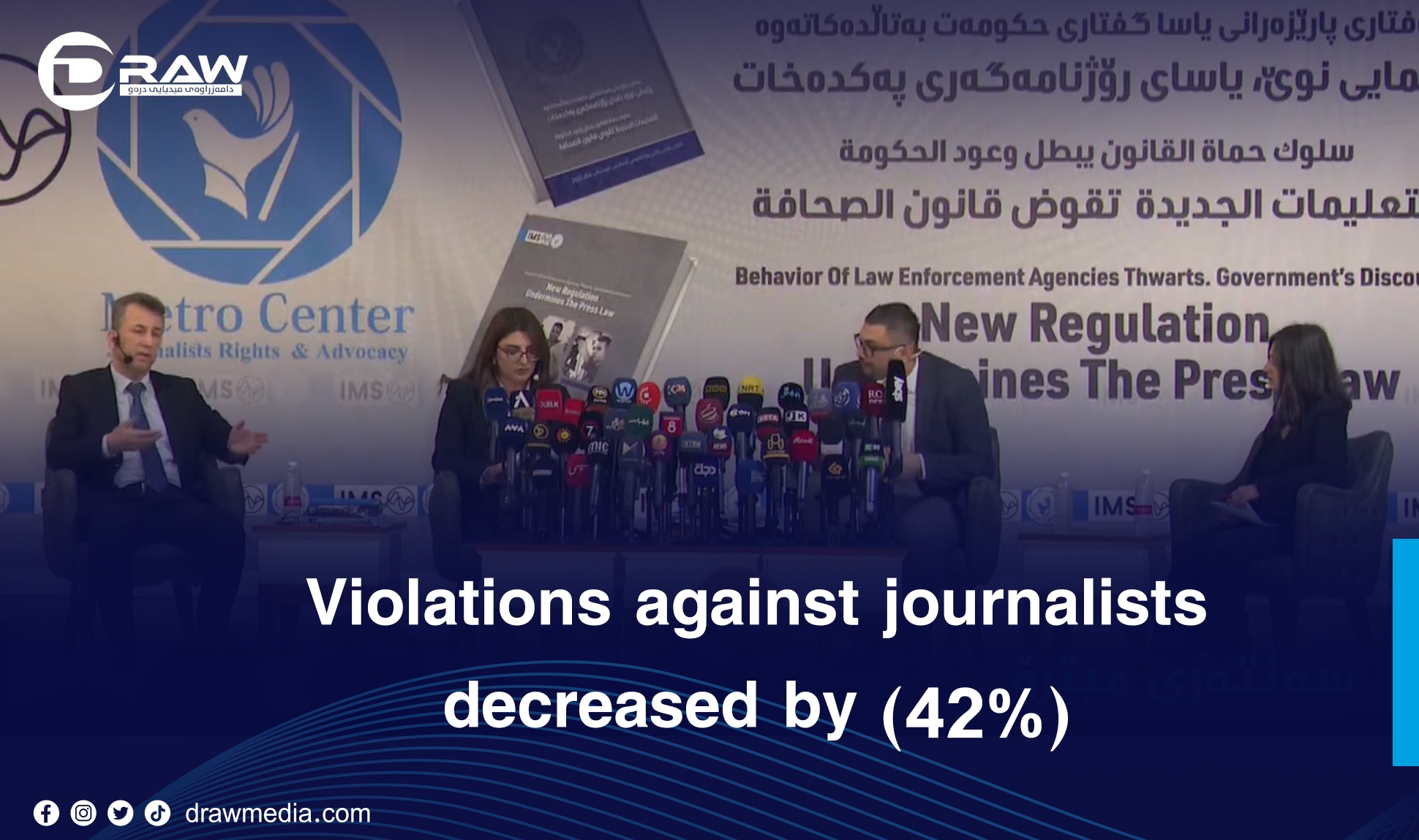
Violations against journalists decreased by (42%) 

Compared to 2022, violations and arrests of journalists decreased by 42% in 2023. Violations decreased from 431 to 249 cases, arrests decreased from 64 to 37 cases. Metro Center for Journalists' Rights and Advocacy has released its annual report on the situation of journalists in the Kurdistan Region. According to the report, 249 violations were committed against 247 journalists in 2023, including: Prevention and discrimination: (134) cases Seizure of journalist's devices: (38) cases Arrest of journalists: (37) cases Attacks, Threats and Insults: (27) Arrest of journalists outside the Journalism Law (5) cases Cyber attack: (4) cases Breaking journalist's belongings (2) cases Raids on journalists' homes: (2) cases Violations against journalists 2022: (431) 2023: (249) Decreased: (182) (42%) Arrest of journalists 2022: (64) arrests 2023: (37) arrests Decreased: (27) cases Decreased by 42%

Read more

US State Department condemns IRGC missile attacks on Erbil

 The US Department of State strongly condemned the missile attacks carried out by the Iranian Revolutionary Guard (IRGC) against Erbil, the capital of the Kurdistan Region of Iraq (KRI), on Tuesday, resulting in the death and injury of 10 civilians. The spokesperson for the Department, Mattew Miller, stated in a press release, "The United States strongly condemns the Iranian attacks in Erbil today and extends its condolences to the victims’ families." "We oppose Iran's reckless missile strikes, which undermine the stability of Iraq." He continued, "We support the efforts of the Iraqi government and the Kurdistan Regional Government (KRG) to meet the aspirations of the Iraqi people." Furthermore, on Monday night, IRGC launched a fierce missile strike targeting civilian areas in Erbil, causing the death and injury of 10 civilians. It is noteworthy that IRGC had earlier claimed responsibility for the attacks that targeted Erbil and stated that they came "in response to the crimes of the Zionist regime against the Islamic Republic, the latest of which was the killing of several IRGC leaders by Zionist fire, targeting a main Mossad spy center in KRI and destroying it with ballistic missiles." The statement added that this Zionist center was the main one responsible for developing and launching espionage operations and planning terrorist activities in the region, especially against Iran. The Security Council of the Kurdistan Region condemned, early today, the missile bombardment conducted by IRGC, targeting various areas in Erbil, as a "blatant violation of the sovereignty" of the Region and Iraq. The Council stated that at 11:30 on the night of January 15 to January 16, 2024, IRGC bombarded several civilian areas in Erbil with ballistic missiles, resulting in the death of four civilians and the injury of six others, some of whom are in critical condition. The statement added that IRGC declared that the attack targeted several locations of groups opposed to Iran, pointing out that this excuse has no basis, and we reject it. They always use baseless excuses to attack Erbil. The statement emphasized that "Erbil, as a stable region, has never been a source of threat to any party." The statement continued that the strikes carried out by the IRGC on Erbil are a "flagrant violation of the sovereignty of the region and Iraq," and the federal government and the international community must not remain silent about this crime.

Read more

Since The Suspension of Oil Exports, The KRG Oil Sector Lost About $7.5 Billion

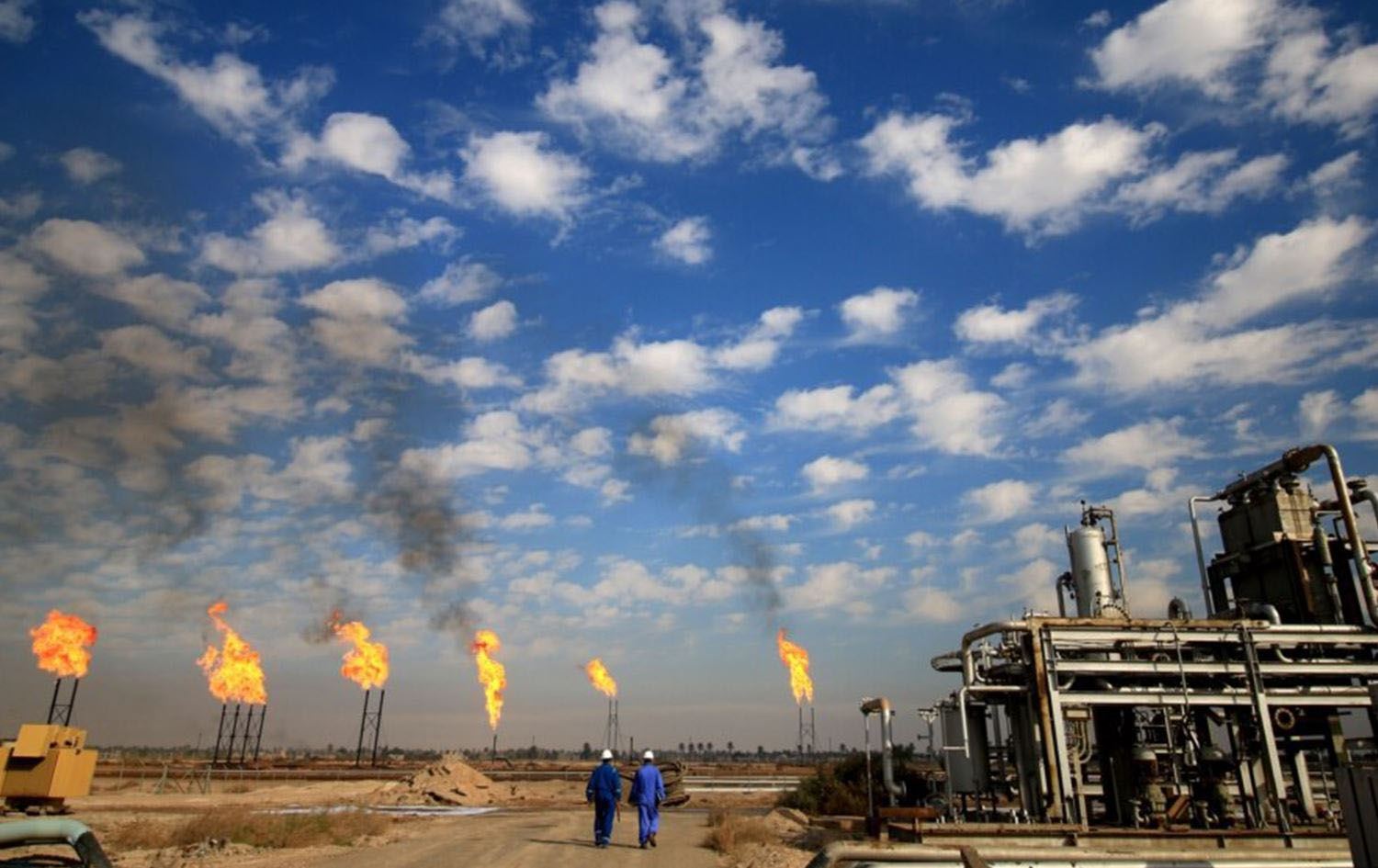
? (1/4/2023 – 31/12/2023) After more than three seasons, oil exports have been suspended and there is no specific time to resume oil exports. ? According to Deloitte data, before the suspension of oil exports, an average of more than (12 million) barrels of oil had been exported per month. ? That is, within three seasons, the oil exports would have reached about (110 million) barrels of oil. ? The average price of Brent oil during (1/4/2023 – 31/12/2023) was (82.9 dollars). ? If the Kurdistan Region had sold its oil at a discount of $15, as happened in the second, third and fourth quarters of 2022; ? The average price of oil sold in the Kurdistan Region would be (67.9 dollars). ? The total value of oil exports would be (7 billion 455 million 479 thousand) dollars. Suspension of oil and financial losses Nine years after the Iraqi government filed a complaint against the Turkish government at the International Chamber of Commerce in Paris, "Turkey violated the 1973 oil pipeline transit agreement by allowing crude oil from the Iraqi Kurdistan Region to be exported through Turkey without Baghdad's consent." Finally, the International Chamber of Commerce in Paris issued a 277-page resolution on February 13, 2023 and on March 25, 2023 officially suspended oil exports from the Kurdistan Region. According to the decision of the International Arbitration Chamber in Paris, the Kurdistan Regional Government is a constitutional and legal government within Iraq, but cannot transport oil through pipelines, whether northern oil, or the region's oil, because the Kurdistan Region is not part of the IPT agreement which was signed between Turkey and Iraq in 1973 on oil pipelines. More than nine months have passed, but no concrete agreement has been reached to resume oil exports. Here we highlight the financial losses caused by the suspension of oil in the region during (1/4/2023 – 31/12/2023): • According to Deloitte's reports for the second, third and fourth quarters of 2022, which means the same the same period as in 2023; - The Kurdistan Regional Government (KRG) exported an average of 12 million 192 thousand 494 barrels of oil monthly through the pipeline to the Turkish port of Ceyhan. - The Kurdistan Region sold oil at $15 less than Brent oil per barrel during the period. - According to Deloitte reports, 54% of oil revenues went to the expenditure of the process and 46% returned to the general treasury of the Kurdistan Regional Government. Therefore, based on the three reports of Deloitte during the second, third and fourth quarters of 2022, we explain the following assumptions; • From (1/4/2023 – 31/12/2023) that is (9) months have passed since the suspension of oil exports. • The region could have exported an average of 12 million 192 thousand 494 barrels of oil per month. • That is, within (9) months, the oil exports would have reached (109 million 732 thousand 446) barrels of oil. • The average price of Brent oil was $82.90 during the period. • If the region had sold its oil at a discount of $15, as happened in the second, third and fourth quarters of then; • The average price of oil sold in the Kurdistan Region would be $67.90 per barrel. • The total value of oil exports would be (7 billion 455 million 479 thousand 397) dollars. • If the amount of revenue (54%) would go to the expenditure of the oil process, it would be equivalent to (4 billion 25 million 958 thousand 874) dollars. • Accordingly, the amount of (3 billion 429 million 520 thousand 532) dollars at a rate of (46%) would be returned to the general treasury of the Kurdistan Regional Government. The following table explains the process.  

Read more

Barzani has secretly met with Kirkuk Arabs

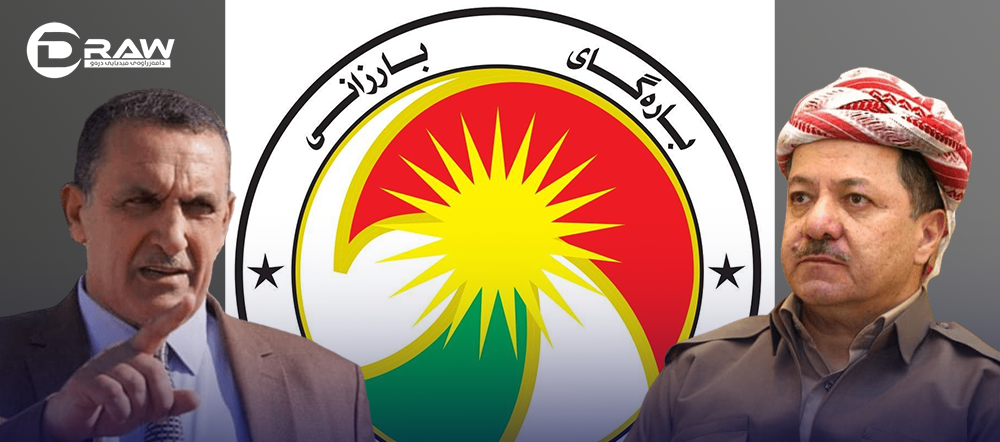
Massoud Barzani, leader of the KDP met with Arab representatives in Kirkuk and apologized for "past mistakes toward the Arabs." Mohammed Hamadan, a member of the Iraqi parliament, who is one of the leaders of the Kirkuk Arab Project, said they had a meeting in Erbil today. According to the investigations of (Draw), an Arab delegation led by Rakan Jabbari, acting governor of Kirkuk, met with Massoud Barzani, the leader of the Kurdistan Democratic Party (KDP) in Pirmam. Mohaimen Hamadani said about the meeting: "It was a historic and honest meeting for the Kurdish-Arab relationship, that the mistakes of the past years to be identified for the first time and acknowledged and apologize to all Arabs for all the suffering they have experienced."

Read more

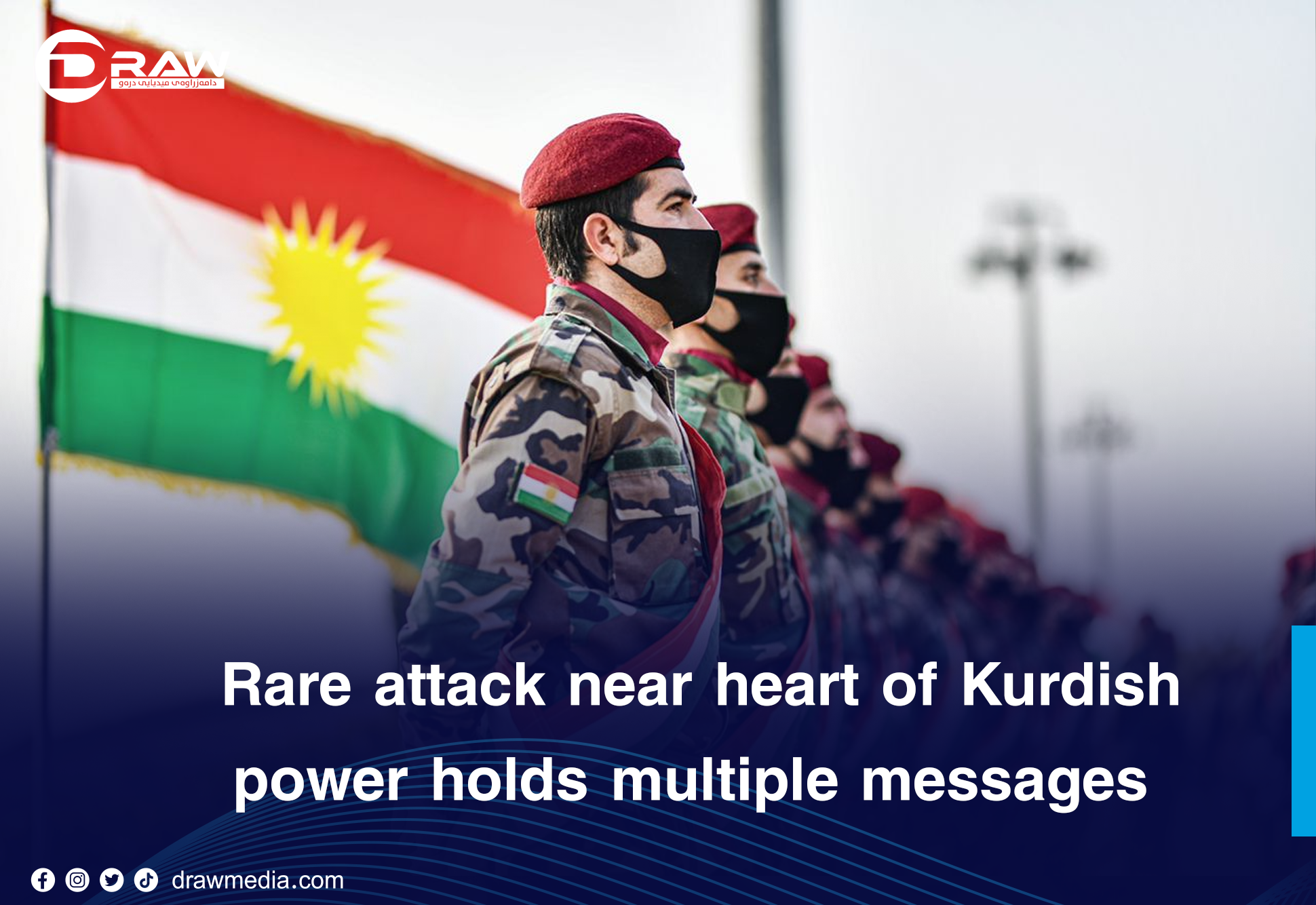
Rare attack near heart of Iraqi Kurdish power holds multiple messages

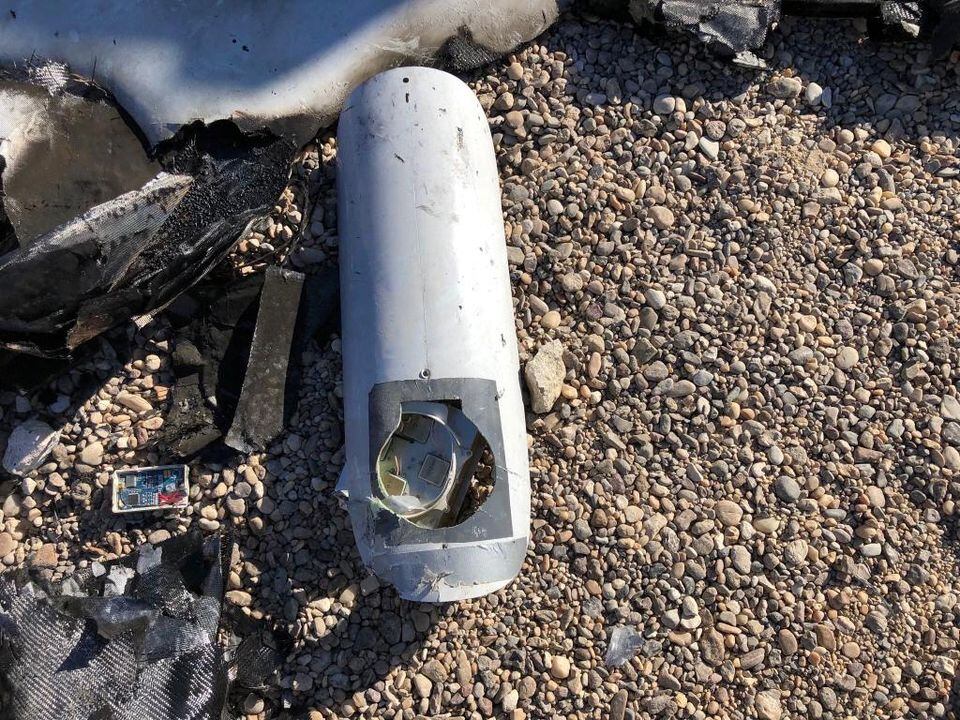
  Amwaj.media The story: Kurdish security forces have been targeted in a rare drone strike in northern Iraq. A Peshmerga base in an area that is home to the headquarters of the ruling Kurdistan Democratic Party (KDP) was hit. While no one has claimed responsibility, the attack follows months of operations against US forces in Iraq and Syria by a new entity known as the “Islamic Resistance in Iraq.” The incident also notably comes amid increased political tensions between Erbil and Baghdad—sparking sharp reactions. The coverage: Two attack drones hit a Peshmerga base in Pirmam on the night of Dec. 30, 2023, according to the Kurdistan Regional Government (KRG). The district is located approximately 28 km (17.4 miles) northeast of the city of Erbil. No casualties have been reported, although the strike is said to have caused material damage.   Pirmam is notably home to the headquarters of senior KDP leaders, including party president Masoud Barzani and his son Kurdistan Region Prime Minister Masrour Barzani. The area is thus highly sensitive both from a security perspective and in terms of political symbolism. KDP and KRG officials have reacted furiously to the incident, describing it as a “terrorist attack.” Kurdistan Region President Nechirvan Barzani said in a statement that “the assault on the Peshmerga, which is an official force and an integral component of Iraq’s federal defense system, is a dangerous and unacceptable escalation.”   Kurdistan Region Prime Minister Barzani condemned the “outlaws and their collaborators.” In a thinly veiled reference to Shiite armed groups, Barzani thundered, “They use state money and weapons to attack the Kurdistan Region, destabilize the whole of the country, and risk renewed conflict in a nation that has seen enough bloodshed.” To help manage the rising tensions, top Iraqi Kurdish figures have engaged with senior members of the security establishment in Baghdad. On Jan. 4, KDP leader Masoud Barzani met with Iraqi National Security Advisor Qasim Al-Araji.   Notably, the Kurdish party president also held talks with the chairman of Iraq’s Popular Mobilization Units (PMU), Falih Al-Fayyadh. The context/analysis: While no one has claimed responsibility for the Pirmam incident, it notably comes amid ongoing attacks on facilities hosting US troops in Iraq and Syria. The “Islamic Resistance in Iraq” began targeting American forces in Oct. 2023 with the apparent aim to press the Joe Biden administration to halt the Gaza war. US facilities in Iraqi Kurdistan have been repeatedly hit, including at the Erbil Air Base. Incidents have additionally taken place at the Harir Air Base, located some 70 km (44 miles) outside Erbil. Pirmam is situated between Erbil and Harir.   Out of an estimated 150 attacks in Iraq and Syria since Oct. 2023, some 30 targeted the Erbil and Harir bases, according to the Institute for the Study of War. Of note, only days after the Pirmam incident—on Jan. 5—Harir was hit by another attack drone. Iraqi Prime Minister Muhammad Shia’ Al-Sudani has said that his government will launch a “comprehensive investigation” into the attack on the Peshmerga base. In contrast with past strikes in Iraqi Kurdistan, there has been little foreign condemnation, with France among few to issue an official statement. Faced with the political aftermath of deadly US attacks on Shiite armed groups accused of involvement in the targeting of American forces, Sudani has sought to calm tension. The renewed push for US forces to leave the country has grown stronger following a Jan. 4 US airstrike that killed Mushtaq Jawad Kazim Al-Jawari. Abu Taqwa, as Jawari was better known, was a senior commander of Harakat Hezbollah Al-Nujaba. Notably, KDP-affiliated media outlets heavily covered the US airstrike.   The day after the killing of Jawari, Sudani announced the formation of a committee to end the presence of Coalition and US troops in Iraq.   The KDP—and Iraqi Kurdish parties more generally—are strongly in favor of maintaining the presence of Coalition and US troops. In this context, the attack on Pirmam is possibly an attempt to pressure the KDP on the issue specifically. The KRG and Iraq’s federal government are also in the midst of a multi-pronged dispute, which covers the budget, elections, oil, security, and other issues. The KDP—and Kurdistan Region Prime Minister Barzani specifically—have a testy relationship with the Iran-backed Shiite Coordination Framework.   While not outright antagonistic, relations between the KDP and the ruling Shiite Arab parties are often tense. In contrast, the other main Kurdish ruling party—the Patriotic Union of Kurdistan (PUK)—is closely aligned with the Shiite Coordination Framework.   The Dec. 30 incident—showcasing the ability to attack symbolically important Pirmam—is potentially another way to keep the KDP under pressure amid Baghdad-Erbil tensions. The future: The Pirmam incident could hold both local and broader geopolitical messages for the KDP. Therefore, it is important to track coming developments along both axes. Ultimately, the potential for the withdrawal of Coalition and US troops is a matter between Baghdad and foreign capitals, with Erbil able to wield only limited influence. However, the KDP’s reaction to such a development will be politically significant.   The Kurdish regional administration has progressively lost power to the federal government over the past two years. As the lead party in the KRG cabinet, this hurts the KDP the most. As the Shiite Coordination Framework continues to press this advantage, it remains to be seen whether the KDP can reverse the current dynamic. If the “Islamic Resistance in Iraq” is involved in the attack in Pirmam, it could indicate that Shiite armed groups are able and ready to also target domestic political competitors. Attacks on the Peshmerga by forces based outside Iraqi Kurdistan have been rare since 2017, and when they have taken place usually limited in scale. If the tempo and intensity of strikes on Peshmerga positions grow, that would be a negative indicator for Baghdad-Erbil relations. Politically, the latter could in turn affect the prospect of the two sides forging a lasting consensus on issues like the budget or oil policy.

Read more

Legal Opinion Validates KRG's Constitutional Authority in Oil Sector

Draw Media Judge Stephen M. Schwebel In a landmark legal analysis, Judge Stephen M. Schwebel provides a resounding endorsement of the Kurdistan Regional Government's (KRG) constitutional rights in oil and gas production and management. This opinion, rooted in a deep understanding of international and Iraqi constitutional law, underscores the KRG's legitimate, legal, and constitutional claim to manage its oil and gas resources. Schwebel's analysis meticulously dissects the 2005 Iraqi Constitution, affirming that the distribution of power heavily favours regional governments, like the KRG, over the Federal Government in matters of natural resource management. Central to his argument is the interpretation of Articles 110, 114, 115, and 121, which collectively do not grant the Federal Government exclusive authority over oil and gas resources. Instead, these articles empower regions to manage the production of oil and gas within their territories. Judge Schweble offers an extensive review of the 2022 ruling by the so called Federal Supreme Court, which deemed the KRG Oil and Gas Law of 2007 unconstitutional. His perspective significantly contests the court’s verdict and outlines the KRG's authority to create legislation and engage in agreements for oil and gas advancement within the boundaries of the constitution. Furthermore, Schwebel's opinion aligns with the late Professor James Crawford's analysis, emphasising that the KRG's authority extends to decisions on new oil exploration and exploitation, thereby reinforcing the region's autonomy. In conclusion, Judge Schwebel's legal opinion serves as a pivotal affirmation of the KRG's constitutional rights, paving the way for a more empowered and autonomous regional governance in managing its vital oil and gas resources. Stephen M. Schwebel is an American jurist and international judge, counsel and arbitrator. He previously served as judge of the World Bank Administrative Tribunal (2010–2017), as a member of the U.S. National Group at the Permanent Court of Arbitration, as president of the International Monetary Fund Administrative Tribunal (1993–2010), as president of the International Court of Justice (1997–2000), as vice president of the International Court of Justice (1994–1997), and as Judge of the International Court of Justice (1981–2000). Prior to his tenure on the ICJ, Schwebel served as deputy legal adviser to the U.S. Department of State (1974–1981) and as assistant legal adviser to the U.S. Department of State (1961–1967). He also served as a professor of law at Harvard Law School (1959–1961) and Johns Hopkins University (1967–1981). Here is the full text of Judge Schwebel’s analysis, titled “The Authority of the Kurdistan Regional Government Over Oil and Gas Under the Constitution of Iraq" Kurdistan Opinion Signed  

Read more

Youth migration from Iraqi Kurdistan declined sharply in 2023

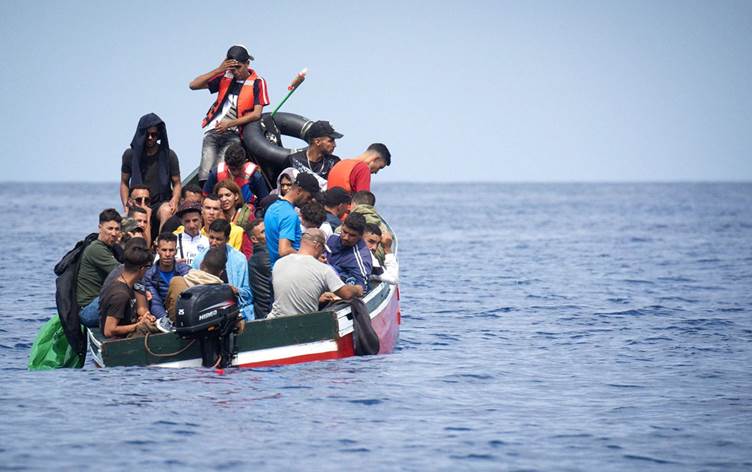
The head of the Civil Organizations' network in the Kurdistan region of Iraq, Sirwan Kurdi, on Tuesday said that the rate of youth migration from the Kurdistan region to Europe and other countries in the world has declined sharply in 2023. Kurdi said in a press conference in Erbil that during the past three years, about 36,000 to 38,000 young people from the Kurdistan region migrated to Europe. In 2023, the rate of migration declined to a low level of only 1,030 people. Kurdi attributed this decline to the outbreak of the war between Ukraine and Russia, the deterioration of the economic situation in Europe, and the tightening of Turkish authorities on illegal immigration operations.

Read more

Iraq Oil revenues decline in 2023 despite increase in exports

New statistics from the Iraqi Ministry of Oil revealed a decline in oil revenues in 2023, despite the rise in exports to more than 1.23 billion barrels of oil during the year when 67 new oil wells were drilled in the northern and southern regions of the country. Iraq relies on oil to provide around 96 per cent of its financial revenues, which bridges the financial deficit and reduces domestic and foreign debts. According to local media, the overall activities of oil export operations showed that the total oil exports in 2023 amounted to approximately 1.23 billion barrels. The statistics confirmed that the monthly oil export rate reached 102.6 million barrels, at a daily rate of 3.4 million barrels; a 5.36 per cent increase from the 2022 exports. The ministry’s figures indicated that the financial revenues from oil sales amounted to approximately $87.6 billion, averaging around $7.3 billion per month. This marks a 31.79 per cent decrease from the previous year’s revenues of $115.46 billion. According to the ministry’s figures, India and China were the main consumers of Iraqi oil, followed by US companies.

Read more

Drone shot down near US military base in northern Iraq

The Counter-Terrorism Service in the Kurdistan region of Iraq announced in a statement that defense systems shot down an armed drone on Sunday near Erbil International Airport in northern Iraq, where US and international forces are stationed. A group called the Islamic Resistance in Iraq said it launched a drone attack to target what it called an ‘occupation base.’ According to security officials, there were no injuries or infrastructural damage. US and international forces stationed in Iraq and across the border in Syria are on high alert amid dozens of attacks on their bases since the outbreak of the war between Israel and Hamas. The attack took place less than 24 hours after two drones were shot down on Saturday evening near a military base in northern Iraq used by the Iraqi Kurdish Peshmerga forces and the Al-Harir Air Base, which also hosts US forces, according to the Kurdistan Regional Government (KRG). The Iraqi Prime Minister, Mohammed Shia Al-Sudani, ordered on Sunday an investigation in coordination with security forces in Iraqi Kurdistan and pledged to pursue those responsible for Saturday’s attack.

Read more

Kurdistan Region in four electoral constituencies

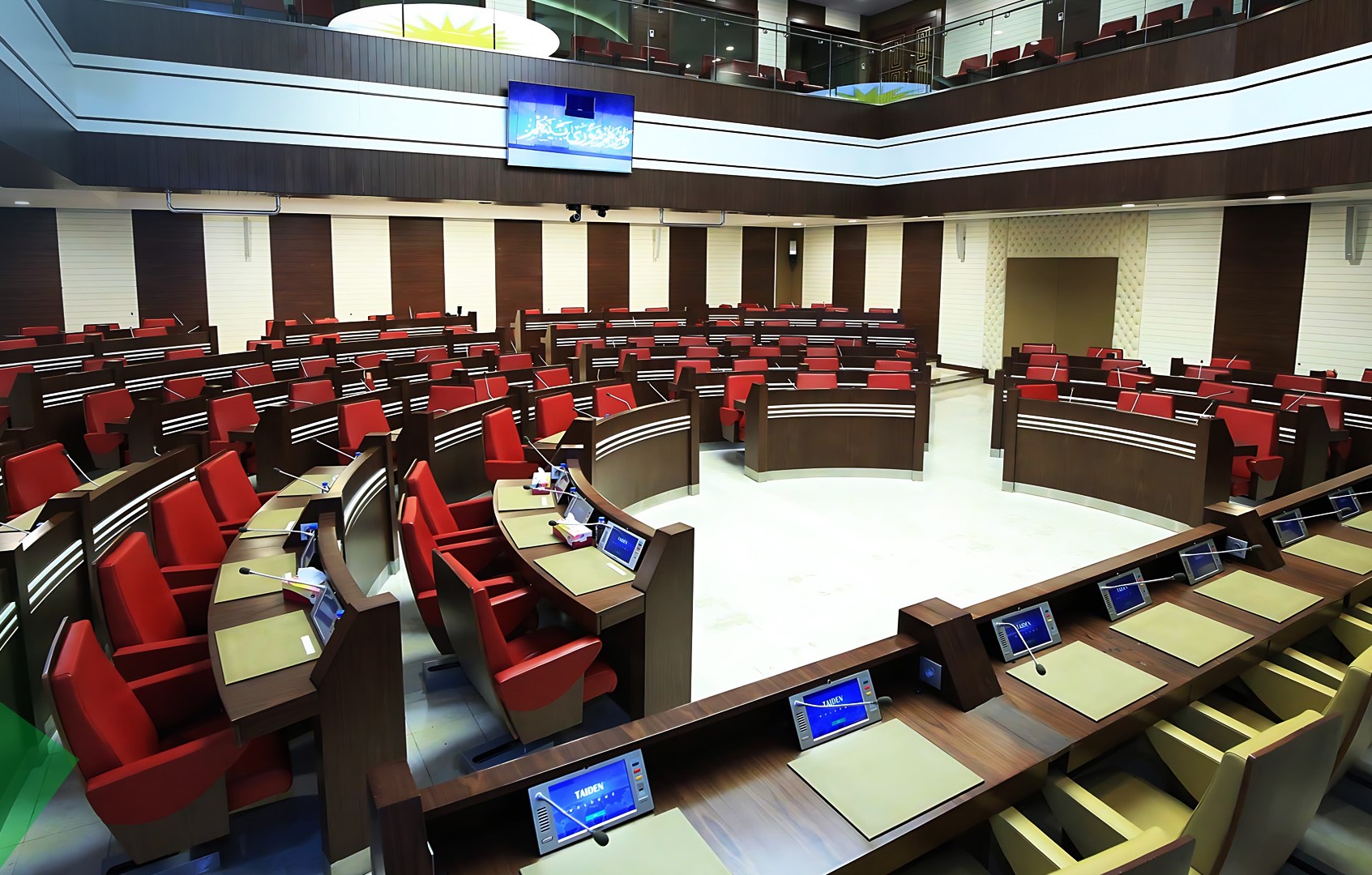
? The Federal Court and the Iraqi High Election Commission are in talks to make the Kurdistan Region into four electoral constituencies for the Kurdistan parliamentary elections. ? Erbil province (34%) of the general seats; which means (34) general seats and (4) quota seats, a total of (38) seats. ? Sulaimani province (39%) of the general seats; (39) seats and (4) quota seats, a total of (43) seats. ? Halabja province (2%) of the general seats; that is a total of (2) seats. ? Duhok province (25%) of the general seats; (25) seats and (3) quota seats, a total of (28) seats. Distribution of the seats in the Kurdistan Parliament among the provinces in the four electoral constituencies situation: According to the talks between the Iraqi Independent High Election Commission (IHEC) and the Federal Supreme Court, the Federal Court has asked the commission to divide the Kurdistan Region into four electoral districts. According to Article 9 of the Kurdistan Regional Election Law, which requires the Kurdistan Region to be divided into at least four electoral districts. Earlier, the Iraqi High Election Commission divided the general and quota seats of the Kurdistan Region into three constituencies and last month submitted to the Federal Court, but now the Federal Court once again asked the commission to divide the region, on the basis of four constituencies. At the level of the constituencies (Erbil, Sulaimani, Halabja and Duhok), based on the same data and distribution which was mentioned before in a letter of the Iraqi High Election Commission, number (2551) dated (30/11/2023), in response to the Iraqi Federal Supreme Court request, Regarding the mechanism of distribution of th seats in the Kurdistan Parliament. The number of seats allocated to the House of Representatives is based on the letter of the commission, the share of each province (constituency) of the (100) seats in the Kurdistan Parliament will be as follows; First Circle; Erbil Province (34%) of the total seats in the Kurdistan Parliament, That is, 34 general seats and (2) Turkmen quota seats and (2) Christian quota seats. Second circle; Sulaimani Province (34% or 39%) of the total seats in parliament, That is, 34 or 39 general seats, two Turkmen seats and two Christian seats. The number of seats depends on the share of Halabja province. Later we explain the reason. Third circle; Halabja province, which two scenarios exist; first; Considering the principle which in the Iraqi parliamentary elections was treated as an election constituency. It included the administrative boundaries of Halabja, Penjwen, Said Sadiq and Sharazoor districts. In this case Halabja will get 7% and 7 seats in the Kurdistan Parliament. So the share of Sulaimani constituency should be (34) seats. second; If the administrative boundaries of Halabja province are taken as the basis, which includes the center of Halabja district and Sirwan, Khurmal and Biara districts. Based on the population of the province, according to the data of the Kurdistan Regional Statistical Board in (2020), this geographical area accounts for 5% of the population of Sulaimani province. So, out of the 41 seats, only two seats will be given to Halabja and Sulaimani province will get 39 seats. Fourth Circle; Duhok province (25%) of the total seats in parliament,   That is, (25) general seats, (1) Turkmen final seat, (1) Christian final seat and (1) Armenian final seat, would be a total of 28 seats.

Read more

Sudai has promised the KRG teachers' representatives to solve the salary problem of the Kurdistan Region

Iraqi Prime Minister Mohammed Shia' Al Sudani has promised the Kurdistan Regional Government (KRG) teachers' representatives that they will solve the salary problem through the amendment of the budget law in the new year. Representatives of the protesting teachers in Baghdad met with Iraqi Prime Mohammed Shia' Al Sudani today, in a meeting, Sudani promised to solve the problem of salaries in the new year, through legal amendments from the budget. Saman Ali, one of the protesting teachers who met with Iraqi Prime Minister Mohammed Shia' Al Sudani, wrote on his official Facebook page: “There is good news.”      

Read more

DNO Kurdistan Production Continues to Climb

The Norwegian oil and gas operator, today announced that gross production from its operated Tawke license in the Kurdistan region of Iraq continues to climb, with the December to date average approaching 90,000 barrels of oil per day (bopd). That lifts the projected fourth quarter 2023 figure to 65,000 bopd, up from 26,000 bopd in the third quarter and zero production in the second quarter, following closure of the Iraq-Türkiye Pipeline in March 2023. Of the total Tawke license production, close to 40 percent represents the Company’s current entitlement share, which is sold to local buyers at prices in the low to mid-USD 30s per barrel. All such sales are conditional on advance payment in US dollars to DNO to eliminate any risk of arrears build up. In addition to stepping up local sales, DNO has reduced costs materially since the pipeline closure, with operational spend in the Tawke license averaging some 65 percent below the pre-export shutdown level. The Tawke license holds the legacy Tawke field in production since 2007 and the Peshkabir field in production since 2017. Both fields were developed and put in production less than two years following discovery. “These are resilient fields and DNO is a resilient company,” said DNO Executive Chairman Bijan Mossavar-Rahmani. “Even with local sales prices as low as half of those realized from export sales through Türkiye, strong production generates material free cash flow for DNO,” he added. “We remain confident that the latest challenges facing DNO and the other international oil companies will be resolved once again and we remain committed to growing our business in Kurdistan as we have over the past two decades,” Mr. Mossavar-Rahmani said. “And that is notwithstanding a pivot to Norway where we have been reporting exploration discovery after discovery over the past two to three years.” DNO is planning to drill another well in the Baeshiqa license in Kurdistan in 2024 following a discovery made in 2019. DNO operates and has a 75 percent stake in the Tawke license with partner Genel Energy International Limited holding the balance. In the Baeshiqa license, DNO holds a 64 percent operated interest (80 percent paying interest) with partners Turkish Energy Company Limited holding a 16 percent interest (20 percent paying interest) and the Kurdistan Regional Government holding a 20 percent carried interest. –  

Read more

Iraqi Kurdistan May Finally Acquire Air Defenses After Years Of Unprovoked Missile And Drone Attacks

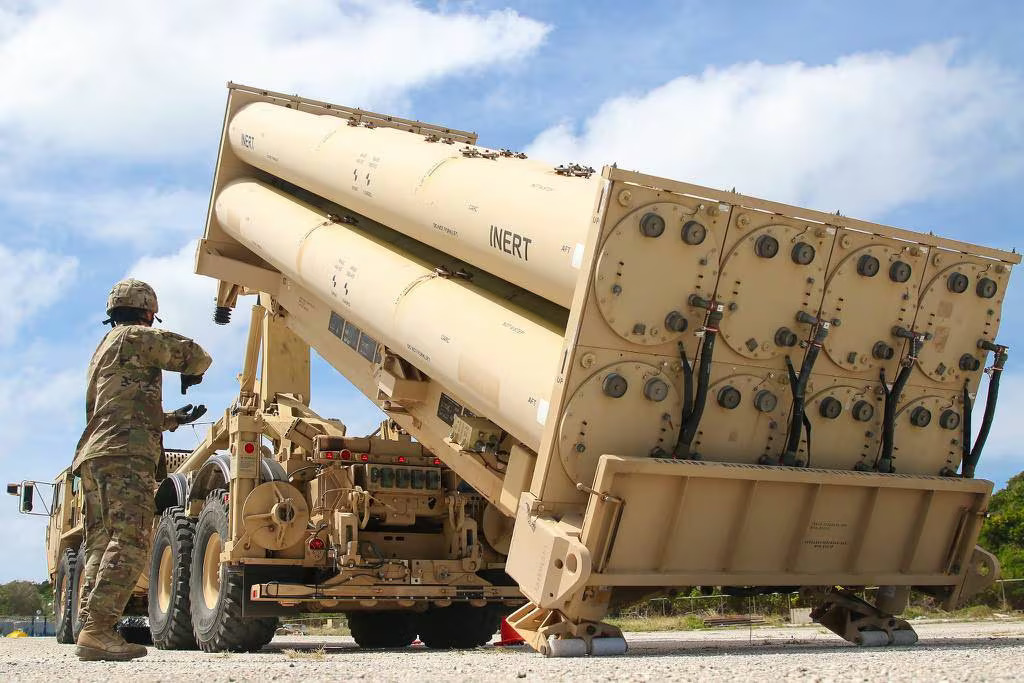
Forbes The 2024 National Defense Authorization Act passed by Congress notably includes a provision for equipping Iraqi Kurdistan’s Peshmerga forces with air defenses. Such a move would likely be welcomed in the autonomous region since it has come under repeated missile and drone attacks from neighboring Iran and Iran-backed militias in recent years, attacks against which it has had no defense. The provision in the bill, passed by both the House of Representatives and the Senate Dec. 14 and expected to be signed by President Biden, obligates the secretaries of defense and state to “develop a plan of action to equip and train Iraqi security forces and Kurdish Peshmerga forces to defend against attack by missiles, rockets, and unmanned systems” by Feb. 1, 2024, and implement it within 90 days of development. Since the outbreak of the unprecedented Israel-Hamas War in October, U.S. troops have come under repeated rocket and drone attacks in Iraq and Syria. These attacks have targeted the U.S. troop base on the grounds of Erbil International Airport, EIA, in Iraqi Kurdistan’s capital. EIA came under fire years before the onset of the current Gaza war, with the first rocket attack targeting the airport grounds carried out by militants in September 2020. Many of these attacks are likely shots across the bow, intended to signal to the United States the capabilities of these militias to hit target its troops, even inside the relatively secure boundaries of the Kurdistan Region. Nevertheless, some attacks have directly endangered U.S. troops at EIA and civilians in the Kurdish capital. For example, an explosive drone targeting the EIA troop base on Oct. 26 hit the second floor of the barracks housing U.S. troops and could have caused significant casualties and damage if it did not fail to explode, according to Reuters. An attack against EIA on Feb. 15, 2021, saw a barrage of 14 rockets hit the base and a nearby residential area, killing a U.S. contractor in the former and severely injuring a civilian, who succumbed to those injuries a week later, in the latter. More recently, an explosive-laden drone crashed into an unfinished residential building in Erbil on Dec. 8. Had the building been finished and inhabited, the risk of civilian casualties would have been high. Unlike the residential areas around Baghdad’s Green Zone, which has also come under repeated militia rocket and drone attacks targeting the U.S.Embassy there, the urban areas around EIA have more high rises, and even more are currently under construction. Analysts previously reasoned in this space that American personnel didn’t risk firing their short-range C-RAM (counter rocket, artillery, mortar) system in EIA during the Feb. 15, 2021, attack since they feared unintentionally hitting tall civilian buildings nearby. Iran fired 12 ballistic missiles at a residential area in Erbil on Mar. 12, 2022. The missiles weren’t directed at any military targets. Instead, they all hit a villa belonging to a Kurdish businessman who was negotiating a “nascent plan” for supplying Turkey and Europe with gas from the autonomous region. And while the attack did not cause any casualties, it demonstrated Iran’s willingness to target civilian areas in Iraqi Kurdistan directly. Iran also targeted Iranian Kurdish dissidents in Iraqi Kurdistan’s Koya region. The first attack was in Sept. 8, 2018, with seven ballistic missiles targeting a building where high-level members of the dissident groups were meeting. That attack demonstrated the accuracy of Iran’s missiles and Tehran’s readiness to attack rival groups in the region in such a way. Iran’s largest cross-border aerial assault since the 1990s, and among the most significant since the Iran-Iraq War of the preceding decade, also occurred in Iraqi Kurdistan in September 2022. Iran sought to deflect blame for widespread internal protests, sparked by the infamous death of Mahsa Jina Amini in police custody in Tehran, against external armed groups. Iran fired an estimated 70 tactical ballistic missiles and long-range explosive drones against suspected targets throughout Iraqi Kurdistan in another truly unprecedented attack. These recurring attacks aptly demonstrated Iraqi Kurdistan’s vulnerabilities. While U.S. troops in EIA will likely continue to provide point defense for their base with C-RAMs, the Iraqi Kurds require broader air defenses. But any air defenses the U.S. ultimately agrees to supply Iraqi Kurdistan will not likely be nearly as advanced as the well-known, long-range MIM-104 Patriot. The Iraqi military’s most advanced ground-based air defense system at present is the short to medium-range Russian-built Pantsir-S1. Baghdad would likely object to Iraqi Kurdistan receiving any more capable system. The U.S. would most likely supply Iraqi Kurdistan with short to medium-range systems capable of countering the militia rocket and drone attacks — which Iraqi Kurdistan would undoubtedly reserve strictly for defensive purposes. And while Iran would surely protest — Tehran already sought clarification on the matter when the provision initially emerged earlier this year — it would hardly view such an acquisition as a strategic threat. Still, such a provision, possibly alongside some shoulder-launched surface-to-air missiles to help Peshmerga forces in the field defend themselves against makeshift explosive drones deployed by groups like ISIS, would undoubtedly be much better than nothing and long overdue.

Read more

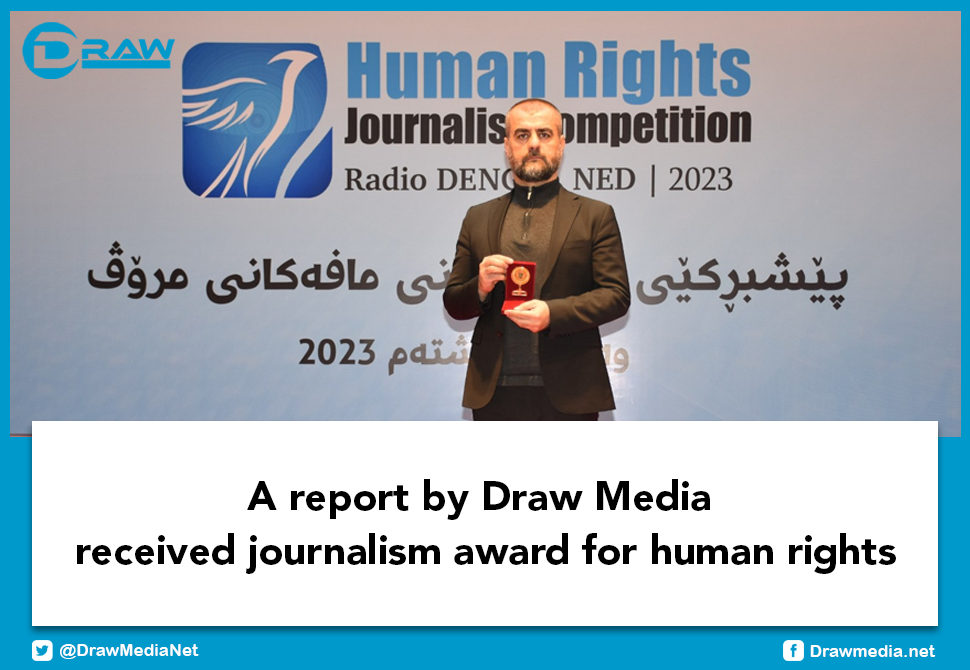
A report by Draw Media received journalism award for human rights

It was prepared by Alan Najmaddin A report by Draw Media entitled “Ghost of the Drones” received journalism award for human rights. The results of the competition was announced on Friday in Kalar, which is organized annually by Deng Radio with the support of the National Endowment for Democracy (NED). Alan Najmadin's investigative report entitled “Ghost of the Drones” won the second prize in the competition. It has been for 8 yeas since the establishment of the award by Deng Radio with the support of the National Endowment for Democracy (NED). This year, 37 journalists, including 10 women journalists, entered the competition. There were 22 written reports and 15 video reports, which have been evaluated by an expert committee of journalists and three winners have been selected. "Ghost of the Drones" is a video report about the victims of drones in the Kurdistan Region.

Read more

Iraq’s Disputed Territories and the Potential Impact of the Upcoming Provincial Elections

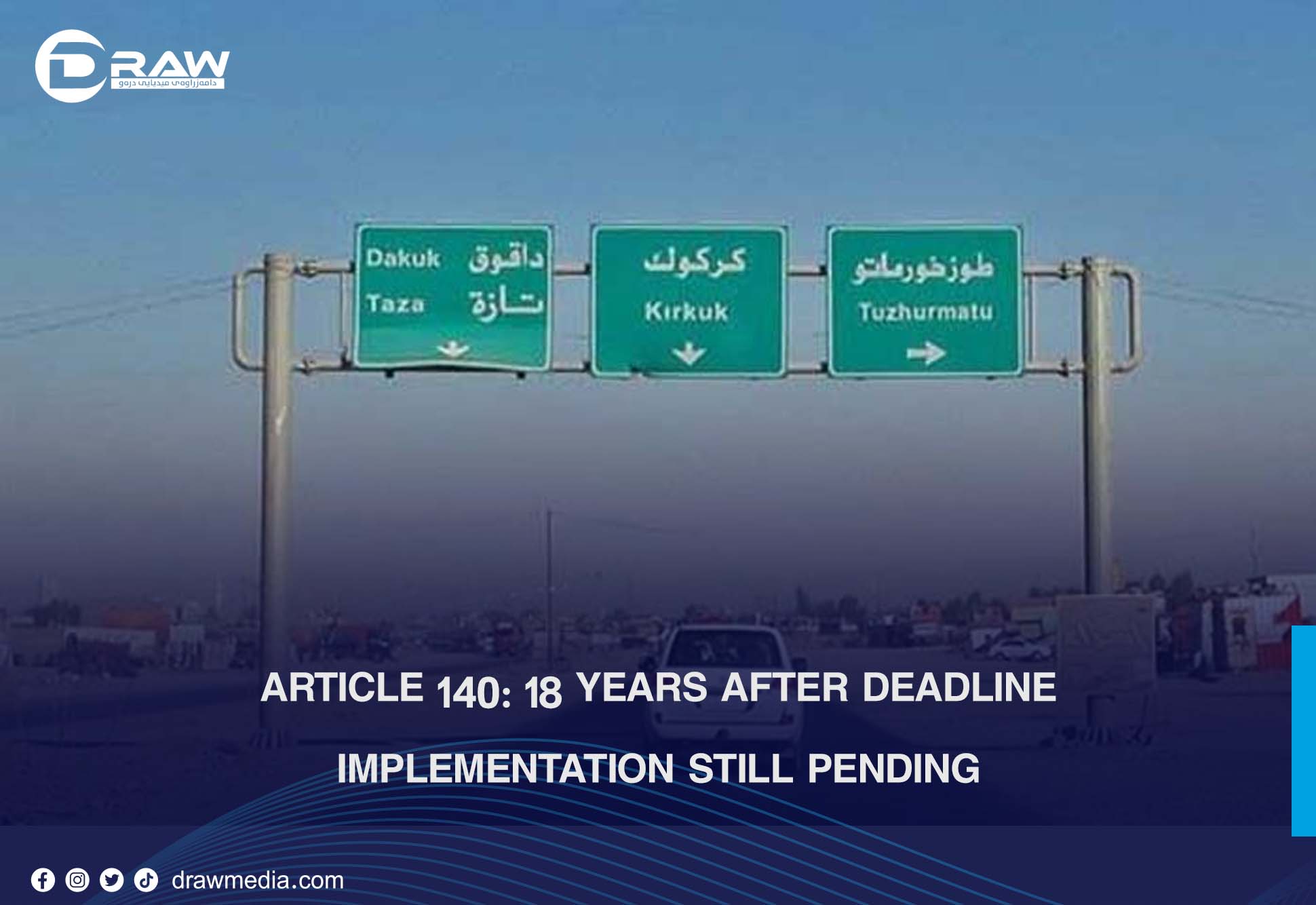
Draw Nedia washingtoninstitute - Hiwa Abdullah Hussein These elections will directly affect the future of the disputed territories, and political parties must be careful to avoid deepening sectarian divides, both in this case and in future elections. Iraq’s highly anticipated provincial elections are scheduled for December 18. Despite initial pushback from political parties, the country’s Electoral Commission with the support of the federal government has emphasized that the elections will go forward. These elections, which will be held in all Iraqi provinces except in the Kurdistan region, have the potential to shift the balance of political power in the country. Per Article 140 of the Iraqi constitution, Kirkuk and parts of  other northern provinces are considered “disputed territories,” and a referendum will ultimately decide whether they become part of Iraqi Kurdistan or remain under the central government. These are not marginal territories; they span about 40,000 square kilometers and are inhabited by over 3 million people. Open image Source: The New Humanitarian  In practice, the final status of these “disputed territories”—areas considered by both the Iraqi federal government and the Kurdish Regional Government (KRG) as part of their territory, will be in the voters’ hands given the sectarian party options, with implications for their future status as areas primarily under either Baghdad’s or Erbil’s purview. Given the high stakes, the question of the legitimate electoral management of the disputed territories will likely become a flash point for conflict between the KRG and the federal government. However, if the will of the people is respected and competing political forces put aside their differences, the elections could open a new chapter of prosperity and cooperation in the disputed territories. Provincial Council Elections: The First In Ten Years It may seem odd that the results of local elections could reverberate through the larger Iraqi political system, but the provincial council elections are an important step toward increasing administrative decentralization and developing provinces. The Iraqi constitution grants provincial councils broad administrative and financial powers, in addition to the power to select the governor and provincial officials and to approve projects according to the budget allocated to the province. Although provincial elections are intended to be held regularly, they have been held only three times since 2003: in 2005, 2009, and 2013. They were scheduled to take place in 2018 alongside parliamentary elections but were postponed indefinitely. According to the Iraqi Provincial Councils Law, provincial councils consist of 285 seats nationwide, with 75 allocated to women. The Independent High Electoral Commission announced that in this year’s elections there are more than 6,000 candidates from 134 electoral lists, including 39 coalitions, 29 parties, and 66 individual candidates. According to the Electoral Commission, more than 23 million citizens are eligible to cast their votes in the elections, but only 60% have received the biometric cards that make them eligible to vote. This concerning figure indicates the potential for a drop in participation, likely due to the absence of the Sadrist movement, the recent withdrawal of independent parties, and a general disenchantment with the political process. As is typical in Iraqi elections, the political arena is cacophonous and confusing, with a staggering number of political actors participating. Currently, ten lists are vying for the largest number of seats for the provincial councils. The largest Shia political fronts competing for provincial seats are the State of Law Alliance, led by former prime minister Nouri al-Maliki; the We Build Alliance, led by Badr Organization leader Hadi al-Ameri; the Powers of the State Alliance, which includes the National Wisdom Movement led by Ammar al-Hakim; and the Victory Alliance, led by Haider al-Abadi. The Shia forces are competing in all fifteen provinces and are expected to win the majority of seats in Baghdad and eight provinces in the southern and central regions. The Sunni groups will field four lists: the Progress Alliance, led by former Iraqi parliament speaker Mohammed al-Halbousi; the Sovereignty Alliance, led by Khamis al-Khanjar; the Decision Alliance, led by Defense Minister Thabet al-Abbasi; and the Determination Alliance, led by the MP Muthanna al-Samarrai. Sunni parties are actively participating in elections in Baghdad, Anbar, Nineveh, Diyala, Salah al-Din, and Kirkuk provinces and are expected to win the majority of seats in all but Kirkuk. The Kurdish groups will field three lists: the Kurdistan Democratic Party, led by Masoud Barzani; the Patriotic Union of Kurdistan, led by Bafel Talabani; and the New Generation Movement, led by Shaswar Abdulwahid. These Kurdish parties are participating in the provinces of Kirkuk (fifteen seats), Salah al-Din (fifteen seats), Diyala (fifteen seats), and Nineveh (twenty-nine seats). Kirkuk and its environs are of particular importance for KRG-Baghdad relations. All Kurdish parties consider the entire province of Kirkuk to be part of Kurdistan. Kurdish parties are expected to win the majority of seats in Kirkuk and to be the decisive power in local governance in Nineveh province, raising the likelihood of a takeover by the Peshmerga, military forces affiliated with each Kurdish party. The results of the upcoming election could sour the already-strained relationship between the KRG and Baghdad. Electoral Politics: Motivated by Sectarianism, not Policy The official status of the disputed regions—including Kirkuk, Tal Afar, al-Hamdaniya, Sinjar, Zammar, Makhmur, and Khanaqin near the Iraq-Iran border—is hotly contested. This is due to the variety of ethnic and religious groups residing in those regions: Arabs, Kurds, and Turkmen, Shia, Sunni, and Christian. In the past, the run-up to elections has been an opportunity for political parties and coalitions in these areas to elevate sectarian rhetoric. The political campaigning of these regions is not governed by a coherent political program or party ideology, but rather reflects a collection of sectarian or ethnicity-based groups aiming to bring their voters to the ballot boxes. While the electoral process, and the large number of candidates, might appear to indicate a thriving civil society, most voters cast their ballots for candidates and lists based on national or sectarian orientation rather than qualifications or political platform. While political parties are eagerly preparing for the December elections, the main groups living in these areas—Kurds, Arabs, and Turkmen—have not been enthusiastic during the initial voter registration phase. Although the elections are highly consequential, turnout could be quite low due to voter frustration with the political, security, and sectarian problems that have persisted for two decades. Another issue in the disputed regions is that local community representatives cannot work together for the benefit of their areas’ residents. Local governments suffer from a lack of cohesive policy, as each official is interested first and foremost in providing services to his or her sect or ethnic constituency. The patronage system in these locales has led to the deterioration of the security situation; the presence of more than one dominant security force, with different names, affiliations, and agendas, is a major roadblock to ensuring civilians’ safety. In October 2017, following the Kurdistan region’s failure to gain independence in the September referendum, the Peshmerga withdrew from Kirkuk and other areas and Iraq’s federal forces resumed control immediately after. Since then, there has been a security vacuum in these areas given the limited involvement of federal forces on the ground. Therefore, sectarian propaganda and political tensions threaten the security situation in these areas, especially since the Islamic State and other terror groups are still able to carry out attacks. Considerations and Approaches to the Elections Outcome These elections will directly affect the future of the disputed territories, and political parties must be careful to avoid deepening sectarian divides, both in this case and in future elections. As a first step, explicitly sectarian speeches, which are likely to increase tensions, should be outlawed. After the elections, the dispute over the identity of these areas will continue. Regardless of the electoral outcome, all of the components, sects, and ethnic minorities currently living in this province must be respected. Moreover, while the formation of local governments in the provinces will likely be delayed for several months because of political disagreements about positions and entitlements, it is important for the main groups in these provinces to start serious talks to reach an agreement on the details as soon as possible after the elections. This is especially true in Kirkuk province, where local parties and regional actors—namely, Iran and Turkey—will undoubtedly try to interfere in the province’s internal affairs. Intra-sectarian tensions must also be addressed; although there is significant infighting within Kurdish parties, they should move beyond internal conflict and present a united front in these elections and their aftermath. Reestablishing a united presence in the disputed areas would be a key point of strength and security for the Kurdistan region, and Kurdish parties should work together to protect the Kurdish voice and form alliances with other groups to serve the people of these areas. If the Kurds do not unite and do not make the necessary preparations, there is no guarantee that they will win the elections for governor of Kirkuk. Post-Election Challenges and Opportunities The elections themselves promise to be an arduous, tense process regardless of the outcome. Afterwards, however, the provincial councils will face a new set of challenges. Dealing with citizens based on their sectarian identity rather than viewing them all as Iraqi citizens creates many social and political problems in the disputed areas. The essence of the problems in these disputed areas, especially in Kirkuk, as stated by Iraqi prime minister Mohammed Shia’ Al-Sudani, is “not security, but a political issue.” He also emphasized that this situation negatively affects the citizens. One of the clearest post-election risks is that local factions might be unable to reach agreement on distribution of gubernatorial positions and other unelected posts determined by the new municipal councils fairly quickly. If this happens, the delays will lead to increased tensions and jeopardize the security of the area’s residents. Additionally, there is a risk of external interventions in these disputed areas, especially by neighboring countries. Furthermore, there is no consensus within these regions on how to use the budget allocated for their administration. Past councils could have created more job opportunities and prosperity through development budgets, but administrative corruption and the unstable security situation have rendered this program ineffective to date, and difficulties continue. Despite the myriad challenges that will arise after the elections, there are important opportunities for greater cooperation and harmony in the disputed territories. Security coordination between the Kurdistan region and Baghdad in the disputed areas can be exploited for collaboration in other fields and for fostering competition in delivering services to the citizens of these areas. For this to work, it is imperative that Baghdad grant operational permission to the region’s service institutions and agree on both parties’ working together to offer the best services, particularly those related to road construction, bridges, and infrastructure. The disputed areas are renowned for their archaeological, historical, and cultural sites. If investment is done correctly, they can attract millions of tourists annually, providing an additional revenue stream for the country and aiding in sustainable development in the provinces. These areas can also be leveraged for agriculture, as they are the breadbasket of the country, and more than 40 percent of the country’s wheat is produced in them. If Iraq, with its different ethnic and religious groups, can have an open, fair, and nonviolent election cycle, this will significantly strengthen its international standing. This would allow it to host dozens of diverse cultural and religious events annually and enhance its position vis-a-vis neighboring countries. Iraq’s multi-ethnic and multi-religious character could be one of its greatest assets, positioning the country as a beacon of coexistence. In order to successfully project this image however, federal and local actors must ensure that the upcoming elections are inclusive and free of harmful sectarian rhetoric.     Hiwa Abdullah Hussein Hiwa Abdullah Hussein is an Iraqi Kurdish journalist and a fellow of Iraq Leaders Fellowship Program (Political Track) at the Institute of International Regional Studies.

Read more

All Contents are reserved by Draw media.
Developed by Smarthand