Draw Media
هه‌واڵ / جیهان

Kurdish Peace Process Makes Slow Gains, With Regional Ramifications

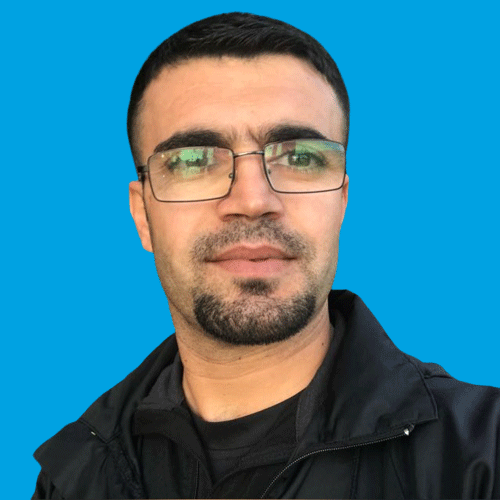
A major challenge to the peace process involves the future of the Syrian Democratic Forces, the Kurdish forces in Syria By  Kawa Hassan Stimson Center Middle East & North Africa Attempting to end the 40-year war between Turkey and the Kurdistan Workers’ Party (PKK), Devlet Bacheli, the leader of the Turkish Nationalist Movement Party (MHP), issued a surprise recommendation in October 2024 to parole long-jailed PKK leader Abdullah Ocalan — if the PKK dissolved itself and renounced violence. In response, on February 27, Ocalan called on the guerrilla movement he established in 1978 to end armed struggle and disband. In May, the PKK held an extraordinary congress at its headquarters in Qandil in Iraqi Kurdistan and on May 12, announced its dissolvement. The congress stated that the party had “achieved its historic mission” as it brought recognition of the Kurds and promoted “a democratic solution of the Kurdish issue [in Turkey].” On July 11, some 30 PKK commanders and cadres symbolically burned their weapons at a ceremony in Iraqi Kurdistan attended by Turkish and Iraqi officials and international experts. The success of the peace process is far from guaranteed. But if it leads to the end of violence and gradual recognition of Kurdish rights by Turkey, it could provide a wider path for conflict resolution in a region ravaged by zero-sum wars. Multiple developments are behind this initiative. The Kurdish electorate is an increasingly important factor in internal Turkish politics. President Recep Tayyip Erdogan, who is seeking a new term in 2028, needs Kurdish votes to strengthen his position. Meanwhile, the Israeli response to Hamas’ October 7, 2023 attack is transforming the geopolitical landscape of the Middle East. Israeli attacks against enemies have sent shock waves across the region. Erdogan and Bacheli have strongly criticized Israel, with the latter asserting that Turkey — long a critic of Israeli policies toward the Palestinians — is the “final target” of Israel’s regional strategy. The effort to resolve the conflict with the PKK can be seen in part as an attempt to prevent Israeli exploitation of the Kurdish issue. For its part, the PKK’s armed struggle ran its course years ago. Salim Çevik, a fellow at the German Institute for International and Security Affairs, told this author that Ocalan realized as early as 1993 that he could not defeat the Turkish state. Turkish military advancements including drone warfare have severely weakened PKK capacity inside Turkey. While the group retains regional influence through affiliated groups in Syria, Iran, and among the diaspora in Europe, its military impact has drastically diminished. A Kurdish analyst who is familiar with the PKK’s history and wished to remain anonymous said that the Israeli decapitation of Hamas and Hezbollah had further persuaded the PKK leadership that the era of armed struggle has ended and a new strategy is needed. Despite these hopeful signs, the prospects of a lasting deal remain uncertain. Polls suggest that most Turks oppose releasing Ocalan or giving him a prominent role in negotiations. The two sides hold two opposing narratives regarding both the problem and its solution. Joost Jongerden, an Associate Professor at Wageningen University who has studied the Kurdish issue in Turkey, said in an interview with the author that the Turkish state frames the problem as one of “terrorism” and “weapons” and talks of the need for a terror-free Turkey. The PKK sees the armed struggle as the outcome of the denial of political and cultural rights to Kurds, who make up about a fifth of Turkey’s population. Ocalan frames the process as an attempt to establish “peace and a democratic society.”  Developments of the last few months show the process is moving, albeit slowly. Özge Genç, a fellow at the Middle East Council on Global Affairs, a Qatar-based research organization, who visited Turkey recently told the author that there is significant support for the process in Ankara, particularly among high-level bureaucrats. Their view, she said, is that the ambitions of external powers to remake the region compel a fresh approach so that the Kurdish issue cannot be exploited. According to this analysis, Ocalan, who has been jailed since 1999, is the only leader with leverage to disband the PKK. In return, the Turkish state should enact laws that lead to the reintegration of PKK militants, said Urko Aiartza Azurtza, a senior advisor at the European Institute of Peace who attended the burning of weapons ceremony in Iraqi Kurdistan. So far, officials have not addressed constitutional revisions that would grant Kurds cultural, linguistic, and political rights. According to Özge Genç, these issues will be dealt with in future stages, which could facilitate the disarmament process but also make it more fragile. Cengiz Çandar, a member of the pro-Kurdish People’s Equality and Democracy Party (DEM), told the author that it will take time before these constitutional changes are adopted. Turkish and Syrian Peace Processes are Intertwined   A major challenge to the current process involves the future of the Syrian Democratic Forces (SDF), Kurdish forces in Syria, within a post-Assad Syrian state. According to Salim Çevik, the Turkish and Syrian peace processes are so intertwined that they will succeed or collapse together. Recently the PKK moved an undisclosed number of fighters from Turkey to Iraqi Kurdistan. According to Özge Genç, this was a PKK confidence-building measure meant to reassure Turkish public opinion and to enable the Turkish state to justify passing a law allowing the return of PKK militants and changes in the penal code supporting disarmament, demobilization, and reintegration into Turkish society. Mohammed Amin Penjweni, a veteran Iraqi Kurdish politician who is close to the PKK leadership, told this author that he is cautiously optimistic because Bacheli, who fiercely opposed previous initiatives, started this process. Parliament members from the MHP, Erdogan’s ruling Justice and Development Party (AKP), and DEM attended a landmark meeting with Ocalan on November 24 where, according to a report by the pro-Kurdish website Mesopotamia, Ocalan reiterated the centrality of a democratic solution to the Kurdish issue and the importance of a March 10 agreement between the SDF and Damascus that calls for the integration of SDF-controlled entities into Syrian state institutions, recognizes Kurds as an integral part of Syrian society for the first time, and authorizes the return of displaced people including Kurds to their places of origin. He also reportedly said there would be no integration of the SDF into a new Syrian army without democracy. In an interview with WelatTV, a Kurdish expert said Mazlum Abdi, the SDF commander, and Ilham Ahmed, co-chair of foreign relations of the Syrian Democratic Council (SDC), the SDF’s political wing, will meet Ocalan in January to reach an agreement that will complement the March 10 understanding. Turkey would then release Ocalan into house arrest and pass new laws enshrining Kurdish rights and amnesty for PKK members. The author could not verify this information. However, last month Abdi expressed his willingness to visit Turkey and meet Ocalan in order to help implement the March agreement. Highlighting the link between the situation in Northeast Syria and the peace process in Turkey, he said that a ceasefire between the SDF and the Turkish army was holding thanks to the negotiations between Turkey and Ocalan. An expert in Northeast Syria who wished to remain anonymous said that Abdi and Ahmad had already had a video call with Ocalan under the supervision of Turkish authorities, but no details were available about what was discussed. Despite being in prison for decades, Ocalan remains a charismatic leader, and Turkey has a unique opportunity to reach a historic agreement with the PKK while Ocalan, 77, is alive. If the process is successful, history will remember Ocalan for both founding and disbanding the PKK, substituting armed struggle with soft power through engagement in democratic, peaceful politics. A recent Reuters report gained access to the transcript of a video call between Ocalan and PKK leaders in Iraqi Kurdistan in May. PKK commanders reportedly voiced suspicions about the seriousness of the Turkish government to implement reforms but acknowledged Ocalan’s leadership and agreed to disarm. Some analysts view Ocalan’s decision to disband the PKK as a recognition that he and his comrades “threw their lives away in vain.” But for many Kurds who are tired of decades of war and destruction, the PKK action reflects Kurdish success and agency in pushing Turkey to accept Kurdish reality. More than 40,000 people have died in the war between Turkey and the PKK. The war also led to hundreds of deaths and destruction of environment and livelihoods in Iraqi Kurdistan. Kurds in Iraq hope a successful peace process will lead to the end of fighting between the Turkish Army and the PKK so they can start reconstruction and development of the destroyed territories. However, if the PKK leaves Qandil, it remains unclear who would control this strategic mountain and whether it will become the object of a power struggle between rival Iraqi Kurdish parties. Syrian Kurds emphasize the need for self-protection against Islamist factions in the post-Assad army as well as the uncertain future of Syria’s transition and the lack of constitutional guarantees of Kurdish rights and the nature of Kurdish integration into the Syrian state. Due to these factors, Ocalan reportedly told Kurdish politicians that the future of Syrian Kurdistan is a red line for him. Shocked by the massacres of Alawites in coastal areas in March and in the southern province of Suwayada, as well as sectarian incitement against Kurds, even some Syrian Kurdish opponents of the SDF have rejected calls for the organization to disarm, according to a Syrian Kurd who is critical of the PKK and SDF and asked to remain anonymous. Should the situation in Northeast Syria deteriorate into a new war, Kurds throughout the region are likely to mobilize, increasing instability and producing new waves of refugees as well as dooming the PKK-Turkey talks. The killing of three Americans on December 13 in central Syria by an ISIS gunman could increase pressure on the Trump administration to withdraw its small force from Syria, further threatening the Kurds and the U.S. partnership with the SDF. At the same time, the U.S. is the only power with strong relations with and leverage over Turkey, the new Syrian government, and the SDF. Given the Jihadi Salafi roots of the new rulers of Syria and the secular nature of Kurdish society, Syrian Kurds are well suited to partner with other minority communities who share their vision of a united, decentralized, non-sectarian Syrian state.  However, regional and international players appear to support consolidation of the interim Syrian government despite its lack of a truly inclusive national dialogue. These actors appear more concerned with blunting Iranian influence, repatriating Syrian refugees, and gaining reconstruction contracts. However, the only way to reunite the country is through decentralization — or violent repression. Therefore, regional and international actors should exert pressure on the interim government to initiate a meaningful, inclusive dialogue, including with Syrian Kurds. This way, Kurdish soft power could play a historic role in building an inclusive, post-Assad Syrian state. Kurdish Paradox: Remarkable Resilience, Destructive Disunity Over the past hundred years, Kurds — the world’s largest ethnic group without its own nation-state — have shown remarkable resilience in resisting repression and even genocide. But deep divisions have prevented the emergence of a common vision and led to internecine fights among Kurdish political parties in Iraq, Iran, and Turkey.  Iraqi Kurdistan held parliamentary elections in October 2024, but the two main parties have yet to form a government due to disagreements over cabinet posts. Drone and missile attacks against critical oil and gas infrastructure by Iran and Iranian proxies have further exposed the vulnerability of the Kurdistan region in Iraq and weakened the power of the regional government vis-à-vis Baghdad. The Iraqi Kurdish Peshmerga played a key role in the fight against ISIS 10 years ago but lack of political will in the two ruling parties to unify their forces damages the soft power and agency of Iraqi Kurds. During the Syrian civil war, Kurdish forces performed an existential role in protecting their areas from the Assad regime, Islamist opposition groups, and ISIS. While the Kurdish-led autonomous administration shares power in relation to local services, meaningful decision making also remains in SDF hands, as Rana Khalaf, a fellow with the Center for Syria Studies at the University of St. Andrews, told the author. Ocalan’s decision to disband the PKK is a once in a century opportunity to bring peace to Turkey and address the Kurdish question. However, success is far from guaranteed. As sub-state actors, Kurds can capitalize on the opportunities generated by post-October 7 dynamics to advance their rights and contribute to regional stability and security. The events that followed the Iraqi invasion of Kuwait in 1990 are a case in point. The US-led operation liberated Kuwait and obliterated the Iraqi army. Kurds rose up against Saddam Hussein and saw their uprising initially crushed, but international outcry over the suffering of Kurdish refugees led to Western humanitarian intervention and ultimately the establishment of no-fly zone and Kurdish self-governance.   The Syrian uprising of 2011 and the war against ISIS were also watershed events. Thanks to the PKK’s military experience and networks in Kurdish-majority areas in Syria, Kurdish forces supported by the U.S. proved to be an organized and disciplined force that fought and helped defeat ISIS. Given the geopolitical importance of various parts of Kurdistan, Kurdish political and social agency could be a force for regional stability and security. But to have this impact, Kurdish administrations in Iraq and Syria need to provide a peaceful and inclusive governance model for themselves and other communities. Kurdish leaders have a historic responsibility to develop and implement a pragmatic strategy that strikes a delicate balance between maximalist demands and a step-by-step solution of the Kurdish question in the countries where 30-40 million Kurds live, and the U.S., Europe, and regional states have a strategic interest in supporting the peace process in Turkey and helping to find common ground between Damascus and the SDF on the implementation of the March 10 agreement. 

Read more

The Middle East in U.S. National Strategy

The National Security Strategy of the United States was published and signed by U.S. President Donald Trump. The Middle East is addressed in the U.S. national strategy as follows: Our partners in the Middle East demonstrate their commitment to confronting terrorism and extremism, and the United States must encourage this direction. The United States must compel these states (especially the Gulf monarchies) to abandon their traditional and historical forms of governance. The key to a successful relationship with the Middle East lies in accepting the region, its leaders, and its nations as they are, while working together on areas of shared interest. It is in the interest of the United States that the Gulf’s energy resources do not fall into the hands of a hostile adversary. The region must not become a supporter, promoter, or exporter of terrorism against U.S. interests, and Israel must remain protected. National Security Strategy of the United States

Read more

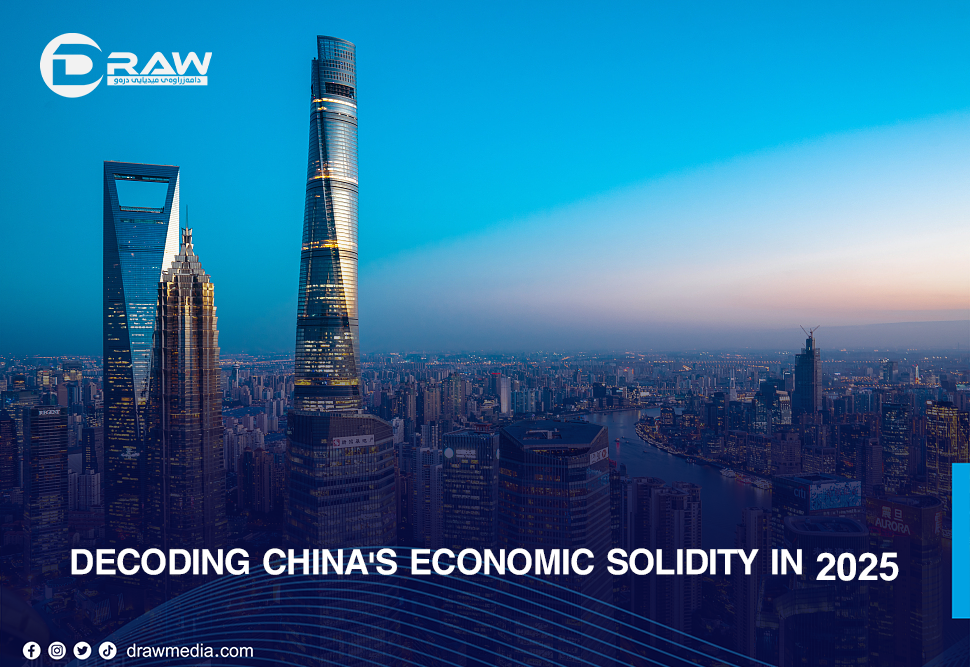
Decoding China's economic solidity in 2025

By Mei Xing | chinadaily Despite the headwinds facing the world economy, the International Monetary Fund (IMF) recently raised its global growth forecast for 2025, including a notable upward revision for China. Indeed, China's economic performance in the first half of this year exceeded expectations: Its GDP grew by 5.3 percent year-on-year — 0.3 percentage points faster than the 2024 pace. Key economic indicators remained stable: unemployment and prices held steady, high-tech output jumped by 9.5 percent, and consumption contributed 52 percent of growth. Given the challenging external conditions, what explains the resilience of the Chinese economy? The following three reasons deserve closer examination: New-quality productive forces: underpinning industrial upgrading China's sustained efforts to boost innovation and develop new-quality productive forces are paying off. In the first half of 2025, value-added output in high-tech industries grew by 9.5 percent, accounting for nearly a quarter of large-scale industrial expansion. High-tech goods exports increased by 9.2 percent, while cross-border e-commerce reached RMB 1.32 trillion yuan (up 5.7 percent) and total services trade hit RMB 3.89 trillion yuan (up 8.0 percent). These developments highlight innovation as the primary driver of China's economic growth and export diversification. Stronger domestic demand: tapping internal source of growth China has been strengthening home-grown drivers of growth, particularly by shifting toward consumption-led expansion. Its RMB 69 billion yuan (about US$9.5 billion) trade-in subsidy program for home appliances and electronics has generated RMB 2.9 trillion yuan in sales, benefiting some 400 million consumers. The monthly RMB 300-yuan childcare allowances and support for eldercare, tourism and household services have helped push service spending up by an annual average of 9.6 percent. As a result, domestic demand accounted for 68.8 percent of GDP growth in the first half of 2025, with final consumer spending alone contributing 52 percent—outperforming net exports. Reform dividends: improving the business environment China has placed greater emphasis on supporting the private sector: In May 2025, the Private Economy Promotion Law—China's first basic statute dedicated to private business—took effect, establishing clear rules for fair competition, easier investment and stronger innovation support. In February, the government introduced "20 Measures to Stabilize Foreign Investment" to encourage and support foreign-invested companies in China. In March, the People's Bank of China, together with the new National Financial Regulatory Administration and the securities regulator, rolled out 25 financial measures for the private sector, encouraging banks to increase lending and underwrite more bonds for privately owned firms. Major banks such as ICBC pledged at least RMB 6 trillion yuan (about US$830 billion) in new credit over the next three years. Since June, regulators have raised first-loan ceilings to RMB 50 million yuan for private companies, eased bad-loan tolerances, and expanded state guarantees. In August, new guidelines were launched that created a "green channel" to fast-track approvals for key private firms in strategic sectors like semiconductors and advanced materials, streamlining listings, mergers and acquisitions, and bond approvals. These reforms have boosted private sector activity: In the first half of 2025, private industrial output rose by 6.7 percent year-on-year, private investment (excluding real estate) grew by 5.1 percent, and hospitality and infrastructure sectors saw growth exceeding 9 percent, indicating a notable uptick in the growth momentum of the private sector. During the first six months of this year, more than 30,000 new foreign-invested companies were set up, 11.7 percent more than the same period of last year; actual investment in China from Switzerland, Japan, the United Kingdom, Germany, and South Korea rose by 68.6 percent, 59.1 percent, 37.6 percent, 6.3 percent, and 2.7 percent, respectively, demonstrating China's continued appeal for foreign companies. The Chinese economy's resilience and potential have gained recognition from the international business community. Edinburgh-based asset manager Baillie Gifford, which oversees about £210 billion, recently published a number of reports highlighting why China remains attractive to global investors. As the firm noted, the key question is "whether fear of China's challenges should be balanced against the fear of missing out on the long-term opportunities it offers." The author is an observer of international affairs. The views don't necessarily reflect those of China Daily.

Read more

Iran Privately Informed of Upcoming U.S. Strikes

"This strike is one-time only... We don't want a broader conflict." 🔻 American bombers dropped six 13.6-ton bombs on the Fordow facility "Natanz and Isfahan facilities were struck with 30 Tomahawk missiles." Source: Amwaj Media reveals that Iran had received prior warning through a special communication channel with the United States, indicating Washington's attempt to prevent escalation. According to the source, Trump may be trying to replicate the symbolic Iranian ballistic missile attack on U.S. bases in Iraq in response to the January 2020 killing of Qasem Soleimani, the commander of the Quds Force. Amwaj Media emphasizes: the U.S. bombing did not originate from any American military base in the region. Reports suggest that at least three B-2 bombers flew from the U.S. and dropped six 13.6-ton (30,000-pound) bunker-busting bombs on Iran’s underground uranium enrichment site in Fordow. Experts say two bombs were dropped on each of the two main entrances of the Fordow site, along with two additional deep-penetrating bombs aimed at the site’s air ventilation system. At the same time, U.S. submarines launched 30 Tomahawk missiles targeting the uranium enrichment facility in Natanz and the nuclear complex in Isfahan—both of which had been struck by Israel in recent days. CBS News quoted a knowledgeable source stating that Isfahan and its underground facilities might have been a more strategic target than Fordow.

Read more

So far, 646 people have been killed in Iran

According to a special report by the Hengaw Organization for Human Rights, in the past seven days of the ongoing war between Iran and Israel, 646 people have been killed. Among them, 560 were members of Iran’s military and security forces, and 86 were civilians, including 35 women and 21 children. Hengaw's Seventh Human Rights Report Based on credible and verified on-the-ground sources across Iran, Hengaw confirms that during the first seven days of direct conflict between the Islamic Republic of Iran and Israel, at least 646 people have lost their lives. Of this number, 86 were civilians, while 560 were from military, security, and affiliated institutions, particularly linked to the IRGC (Islamic Revolutionary Guard Corps) and associated military networks. Hengaw also verified the deaths of at least 35 women and 21 children among the civilian casualties. Over 85% of these civilian deaths were recorded in Tehran province. 86 Civilian Deaths in the First Week of War According to the statistical center of Hengaw, at least 86 civilians were killed due to Israeli strikes, with the identities of 83 already confirmed. These included 35 women and 21 children. Notably, one of the victims was a citizen of Afghanistan. Additionally, Hengaw reports that at least 26 of the civilian victims belonged to families of high-ranking members and cadres of the IRGC. Breakdown of Civilian Deaths by Province: Tehran Province: 73 cases Isfahan Province: 5 cases Hamedan Province: 4 cases Kermanshah Province: 2 cases East Azerbaijan Province: 2 cases Deaths of At Least 21 Children Hengaw confirms that at least 21 children were killed in Israeli airstrikes targeting Tehran and Isfahan provinces. These included 11 girls and 10 boys, with the youngest victims being 2 and 7 months old, and the oldest being 17 years old. Identified child victims include: Rayan Qasemian – 2 months Zahra Zakarian Amiri – 7 months Amir Ali Amini – 12 years Parham Abbasi – 15 years Fatemeh Zakarian Amiri – 5 years Baran Ashrafi – under 15 years Mahya Nikzad – 7 years Soheil Katouli – 11 years Eima Zeynali – 7 years Hida Zeynali – 4 years Motahhareh Niyazmand – 6 years Ali Niyazmand – 10 years Fatemeh Niyazmand – 12 years Mohammadreza Sedighi Saber – 17 years Matin Safaeiyan – 16 years Zahra Barzegari – 3 years Tara Hajimiri – 8 years Mojtaba Sharifi – 7 years Fatemeh Sharifi – 11 years Seyed Ali Sadati – 6 years Reyhaneh Sadat Sadati – 12 years Deaths of 35 Women, Including Two IRGC Members As of the time of this report, the identities of 35 women killed have been confirmed by Hengaw, all in Tehran and Isfahan provinces. Among them were Fatemeh Bagheri and Elham Farahmand, both members of the IRGC, while the remaining 33 were civilians. Deaths of 560 Military Personnel Across Iran Starting in the early hours of Friday, June 13, 2025, coinciding with the beginning of direct Israeli air and missile attacks on Iran, the number of military casualties surged dramatically. Hengaw's verified sources confirm that at least 560 members of the army, IRGC, law enforcement, Basij, nuclear scientists, and technical staff affiliated with security organizations have been killed. So far, 211 identities of these military personnel have been publicly confirmed by Hengaw. The highest military death tolls have been reported in the provinces of Tehran, East Azerbaijan, Kermanshah, Qom, and Isfahan. Breakdown of Military Deaths by Province: Tehran Province: 235 cases East Azerbaijan Province: 63 cases Kermanshah Province: 50 cases Qom Province: 40 cases Lorestan Province: 35 cases Isfahan Province: 40 cases Urmia Province: 20 cases Alborz Province: 20 cases Zanjan Province: 15 cases Hamedan Province: 12 cases Khuzestan Province: 9 cases Sanandaj Province: 5 cases Markazi Province: 10 cases Fars Province: 6 cases In Tehran Province, the main target of Israel’s military campaign, at least 235 military personnel were killed. Among them, 61 identities have been confirmed, including 10 senior IRGC commanders, 11 nuclear scientists, and 2 government-affiliated appointees linked to the IRGC. Hengaw Human Rights Organization strongly condemns the targeting and killing of civilians and the escalation of violence between Iran and Israel. It calls upon the international community and human rights organizations to prioritize the urgent humanitarian situation in Iran and take concrete measures to protect civilians — particularly women and children — during this ongoing conflict.    

Read more

Sanctions Lifted, PKK Disbands, and the Quiet Oil Play in Syria

In a flurry of coordinated geopolitical maneuvers, the United States has lifted key sanctions on Syria while positioning itself as the broker in a historic normalization process between Syria and Israel. At the same time, Turkey’s Erdogan is getting a trade-off, with the Kurdistan Workers' Party (PKK) vowing to disband, ending a decades-long insurgency. Not exactly peace, it’s a solid and very layered quid pro quo in a complicated regional alignment game. It was a pretty tidy sequence of events. The PKK’s sudden dissolution hands Erdogan a massive domestic and strategic win, clearing the way for Turkey to deepen its presence in northern Syria without the political and military liability of Kurdish resistance. (Erdogan needs the win right now to distract from his jailing of his key political rival). Washington gets to sell the narrative of peace-building while loosening Assad’s isolation just enough to open reconstruction and energy channels (which will bear the corporate footprint of Turkey and the U.S.). Israel is quietly cooperating, likely in exchange for security guarantees and a bigger strategic say in Syria’s post-war infrastructure buildout. Energy is at the center of the big reordering. Turkish companies (TPAO and Botas) will be eyeing gas fields and pipeline routes that were previously inaccessible thanks to a Kurdish buffer. With the PKK out of the way, those corridors are suddenly in play. Israeli infrastructure and defense firms could also find themselves beneficiaries of any new commercial framework with Syria. For U.S. firms, the easing of sanctions opens the door to re-enter the Syrian market under the cover of energy-linked projects. The Pentagon gets stability, Ankara gets access, Tel Aviv gets quiet borders—and American companies get a seat at the table. That’s the intention, at least. (And the UAE is in there, as well, with an $800M deal to develop Syria’s port at Tartous). And as for the PKK? It didn’t just dissolve out of goodwill—it’s getting something in return, even if that is not yet clear. While “integration” and “amnesty” are the stated incentives of the deal, there will be more to it, and we will be looking for clues as to this particular quid pro quo. By oil price

Read more

PKK holds 12th Conference, outcomes to announced later

The Kurdistan Workers' Party (PKK) has announced the convening of its 12th Conference during the current month of May and stated that the outcomes will be announced in the coming period. In a public statement published by the Firat News Agency (ANF), the PKK declared that its 12th Conference was held between May 5th and 7th. The statement noted that the conference took place at two different locations within the Medya defense areas in South Kurdistan and that the results will be shared soon. The statement reads: "The 12th Conference of the Kurdistan Workers’ Party (PKK) was successfully held in the Medya defense areas from May 5 to 7. The Conference was held simultaneously in two different locations, with the participation of representatives and delegates from all regions where the party operates. The Conference was convened based on a call from Leader Abdullah Ocalan. A tribute was paid to Leader Apo with great longing and respect, and the views and proposals he presented for the Conference were read and evaluated. The summary report of the PKK Central Committee was also read and discussed during the Conference. In this context, the 12th Conference of the Kurdistan Workers’ Party made historically significant decisions regarding the party’s work, based on Leader Apo’s call. The participants commemorated the Month of Martyrs and all heroic martyrs who sacrificed their lives over 52 years of historic struggle with respect, love, and gratitude. The Conference called on our people and all democratic socialist forces to properly honor and commemorate our martyrs, embracing the democratic and national values of the great 52-year struggle. They also remembered Martyr Sirri Sureyya Onder with respect and gratitude, one of the individuals who made great efforts in organizing the Conference, and called on everyone to work together to achieve the goals of peace and a democratic society for this precious person who was a comrade of Leader Apo for 12 years. The results of the 12th PKK Conference and comprehensive, detailed information and documents regarding the decisions taken will be shared with the public in the very near future, once the results from the two locations are consolidated. On the same basis, we once again commemorate all our heroic martyrs with respect and gratitude in the name of our great first martyr, comrade Haki Karer, and we call on our people and democratic friends to remember our heroic martyrs everywhere and to escalate the struggle even further for the physical freedom of Leader Apo. Martyrs are immortal Long live Leader Apo"

Read more

Where Does PJAK Fit into the Peace Process?

Does Arming the PKK Extend to PJAK? Why Is Turkey Silent on PJAK? Analytical Report by Hemn Khoshnaw As discussions around the dissolution and disarmament of the Kurdistan Workers' Party (PKK) gain momentum, a critical question remains unanswered: What is the future of the Kurdistan Free Life Party (PJAK)? Notably, Turkey has maintained a conspicuous silence on this issue. Despite being a significant actor in the Kurdish militant landscape, PJAK appears absent from the agendas of Turkish, Iranian, regional, and international stakeholders. This silence raises questions about whether the group is being deliberately overlooked or strategically sidelined. PJAK, widely regarded as the Iranian and East Kurdistan wing of the PKK, was officially founded on April 4, 2004. The organization maintains its own armed forces under the banner of the East Kurdistan Units (YRK). These units are active in various regions of East Kurdistan (Iranian Kurdistan) as well as in the mountainous stronghold of Kandil. Since its formation in 2004, PJAK has engaged in repeated armed confrontations with Iranian security forces, resulting in casualties on both sides. One of the most significant escalations occurred in the summer of 2011, when the Iranian military launched a large-scale offensive targeting the Kandil Mountains—an operation bolstered by artillery fire and military helicopters. The campaign led to the bombing and destruction of several villages and areas within the Kurdistan Region, drawing regional concern. The hostilities persisted until September 29, 2011, when both parties reached a negotiated agreement, culminating in the declaration of a ceasefire. While the truce has largely held, intermittent skirmishes have continued to flare between PJAK guerrillas and Iranian forces. These encounters have typically been limited in scope and characterized by sudden, small-scale clashes rather than sustained conflict. PJAK, currently under the leadership of co-chairs Amir Karimi and Payman Viyan, remains an active member of the Kurdistan Communities Union (Koma Civakên Kurdistanê, KCK). This umbrella organization encompasses several Kurdish political parties and affiliated groups operating across the region. Like other KCK constituents, PJAK considers Abdullah Öcalan—the imprisoned leader of the PKK—as its primary ideological and political reference, or marja'i. Following the collapse of Turkey’s Kurdish peace process on July 22, 2015, the Turkish military significantly curtailed the ability of Kurdish youth from Northern Kurdistan to join the ranks of the PKK. This shift contributed to a noticeable rise in the number of guerrilla fighters originating from Eastern Kurdistan within the PKK structure. Current estimates suggest that youth from the east now constitute approximately 35% of the overall military forces within the broader KCK framework. In this context, PJAK has evolved into a key component of the KCK’s military, political, economic, social, organizational, and diplomatic capital. Any stakeholder engaging with the Kurdish question must now take PJAK into serious consideration as an integral force within this complex landscape. The renewed dialogue process between İmralı and the Turkish government, initiated in October 2024, centers on the dissolution and disarmament of the PKK. Yet, the deliberate strategy of withholding information—particularly concerning PJAK—casts a shadow over the transparency of the talks. This lack of clarity compels observers to interpret PJAK’s potential future role through the lens of Abdullah Öcalan’s earlier statements, as no direct disclosures have been made regarding the group’s position within the evolving negotiations. In 2008, Abdullah Öcalan, through his legal representatives, issued a warning to the PKK leadership in Kandil concerning Iran’s apprehensions over the withdrawal of PKK forces from Turkey into the Kurdistan Region. He cautioned that Iran might attempt to undermine the process. Later, during the 2013 phase of his political engagement—often referred to as the Öcalan treatment process—he spoke more explicitly about Iran’s potential role, expressing concern that Tehran could initiate armed actions against Turkey and attribute them to the PKK, thereby sabotaging the peace efforts. To preempt such scenarios, Öcalan urged the leadership in Kandil to remain vigilant. “The only way to prevent Iran is for the PJAK to increase its forces to 40,000,” Öcalan stated. The significance of this remark lies more in its political implication than its logistical feasibility. Nevertheless, it offers a crucial lens for understanding the current, largely opaque dynamics surrounding PJAK’s role in the region. Another dimension that reveals how both the Turkish state and Abdullah Öcalan perceive PJAK lies in the broader international context. The ongoing war in Ukraine, developments in Syria and Lebanon, Israel’s involvement in regional affairs, India’s tensions with Pakistan, and the strategic maneuvers of the U.S. administration all influence the shaping of PJAK’s fate and future agenda. This complex geopolitical landscape presents Turkey with a chance to elevate its regional role. However, when assessed through a comparative lens, the balance tilts more toward “anti-opportunities” than actual advantages for Ankara. These counter-opportunities have increasingly positioned Turkey at odds with many of its NATO allies, intensifying geopolitical pressure on multiple fronts. Within the framework of ongoing dialogue between Abdullah Öcalan and the Turkish state, there appears to be consensus regarding the strategic strength and influence the PKK has amassed within the broader Middle Eastern balance of power. Iran—Turkey’s long-standing regional and historical rival—represents a critical geopolitical arena where the PKK holds significant political, military, social, and diplomatic leverage. In recent years, Iranian and Turkish interests have visibly clashed in the South Caucasus, particularly in the context of the Azerbaijan-Armenia conflict. The current regional and international conditions surrounding Iran offer Turkey a strategic opening to consolidate and expand its influence—potentially at Iran’s expense—amid shifting alliances and renewed regional rivalries. Against this backdrop, the agreement between Öcalan and Turkey carries an unmistakable Iranian dimension. This aspect, in turn, is among the driving factors pulling Turkey into renewed negotiations with both Öcalan and the PKK leadership. Between 2011 and 2025, amid a series of overlapping regional crises, key actors involved in the Syrian conflict sought to exploit the shifting dynamics in Libya to recalibrate their strategic agendas in Syria. Developments in Libya consistently reverberated across the Syrian landscape, influencing decision-making and battlefield outcomes. Today, it has become increasingly apparent that Turkey aims to draw on the lessons learned from over a decade of entanglement in Syria. Leveraging its accumulated experience, Ankara appears intent on avoiding the strategic missteps it encountered during the Syrian crisis as it navigates the unfolding challenges related to Iran. In recent years, amid the ongoing Syrian conflict, the Kurdish population has emerged as a pivotal force in shaping the country’s power dynamics. Turkey’s persistent interference in Syria’s internal affairs—coupled with its antagonistic stance toward the Kurds—has effectively kept Syrian Kurds beyond the scope of Ankara’s strategic influence. Previously, during the U.S.-led intervention in Iraq, the Kurds secured a significant foothold that caught Turkey off guard and recalibrated regional power equations. Simultaneously, the unwavering push by Israeli Prime Minister Benjamin Netanyahu to drive change within Iran has compelled Turkey to formulate its own contingency strategies for potential developments across its eastern neighbor’s borders. These various factors have led Turkey to prioritize the urgent formulation of its agenda regarding Iran. This sense of urgency may explain the swift actions taken by Turkish leaders to convene the PKK congress, where they decided to initiate the process of dissolution and disarmament. It has become increasingly clear to Ankara that its strategic objectives in Iran cannot be realized without engaging in cooperation with PJAK. Why does Turkey need PJAK?  In 2015, the Kurdistan Democratic Party of Iran (KDPI) and other Kurdish factions attempted to reclaim their influence in East Kurdistan through the Rasan campaign, aiming to curb PJAK’s military and popular expansion. The Keleshin highland pastures incident that year was part of a covert operation orchestrated by the Turkish state as part of the Rasan campaign. Media outlets linked to the KDPI, and to a lesser extent Komala ahmetkeshan, later confirmed Turkey’s involvement in the campaign. However, the failure of the campaign, coupled with the ineffectiveness of the eastern Kurdish parties, prompted Turkey to reconsider its strategy and turn to a more viable alternative—PJAK. Around this time, Israel also sent a subtle message to Iran's Kurdish factions, signaling that significant changes were imminent in Iran that summer. Israel implied that the Kurdish role in these changes would be both influential and decisive. What does Turkey want from PJAK? While the PKK has yet to convene a congress to dissolve and disarm, it is evident that the process has reached a standstill. The reasons behind this impasse remain unclear. However, it is apparent that Kandil remains resolute in its position: if Abdullah Öcalan is not permitted to preside over the congress, no steps will be taken toward disbandment or disarmament.   In the event that a congress is held and a decision is made to renounce armed struggle, not all guerrilla fighters are expected to disarm—at least not until the peace process is fully realized. It remains difficult to compel all fighters to lay down arms and transition into legal political work. As such, there must be a mechanism or platform to absorb and accommodate them, and the most viable platform appears to be PJAK. However, such a transition will not occur automatically. The agreement between Abdullah Öcalan and the Turkish state must be comprehensive. Any forces relocated under the PJAK umbrella must not function as anti-Turkish elements. Turkey is counting on PJAK. Moreover, positioning PJAK in this role would serve to block the Kurdish movement from falling into Israel's sphere of influence should a political transformation occur in Iran. Through this plan, Turkey aims to secure leverage over the Kurdish file in Iran—an objective that can only be realized if PJAK is incorporated into the framework of the Öcalan–Turkey agreement. It appears that Turkey has detected Israel’s subtle message to Kurdish factions in East Kurdistan and, in response, is determined not to repeat the Syrian scenario by allowing Kurds to emerge as an adversarial force in Iran. In a telephone interview with a Kurdish journalist in Turkey closely following the resolution process, I asked about the state’s vision for PJAK. “Turkey expects PJAK to play a role similar to that of the so-called Syrian National Army militias—but within Iran,” the journalist said. Iran Will Not Remain Passive Since 2008, Iranian authorities have viewed the peace process between Turkey and the PKK with increasing alarm, fearing its potential geopolitical repercussions for Iran. These concerns intensified in 2013, when PKK guerrilla forces began withdrawing from North Kurdistan toward the Iranian border areas—a shift Tehran perceived as a direct threat. That summer, Iran held a series of high-level meetings with senior figures from the PKK, the Patriotic Union of Kurdistan (PUK), and the Kurdistan Democratic Party (KDP). During the meetings, Iranian officials voiced their apprehension over the growing concentration of guerrilla forces near their frontier and questioned the implications of a possible Öcalan-Turkey agreement. “If Öcalan strikes a deal with Turkey, is there anyone who can stop PJAK?” Iranian representatives asked pointedly. The discussions turned tense, with friction between Iranian officials and representatives from Kandil surfacing clearly. Iran’s perceived threat from PJAK is not a superficial one, but rather rooted in a longstanding geopolitical rivalry between Tehran and Ankara. In this strategic context, if a figure like Öcalan—known for his pragmatic maneuvering—were to wield control over PJAK, it could potentially smooth the path for a comprehensive agreement with Turkey. As a dominant regional power, Iran has clearly grasped Turkey's strategic intentions. The election of Massoud Pezeshkian's government appears to be a calculated response to anticipated regional and international maneuvers involving Kurdish dynamics. Shortly after the peace treatment process between Öcalan and Turkey resumed, Pezeshkian’s administration made a symbolic yet significant move: it called on parliament to implement Article 15 of the Iranian constitution, which allows for education in unofficial languages. Although the initial bill failed to secure enough parliamentary support, Pezeshkian and his allies remain committed. They are now working on revising the bill's language with the intention of resubmitting it for a new vote. On March 4, 2025, government spokeswoman Fatemeh Mahajerani announced that a draft law had been submitted to grant official recognition to non-Persian languages.This push reflects more than just a domestic policy shift. Pezeshkian’s efforts aim to prevent Iran from becoming isolated in the region as the only country clashing with its Kurdish population. Strategically, it is an attempt to neutralize the Kurdish card and prevent it from falling into the hands of regional rivals such as Turkey—or even outside powers like Israel. If the disarmament of the PKK moves forward alongside constitutional reforms in Turkey over the next three to four years, the role and strategic importance of the PJAK (Party for a Free Life in Kurdistan) is poised to expand more than ever before. However, the current sluggish pace of the process raises serious doubts about the PKK fully severing its ties with Iran. With the resumption of the peace dialogue between Abdullah Öcalan and the Turkish state, it is now almost inevitable that Iran and the PKK leadership in Qandil will engage in renewed talks. Such dialogue would serve a dual purpose: easing Iran’s security concerns and enabling the PKK to position itself pragmatically for the shifting political dynamics ahead. Turkey’s evolving strategy toward PJAK remains tightly bound to the position of the PKK leadership in Kandil. Any rupture in relations between Kandil and Tehran would effectively signal a strategic gamble by the PKK—placing all its leverage in Ankara’s hands, a move that appears untenable under current conditions. Without robust legal and political guarantees from Turkey, it is unlikely the PKK would risk activating PJAK in a way that compromises its Iranian front, potentially triggering new crises and undermining its broader regional standing.      

Read more

US 'reciprocal tariff' is an old habit that dies hard

By Shao Xia | chinadaily.com.cn   Once again, the US Administration imposed sweeping tariffs on the world — even targeting some poor penguins. Many around the world were stunned, with some US allies protesting, "This is no way to treat friends." Yet America's habit of imposing tariffs is nothing new. Over a century ago, the United States had its own "Tariff Man," who not only levied tariffs but also pursued policies that have parallels with those seen today. A tariff-obsessed president William McKinley, the 25th President of the United States, is a controversial figure in American history. During his presidency, the US experienced "The Gilded Age," an era marked by rapid industrial growth as well as significant social inequalities. He campaigned with the slogan "Prosperity at Home, Prestige Abroad" and declared himself "Tariff Man".  As a congressman, he was a staunch advocate of tariff. The McKinley Tariff Act of 1890, named after him, raised average US tariffs from 38 percent to 49.5 percent. Later, as president, he signed the Dingley Tariff Act in 1897, pushing rates to 52 percent under the guise of "protecting American workers and products". Industrial capitalists adored him. Under tariffs, foreign goods became uncompetitive, allowing some US industrial giants to monopolize domestic markets. Protected by a 70 percent tariff, American tinplate production expanded rapidly, capturing over 60 percent of the domestic market by 1895. But workers and farmers despised him. Tariffs inflated living costs, pushing US consumer prices 35 percent higher than Europe's. Retaliatory tariffs crushed agricultural exports, slashing farmers' incomes. Between 1897 and 1904, the labor movement saw a stunning 17,000 strikes involving four million workers. The old playbook For quite a long time, McKinley was a forgotten president, until the current US administration began to hype up his presidency for its own purposes. Today's US administration openly shows admiration for McKinley. It restored the name "Mount McKinley" to "dutifully recognize his historic legacy of protecting America's interests and generating enormous wealth for all Americans."  The administration's slogan — "The Golden Age of America" — reminds people of "The Gilded Age." After announcing "reciprocal tariffs," the administration even claimed high tariffs "could have prevented the Great Depression". The mimicry extends beyond tariffs. McKinley launched the Spanish-American War, seized colonies like Cuba and the Philippines, threatened Hawaii with tariffs, and pushed for a Latin American canal. The new administration, meanwhile, vows to "not rule out military force to take Greenland," threatens an annexation of Canada, and demands control of the Panama Canal. In McKinley's time, the US government was relatively small, with federal spending accounting for less than three percent of GDP. His administration relied on the alliance with industrial capitalists. Today's administration, through the Department of Government Efficiency (DOGE), plans to slash US$2 trillion in federal spending while aiming to build alliances with tech capitalists, mirroring McKinley's approach. Learning the right lesson Clearly, the US is replaying its 19th-century playbook, hoping to solve modern crises with outdated strategies. But the world — and America itself — has changed. Repeating past errors won't secure the future. It only leads to more problems. If history is any guide, tariffs are never the foundation of prosperity, but threats to prosperity. What McKinley's 19th-century "boom" actually relied on was technology, capital, and labor growth — not tariffs. History also offers a stark lesson: the Smoot-Hawley Tariff Act of 1930 slapped tariffs on more than 2,000 products, raising average rates to 60 percent. The result? US trade plummeted 67 percent, and global trade collapsed by 66 percent in just four years. The damage of the Smoot-Hawley Tariff Act of 1930 was so severe that 50 years later, Ronald Reagan provided a cautionary tale: "There are those in the Congress, just as there were back in the 1930s, who want to go for the quick political advantage, who risk America's prosperity for the sake of a short-term appeal to some special interest group". He succinctly pointed out the logic and impact of tariffs: They might seem appealing initially, but they ultimately lead to economic devastation. The new administration believes that tariffs that "nurtured" 19th-century industry can also bring about 21st-century manufacturing "reshoring." But we should remember one thing: tariffs in the 1890s were aimed at bolstering the rising industries and companies in the US, not attracting manufacturing from other countries or creating new industrial chains from zero. US today Today, US manufacturing is in a totally different position compared to 100 years ago. It is hollowed out: skilled workers are scarce, infrastructure is crumbling, and supply chains are broken. Decades of financialization have overvalued the dollar, making US production costs uncompetitive. Without cost advantages or reliable infrastructure, tariffs for "reshoring" would only yield two outcomes: slow,expensive production and no market — domestic or global. US Commerce Secretary Luttnick claimed "An army of millions will build iPhones in the US". If the US attempts to do so, it can surely be achieved. But if the costs of producing an iPhone were to double or rise even higher as a result, who would be willing to buy it? And while consumers might skip an iPhone, they can't skip expensive food or other daily essentials made in the US, as the tariffs choke off cheap imports. The world has moved on since McKinley's time. In the 19th century, America could thrive as an isolated industrial power. Today's global economy is interconnected. By dismantling the global trading system which was built by the Americans but deemed "unfair" by some Americans, the US risks global isolation, losing moral authority, and ultimately, dollar hegemony. As International Chamber of Commerce Secretary General John Denton noted, "only 13 percent of global trade issues from the US". The world would suffer without America, but America alone is not in a position to disrupt the global trade order and threaten the whole world. If the US truly seeks a "Golden Age," it must choose wisely: cling to the outdated history and repeat past failures, or confront its own flaws, solve real problems, and stop blaming others. The author is a commentator on international affairs. The views are the author's own and do not necessarily reflect those of their affiliation or China Daily. If you have a specific expertise, or would like to share your thought about our stories, then send us your writings at [email protected], and [email protected].

Read more

Kurdish Unity Conference kicks off in Rojava

The Rojava Kurdish Unity and Common Position Conference has begun in Qamishlo, Northern and Eastern Syria. More than 400 people from Rojava, Bakur and Bashur Kurdistan and different regions of Syria are attending the conference in Azadi Park. Kurdish political parties in Rojava, youth and women's organizations, intellectuals, writers, artists, religious figures, and respected members of society are among the participants. In addition, prominent Kurdish figures from Damascus, Aleppo, Hama, Bab, and Azaz are also expected to attend. Representatives of political parties from both the northern and southern parts of Kurdistan will take part in the conference. Messages are also expected from Eastern Kurdistan and abroad. Around 200 journalists representing more than 60 media outlets will cover the conference. The opening speech will be delivered by the General Commander of the Syrian Democratic Forces (SDF), Mazloum Abdi. After the reading of messages and the speeches by the guests, the conference will continue behind closed doors. In the closed session, the draft document on unity and a common stance, previously worked on by parties, organizations, and individuals, will be discussed, finalized, and presented for approval. At the end of the day, the outcomes of the conference are expected to be announced to the public through a final declaration.

Read more

Iran imprisons Kurdish teacher for allegedly threatening national security

Srveh Pourmohammadi, a Kurdish language instructor and active member of the NGO Nojin, has been taken into custody to begin serving a five-year prison sentence. She was transferred to the women’s ward of Sanandaj Central Prison—referred to by state institutions as a “Correction and Rehabilitation Center.” According to a report received by the Hengaw Organization for Human Rights, on Saturday, April 19, 2025, 36-year-old Srveh Pourmohammadi was summoned to the Sentence Enforcement Office in Sanandaj and subsequently arrested. She was then transferred to the prison to serve her five-year sentence. Pourmohammadi had originally been sentenced to ten years in prison by Branch 1 of the Sanandaj Revolutionary Court, presided over by Judge Karami, in November 2023. She was convicted on charges of “forming a group with the intent to disrupt national security.” However, the Court of Appeals later reduced the sentence to five years of suspended imprisonment. The final verdict was officially issued to her on Tuesday, November 25, 2024. Srveh Pourmohammadi was initially detained on Sunday, January 29, 2023, after going to the Sanandaj courthouse to follow up on the cases of other detained members of the Nojin association. She was arrested by state forces at the courthouse. After two weeks in detention, she was released on bail on February 13, 2023, pending the conclusion of legal proceedings. Source: Hengaw

Read more

SDF announced the names of the members of the delegation for talks with Damascus

Syrian Democratic Forces Media Center announced the names of the members of the committee for the northern and eastern regions of Syria for talks with the Damascus government. SDF Media Center reported: Mazlum Abdi and East Afrin received Hussein Salama, head of the Damascus government's committee appointed to implement the March 10 agreement between Syrian President Ahmed Shara and Mazlum Abdi. It added: The meeting discussed the implementation of the provisions of the agreement and the need to continue to reduce violence and stop the fighting in Syria, including the protection of the Tishrin Dam from military attacks. They also discussed the formation of a committee to discuss the return of refugees from all parts of Syria. The statement said: The committee, which will represent northern and eastern Syria in talks with the Damascus government, includes Fawza Yousef, Abdul Hamid Mahbash, Ahmad Yousef, Sanhar Barsum, Suzdar Haji, Maryam Ibrahim and Yasser Suleiman.

Read more

Kurds to push for federal system in post-Assad Syria

Syrian Kurdish groups are preparing to push for a federal system that would grant them autonomy, despite opposition from interim president Ahmad al-Sharaa, a senior Kurdish official told Reuters. Kurdish sources said rival factions reached consensus last month on a unified political vision, including support for a federal governance model—though it has not been officially announced. Momentum for a federal system has grown amid rising concerns among Syria’s minorities, particularly after last month’s mass killings of Alawites. Kurdish groups accuse al-Sharaa and Islamist factions leading the interim government of consolidating power and steering Syria in the wrong direction. Kurdish-led groups currently control nearly a quarter of Syrian territory. In March, the US-backed Syrian Democratic Forces (SDF) reached an agreement with Damascus to integrate Kurdish governing bodies and security forces into central structures. “All Kurdish political forces in Syria have agreed on a common political vision regarding governance, the identity of the Syrian state, and Kurdish rights,” said Badran Jia Kurd, a senior official in the Kurdish self-administration. “They affirmed the need for a federal, parliamentary, pluralistic, and democratic system.” It marks the first time a senior Kurdish official has publicly confirmed support for federalism since the consensus was reached. Until now, Kurdish authorities had emphasized decentralization rather than explicitly calling for a federal system. They maintain that the goal is autonomy within Syria, not independence. Al-Sharaa has rejected federalism, telling The Economist in January that it lacks popular support and would harm Syria’s unity. “The reality of Syrian society and its geography shows the need to preserve each region’s administrative, political, and cultural identity,” Jia Kurd said. He added this would require regional legislative councils, executive bodies for local governance, and internal security forces, all anchored in the constitution. Neighboring Turkiye opposes the move. It considers the main Syrian Kurdish party, the Democratic Union Party (PYD), a security threat due to its ties to the outlawed Kurdistan Workers’ Party (PKK), which has led a decades-long insurgency in Turkiye. The Kurdish National Council (KNC), backed by Iraq’s Barzani-led Kurdistan Democratic Party (KDP), also joined last month’s talks. KNC leader Suleiman Oso said the joint Kurdish vision will be presented formally at a conference later in April. He noted that developments since Bashar al-Assad’s ouster in December have strengthened support for federalism—particularly following reported violations against Alawites in Syria’s coastal regions and growing resistance among the Druze community in Suwayda. A recent constitutional declaration by the interim government gave sweeping powers to al-Sharaa, named Islamic law as the main legislative source, and established Arabic as the sole official language—without reference to Kurdish. “We believe federalism is the best solution to preserve Syria’s unity,” Oso said. “Syria is home to many ethnicities, religions, and sects. When we go to Damascus, we will clearly present our vision and demands to the interim government.”

Read more

Erdogan to Meet DEM Party Delegation Amid Ankara-PKK peace talks

A delegation from the Peoples’ Equality and Democracy Party (DEM Party), also known as the Imrali delegation, is set to meet Turkish President Recep Tayyip Erdogan on Thursday, April 10, to discuss reviving the Kurdish peace process and the potential disarmament of the Kurdistan Workers’ Party (PKK). The meeting comes in response to a request made by the delegation prior to the Newroz holiday to convey a message from jailed PKK leader Abdullah Ocalan and to discuss the next steps in the peace process.  Erdogan reportedly agreed to the meeting on Tuesday but will not receive the full seven-member delegation. According to Turkish media, only two members—Sırrı Süreyya Önder and Pervin Buldan—will attend the meeting. Ahmet Türk, another prominent figure in the delegation, will not participate due to health concerns. Observers consider the meeting significant, as the DEM Party is seeking clarity on whether the PKK’s disarmament will be unconditional or if Erdogan intends to introduce related legislation in the Turkish Parliament.  Erdogan’s stance is expected to be clarified during the talks. On Wednesday, Erdogan addressed the peace process during his Justice and Development Party (AKP) parliamentary group meeting, stating: “We have issues that hold great importance for the future of our country, including the goal of a ‘Terror-free Turkey.’ As the People’s Alliance, we will carry out the peace process, which we are managing with great care, in a way that will be beneficial for our country.”  He confirmed that the DEM Party delegation would be received on Thursday, reaffirming his government’s commitment to achieving a “Terror-free Turkey.” He further emphasized inclusivity, saying, “We will continue reviving and rebuilding our country and our region. Together with our Kurdish, Arab, Alevi, and Sunni brothers, we will intensify our efforts to sow peace on our country’s soil.” On February 27, Ocalan, who is imprisoned on Imrali Island, issued a written message through the delegation calling on the PKK to convene a congress, dissolve itself, and lay down arms.  The move followed a speech by Nationalist Movement Party (MHP) leader Devlet Bahçeli in parliament, urging that Ocalan be brought to the assembly to publicly call for the PKK’s disarmament. Ocalan’s message has since reignited debate on the Kurdish solution process, drawing significant attention in both Turkish and international media.

Read more

Groups urge US to protect press freedom and keep journalists safe after order to gut

Draw Media   We, the undersigned, reaffirm our support for press freedom and a free media that is able to operate without coercion by, or interference from, government – and call on the United States to protect all reporters and media workers employed by the U.S. Agency for Global Media (USAGM), many of whom face significant personal risk in reporting on and from highly repressive regimes. For more than 80 years, USAGM entities, which include Voice of America (VOA) and Radio Free Europe/Radio Liberty (RFE/RL), have played a vital role in reaching audiences living under authoritarian governments, empowering free expression in some of the world’s most dangerous reporting environments. Eliminating these organizations is a significant blow to press freedom - and a gift to autocrats worldwide. Journalists for VOA, RFE/RL, and other affiliates are frequently targeted by authorities in highly censored or dangerous countries. A March 14 executive order issued by President Donald J. Trump called for USAGM to be “eliminated to the maximum extent consistent with applicable law” as part of ongoing efforts to reduce “the elements of the Federal bureaucracy that the President has determined are unnecessary.” USAGM is a U.S. federal agency whose mandate is drawn from several laws. It oversees broadcast entities including VOA, RFE/RL, the Office of Cuba Broadcasting, Radio Free Asia, and the Middle East Broadcasting Networks. Under U.S. law, the editorial operations of USAGM entities are separate from the government to protect editorial independence. It is vital that Congress protect USAGM, ensure the safety of its affiliate journalists, and reaffirm the U.S. government’s commitment to a free and independent media at home and abroad. Signed by– • Committee to Protect Journalists • Association for International Broadcasting • Reporters Without Borders (RSF) • Public Media Alliance • The Press Freedom Center at the National Press Club • Arab Reporters for Investigative Journalism • The Bureau of Investigative Journalism • International Press Institute • Forbidden Stories • Radio Television Digital News Association • PEN America • The European Federation of Journalists • Nieman Foundation for Journalism • Pulitzer Center • World Association of News Publishers (WAN-IFRA) • National Press Photographers Association • Society of Professional Journalists • Reporters Committee for Freedom of the Press • Freedom of the Press Foundation • Association of Foreign Press Correspondents • Center for Democracy & Technology • Index on Censorship • Free Press • Global Investigative Journalism Network • Global Reporting Centre • International Women’s Media Foundation • European Centre for Press and Media Freedom (ECPMF) • The Asian American Journalists Association

Read more

All Contents are reserved by Draw media.
Developed by Smarthand