Kurdistan Parliamentary Election, From One Electoral Circle to Multi-Circles
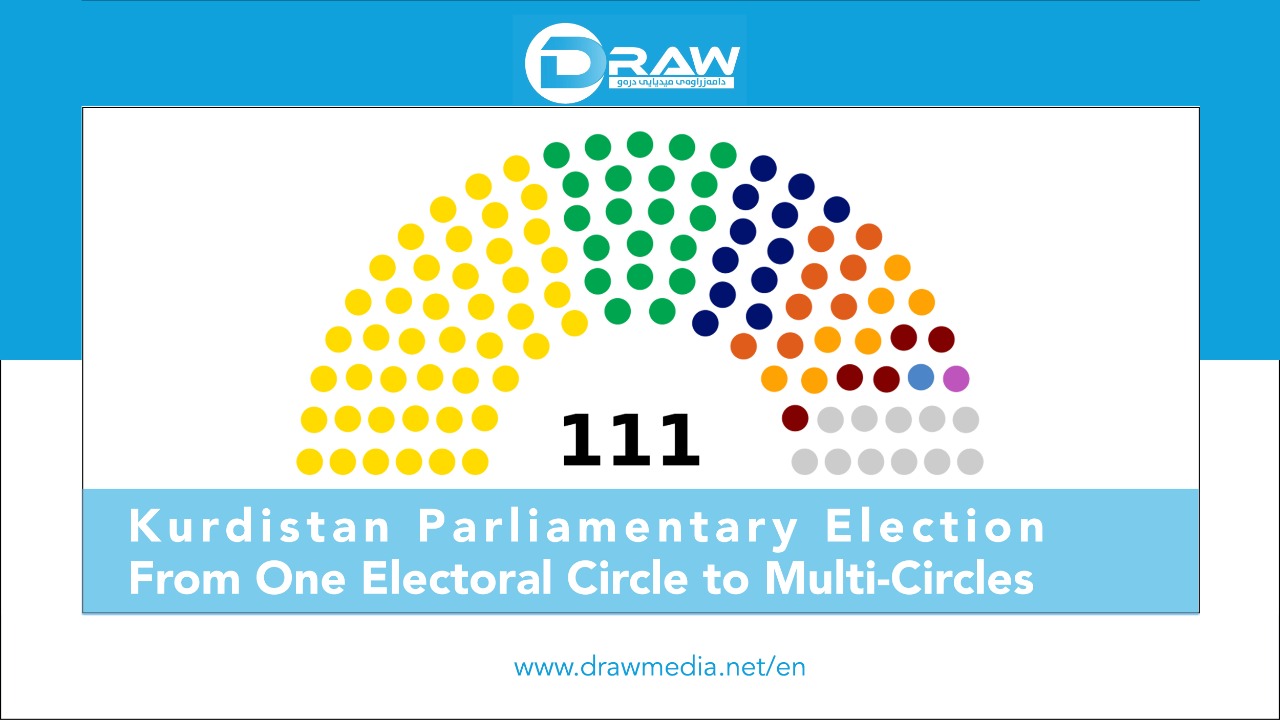
Neaz Mustafa, Draw Media Kurdistan Parliament discussing the upcoming election procedures, the Parliamentary Factions have to inform the Presidency of the Kurdistan Parliament about their opinion regarding the election system, by the 18th of this month. It has been for two years; the legal period came to an end. Kurdistan Democratic Party (KDP) is asking to replace the commission. Patriotic Union of Kurdistan, Change Movement, Kurdistan Islamic Union, and Justice Group are against the change. The voter's record has not been renewed. There are calls for changing the election mechanism from one electoral circle to multi-circles and, amending the election law. Get more information from this report by Draw Media. Parliament asking for the Parties Opinion The 2022 Kurdistan Parliament elections, 6th term, will be held on Friday, September 30, 2022. Last week, the presidency of the Kurdistan parliament held a meeting with the parliamentary fractions to discuss the election procedures because they have to reach the final decision regarding the election at least six months ahead of the process. According to the information that Draw has received, the Presidency of the Kurdistan Parliament asked the fraction presidents to submit their opinions regarding the election law, no later than November 18, 2021. The parties’ suggestions for the election Based on the Draw Media investigations, the parties have not made their final decisions, but they have presented some initial viewpoints. Kurdistan Democratic Party (KDP) KDP is with conducting the election on time in considering the PUK local situation and the sharp downturn of the Change Movement in the last election. KDP is looking forward to securing approximately 50 seats in the next parliament election. Also, they are trying to reestablish the High Elections and Referendum Commission based on the current seat numbers in parliament. If this request would be executed, the KDP would control the vast majority of the commission in their favor. Based on that suggestion, KDP would secure 4 out of 9 seats of the High Elections and Referendum Commission, and they could make all the decisive decisions for their benefit. Patriotic Union of Kurdistan (PUK) Due to its internal conflicts, PUK would like to delay the election, but they have not announced this officially. Initially, they ought to change the election system from one electoral circle to multi circles, which means each province would have an independent electoral circle. Regarding the Independent High Elections and Referendum Commission, PUK is against the KDP suggestion for renewing the commission based on the current seat number in parliament. Currently, two out of nine commission members belong to PUK. Change Movement The movement already submitted their viewpoint to the parliament presidency and asked for a closed list and multi-circle election. About The Independent High Elections and Referendum Commission fate, Change Movement is agreed with PUK which they demand to keep the commission structure without making any changes. In the case of restructuring commission, as PUK asked for, the Change movement would lose one of its seats. Currently, the change movement has two seats in the commission. Kurdistan Islamic Union (KIU) KIU is demanding a semi-open election with multi electoral circles. KIU also demanded to renew the voter's record. Regarding The Commission destiny, KIU has the same opinion as the Change Movement and PUK, which they request to keep the commission structure as its current one. KIU has one commission seat out of nine members. New Generation Movement This movement has announced its perspective for the general public regarding the election, asking for "conducting the election on its legal time, September 30, 2022. Since they do not have any representatives in the commission, New Generation Movement demands an independent electoral commission away from the political fractions and work under the supervision of the United Nations. Kurdistan Justice Group Justice Group votes and seats have declined in the last Iraqi parliamentary election. Regarding the justice group attitude for the sixth term of the Kurdistan parliament election, Omar Gulpy a member of the Justice group parliament fraction told Draw Media, “Justice group demanding the election to be on time. Also, they want to amend the election law and change the electoral circles from one circle to multi circles. He added that "the amendment should let the ethnic and religious components reach parliament with their votes, not with the other party votes that they have authority in the region. The Justice group also does not support the ideas for changing the commission, but they want a clean voter's record out of the dead and fraud names. The group only has one seat in the high electoral commission. About The Independent High Elections and Referendum Commission The Independent High Elections and Referendum Commission in Kurdistan is one of the commissions that belong to the Kurdistan parliament, which was made by law NO. 4 which was passed on July 23, 2014, by parliament. The commission has started up 7 years ago. During this period, the commission has conducted only two missions: First: managing the Kurdistan Region independence referendum on September 25, 2017. Since it was a national referendum, there was not a lot of conflict or disagreement about the results. Second: Managing the Kurdistan parliament process on September 30, 2018. That was the first practical experience of conducting an election for the commission. The results brought a lot of disagreements. Particularly PUK, change Movement, KIU mentioned that the election was not clean and there was a big fraud going on in the election.
Read moreThe Kurdistan Parliament, since its establishment
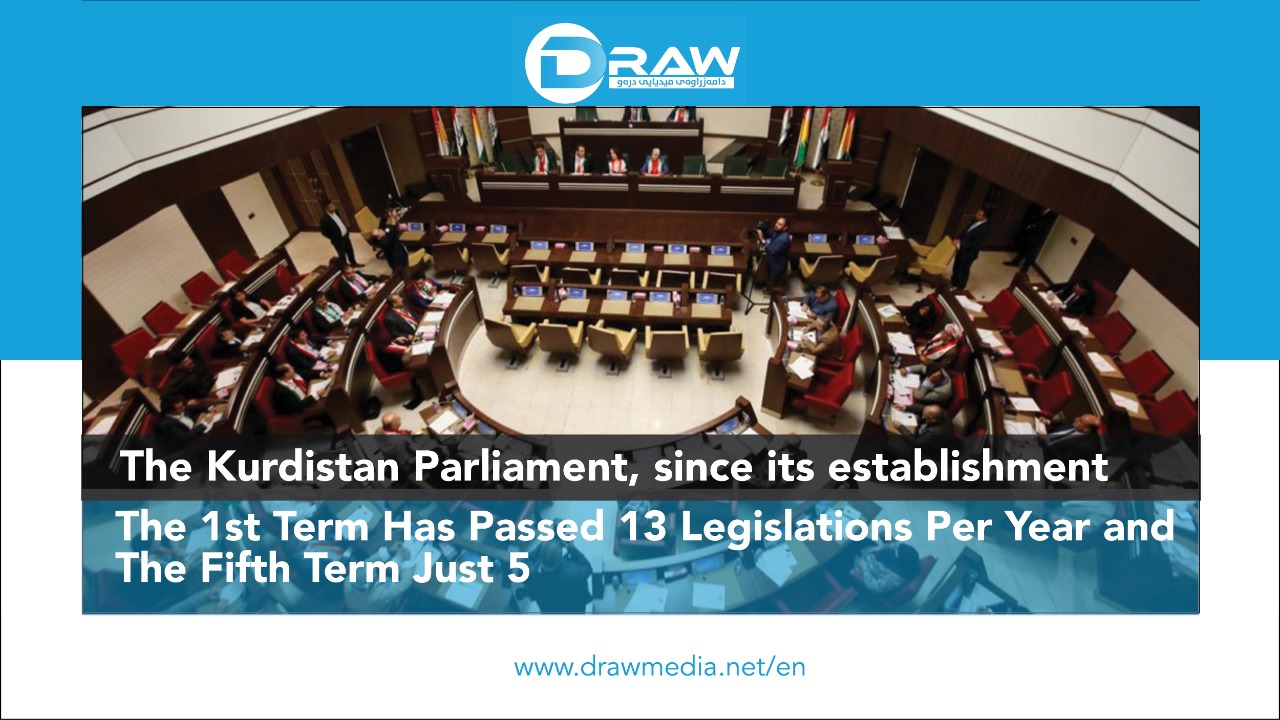
Draw: The Kurdistan Parliament since its establishment in 1992, has passed 385 legislations. But the fifth term of this parliament has enacted the lowest number of legislations. In the first term, there was an average of 13 laws per year, the second term 17 laws, the third term 18 laws, the fourth term 6, and in the current parliament term, only 5 laws have been issued. In this report, Draw Media compares the number of the laws that have been passed in the Kurdistan parliament during five terms, 1992-2021. The first term of Kurdistan Parliament May 19, 1992, until January 30, 2005 Even though this term was the longest one, because of the civil war conflicts the national election was postponed, and this term was continued for 13 years. Regarding legislation, this term has issued the highest number of legislations per year, compared to all other terms. despite the continued war, there was not a single year of the first term passed without passing a law. For example, here are the number of the legislation they passed each year. 1992 / 16 1993 / 21 1994 / 4 1995 / 1 1996 / 4 1997 / 14 1998 / 9 1999 / 18 2000 / 19 2001 / 19 2002 / 16 2003 / 7 2004 / 25 Overall is 173 laws with an average of 13.3 laws per year. The Second term of Kurdistan Parliament January 31, 2005, until July 25, 2009 This term was continued for four years and a half. During that period, they have passed 89 laws. 2005 / 2 2006 / 20 2007 / 39 2008 / 18 2009 / 10 An average of 17.8 laws per year. The Third term of Kurdistan Parliament July 25, 2009, until September 21, 2013 This term was continued for four years. It is recognized as the most active term of Kurdistan parliament, based on the number of legislations they have issued: 2010 / 17 2011 / 22 2012 / 17 2013 / 19 Overall is 75 laws have been issued with an average of 18.8 laws per year. The fourth term of Kurdistan Parliament September 21, 2013, until September 30, 2019 Even though this term was facing a big challenge because of the (presidential law) disagreement between the parties, the parliament door was closed for almost two years. In 2016, for the first time in parliament history, there was not a single law issued in that year. But the rest of the years there was several laws have been issued: 2014 / 9 2015 / 9 2016 / 0 2017 / 4 2018 / 11 Overall is 33 laws have been issued with an average of 6.6 laws per year. The fifth term of Kurdistan Parliament September 9, 2019, until now Although this term is not over yet, and almost one year left of time legally. But yet they have passed the lowes number of legislation of all time. 2019 / 5 2020 / 5 2021 / 6 Overall, 15 laws have been issued, with an average of five laws per year.
Read moreLahur Sheikh Jangi Expelled From PUK
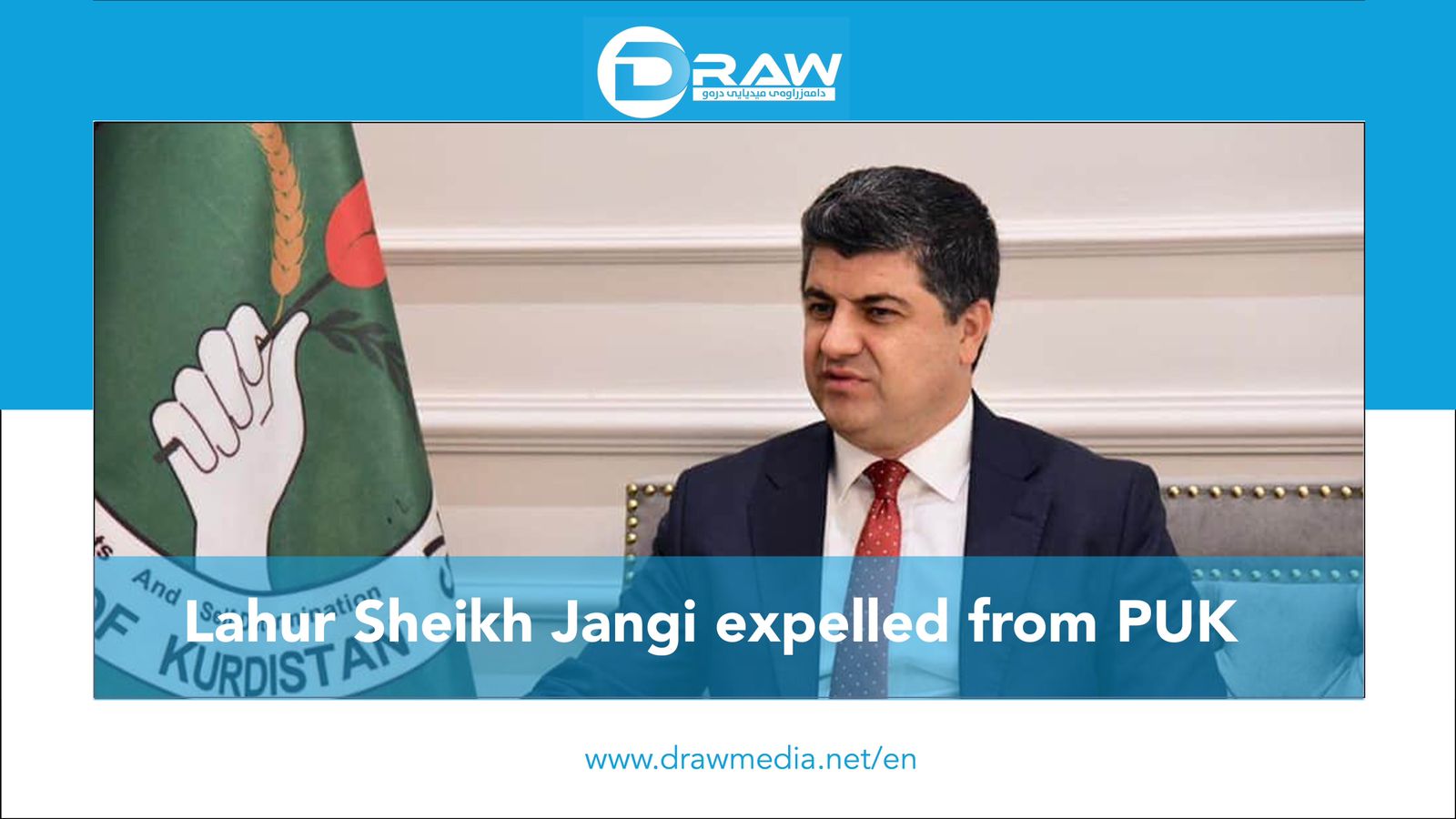
DRAW: Lahur Sheikh Jangi Talabani, former Co-President of the Patriotic Union of Kurdistan (PUK), and three others have been expelled from the party by their Co-President Bafel Talabani. In a statement which was released today November 2, Bafel Talabani announced that Lahur Sheikh Jangi Talabani, former Co-President of the Patriotic Union of Kurdistan (PUK) has been expelled from the party because he has violated the bylaw of PUK or the action rules of the Leadership Committee. Earlier today, prior to Bafel Talabani's statement, Lahur Jangi released a statement criticizing the direction of the party and calling for a resolution to the power struggle with his co-president, Bafel Talabani.
Read moreSulaymaniyah Revenue Before and AFter, July 8
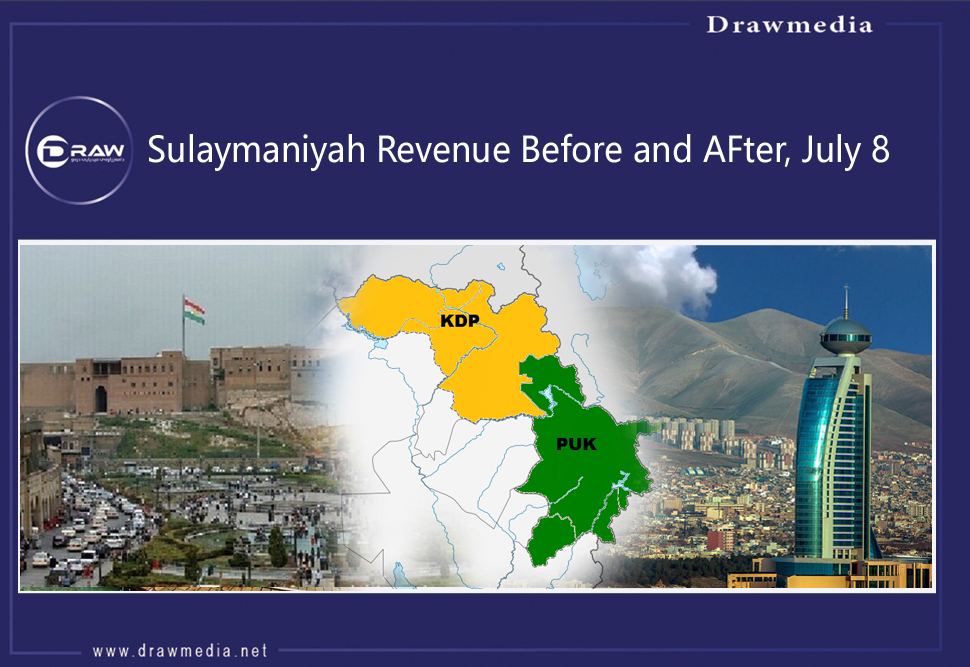
Draw: Compared to prior July 8 incidents, tensions between the Talabani brothers and Sheikh Jangi erupted into public view, the border crossing revenue in Sulaymaniyah reduced by 19%, and tax revenue reduced by 13%. It has been for a few days, reducing the border crossing revenue in Sulaymaniyah became a political matter once again. Kurdistan Region finance minister Awat Sheikh Janab says, "We have cash flow shortage in Sulaymaniyah Province. In Sulaymaniyah, Halabja, Garmyan, and Raparing administration, Tax revenue is not collected as needed, which is the consequence of running payroll late.” Before July 8, and rising tensions between the Patriotic Union of Kurdistan (PUK) leaders (the ruling party in Sulaymaniyah), PDK leaders in Erbil had reiterated that PUK does not return the Sulaymaniyah revenue to the government treasury. That time their fight was with Lahur Sheikh Jangi, the Co-President of the PUK. They would say he is the one who is preventing the tax collection by the government. But now, things have been changed, Lahur Sheikh Jangi does not have power anymore among his party. The crossing border in the province is controlled by Qubad Talabani and Bafel Talabani, the sons of the late former Iraqi President Jalal Talabani. Revenue, Before and after July 8 According to the General Directorate of Taxes and Real Estate, tax and Government incomes revenue without custom revenue was 657.14 billion IQD in 10 months of this year, which was collected as mentioned below: Erbil: 343.9 billion IQD, which is 52% of all taxes and real estate revenue. Sulaymaniyah: 164.9 billion IQD, which is 25% of all taxes and real estate revenue. Duhok: 148.16 billion IQD, that is 23% of all taxes and real estate revenue. In July, tensions between the Talabani brothers and Sheikh Jangi erupted. Co-President Lahur Sheikh Jangi stepped down from his position. The average government income in that month was 68.1 billion IQD and Sulaymaniyah's revenue was 18.2 billion IQD, which was 27% of all the government revenue in July. However, in October, three months after July 8 incidents, the overall tax revenue in the Kurdistan region was 63.84 billion IQD, only13.35 billion IQD of that was from Sulaymaniyah, which is 21% of all KRG tax revenue. That indicates, compared to before July 8 Sulaymaniyah's revenue reduced by 6%. Tax revenue list in Sulaymaniyah before and after July 8 June: 16.47 billion IQD July: 18.2 billion IQD August: 14.79 billion IQD September: 17.76 billion IQD October: 13.35 billion IQD Custom revenue in Sulaymaniyah before and after July 8 According to Draw Media investigations, Custom revenue of the border crossing points within the PUK authority areas has declined since July 8. Bashmax Border Crossing Revenue January: 22.8 billion IQD March: 22.47 billion IQD September: 17.1 billion IQD October: 18.7 billion IQD Compared to January, Bashmax Border Crossing Revenue declined by 19% in October. Parwez Xan Border Crossing Revenue January: 22.79 billion IQD March: 21.6 billion IQD September: 16 billion IQD October: 14 billion IQD Compared to January, Parwez Xan Border Crossing Revenue declined by 39% in October. Because of the Truck driver strikes, the commercial movement has been stopped at the Parwez Xan border crossing. .
Read more20Thousand Teachers put pressure on the government
DRAW: Teachers who are teaching at schools without having an official contract with the government start to protest and strike. They are asking the government to hire them officially. In Kurdistan's reign of Iraq, there are 20 thousand unemployed teachers, who are teaching without a contract. Making a contract with this group of teachers will increase 4 billion dinars for the expense budget on government. Who are these teachers without a contract? How much is their salary? How does the government handle this problem? Draw Media provides more information in this report. Government Facing a New Dissatisfaction Approximately there are 20 thousand Unemployed teachers in the Kurdistan Region of Iraq. It has been for a few days they have started protests and strikes asking the government to hire them officially and make a contract with them. In May of this year, this group of teachers had another protest asking for their payment, which was late for 5months. Unemployed teachers are going to be a new challenge for the new government cabinet which include (KDP, PUK, CHANGE MOVEMENT) Who is an unemployed teacher? Last year KRG decided to change 6,000 temporary contracts to permanent teachers. Before they get hired, they had been working for years as temporary teachers without having a fixed salary. Since 2013, the hiring process in the public sector has been stopped because of the financial crisis, but the need of the education ministry for teachers obligated them to hire a big number of teachers temporarily without having a fixed salary. That was because of: _ Increasing numbers of students and schools. _Many of the previous teachers got retired. To fill out those gaps ministry of education hired temporary teachers. Based on the data that Draw Media has received; in 2019 there were 17,500 temporary teachers in the schools, but the number increased to 20,000 by 2021. The number of all teachers according to the ministry of education are 120 thousands, which means the temporary teachers are 20% of all teachers in the ministry of education. Most of the schools all over Kurdistan have temporary teachers. Even in some schools except the principal, all of the teachers are temporary. For example: In Sayd Sadiq Town, there are 1,200 permanent teachers with 490 temporary teachers. This means 40% of all of the Teachers in this Town are not hired permanently. How much is the salary of the temporary teachers? In the previous years, the temporary teachers were paid based on the number of hours they teach. Each teacher who had a Diploma degree would get 3000 dinars and for a bachelor's degree, they spend 4000 dinars. Based on this fixed salary, now the expense of all the temporary teachers is 5 billion and 500 million dinars. If the government decides to hire these 20 thousand teachers permanently, then the salary of those who have a diploma will be 450 bachelors will be 500 thousand dinars. And that would be 9 billion and 500 million dinars. This means the government needs 4 billion more to pay their salary. With this extra, would the government decide to change their contract from temporary to permanent?
Read moreKurds and Sunni Don’t Want to Take a Risk by Making Agreement with a Shia Group.
DRAW Asharq Al-Awsat The power conflict between the Sadr bloc, led by Muqtada Sadr, and The Shia Coordination Framework, led by a number of the prominent Shia leaders, hit the second week, but there is no hope in solving the dispute. Last week, on Friday prayer, it was expected that the Grand Ayatollah and the Shia leader from Najaf declare their opinion about the political conflict between the Shia groups and announce a roadmap for both sides. Yet, there was no indication regarding that matter. The quietness of the Shia leaders from Najaf was described as dissatisfaction with the situation. The election results were unexpected, which sparked the Shia conflicts. The dispute has reached a point that the Shia Coordination Framework would attempt to Kick Muqtada Sadr out of the game by agreeing with Kurds and Sunni to form the biggest bloc in Parliament. Yet Sadr, the biggest winner of the election who won 73 seats, tries to hang on to an institution that gives him the right to form the new government as the biggest winner. Kurds and Sunni, still waiting to see the end of the conflict between the Shia blocs. That made them not take a risk on making agreements with any of the Shia blocs at the expense of the other side, without considering the achievements that they would get.
Read moreBarham Salih Seeks Second Term
Neaz Mustafa, Draw Media Repeating the 2018 scenario is not possible. Among the party and outside, Barham Salih will not have strong support anymore. After the referendum, he became the president. Although, Kurdistan Democratic Party KDP (his opponent) is strong now and returns to the political game in Bagdad strongly. His party members are furious with him. They say he was aware of the election frauds, but he did nothing to inform his party members. The president between KDP and PUK KDP, the fourth-biggest winner of the Iraqi election, after projecting the preliminary results, KDP focuses on three different suggestions regarding the president position. First, the presidency position is the portion of Kurds, and it is not yet clear for whom it will be. That is a clear message for PUK, to not be confident about getting the position again. Second, it’s been for a few days, KDP leaders are focusing on obtaining the Kirkuk governor without mentioning the presidency. KDP wants to secure the Kirkuk governor position for themselves by giving the presidency to the PUK. Third, by putting pressure on PUK (for the presidency position), KDP tries to drive PUK to renew the strategic agreement or sign a new accord between them. Especially after the current changes following 8 June inside PUK, which is to KDP benefit. The struggle for the presidency was significant because it appeared to break a tacit accord between the KDP and PUK, under which the former holds the Iraqi Kurdish presidency and the latter the Iraqi national presidency. However, the KDP insisted its candidate be put forward because it had more seats in the federal parliament. Will the 2018 Scenario be Repeated? Even though the strategic agreement between KDP and PUK for dividing the senior positions in the local and central government is already dead yet, PUK insists that the Iraqi presidency is their portion. The Iraqi presidency has long been controlled by the Patriotic Union of Kurdistan (PUK) party. Out of agreement with KDP and the other Kurdish parties, PUK settled the presidency office to its advantage in 2018. In the current situation, Could PUK could carry out the same action? The changes that happened since 2018 show that PUK could not repeat the same scenario, and Barham Salih does not have that big chance waiting for him. Barham Salih had a strong ability to play with the conflicting sides, especially USA and Iran. His games are almost clear for both sides of the poles now. Especially, after that his cell phone was observed by an Israelian Program. Also, there was a rumor that his cell phone was stolen during a visit to Qatar. Allegedly, these events reveal Barham Salih's secret and private relations. Barham Salih’s Chance Barham Salih still insists on remaining on his chair for the second term. A chair that following the fall of Saddam Husain, only Jalal Talabani a historical leader of PUK, could stay on it for two terms. According to the Draw Media information, among members of the PUK Political Bureau and Leadership Committee, there is dissatisfaction against Barham Salih. They believe Barham Salih with Mustafa Al-Kadhimi, Prime minister, and Mohamed Al-Halbousi Speaker of the Council of Representatives of Iraq, already had information regarding the election fraud tactics, but he did not inform his party members about it. On the other side, depending on the Draw Media knowledge, Iran has a decisive role in determining the Iraqi high-ranked positions, yet they support Barham Salih to retake the position, and also, they have no problem with an alternative if PUK and KDP agree on that. The presidency Candidates According to Draw Media information, the Iranian told KDP, even though they have won more seats still, the Iraqi presidency is decided for PUK, but they can have their comment on PUK candidates. After receiving the message from Iran, KDP is not likely to fight for the presidency anymore, yet they will not give up easily without letting PUK pay the price. Determining the Kirkuk governor to their advantage to let Masrur Barzani cabinet have full authority on the entire Kurdish territory from all over Kurdistan.
Read moreAfter Iraqi elections, Iraq's Kurdistan region is in the spotlight - analysis
DRAW By SETH J. FRANTZMAN - Jerusalem Post Kurdish parties won considerable gains with a large number of seats in Iraq's parliament, but low turnout has meant that it appears many are cynical or apathetic about what might come next. An official works at a polling station during the parliamentary election, in Baghdad, Iraq, October 10, 2021 (photo credit: REUTERS/THAIER AL-SUDANI) Advertisement The Kurdistan Democratic Party came in either third or fourth place in Iraq’s recent elections, if the vote tally remains consistent over the next days. That will give it around 32-33 seats, meaning it will play a key role in coalition politics of the next Iraqi government. Other Kurdish parties also received seats, including the Patriotic Union of Kurdistan (PUK) with 16 seats. “So far there are no official agreements on such matter. Hoshyar Zebari has been appointed as the negotiator for the KDP. There have been understandings before the elections, but the KDP does not do agreements with any side against another,” Showan Mohammed, head of the KDP office in Baghdad, told Rudaw, a news channel. For the Kurds this is important. However, low turnout has meant that it appears many are cynical or apathetic about what might come next. This is because the Kurdish region has suffered some setbacks. Despite an impressive economy, security and relative stability, the region has been under pressure from Iran and Turkey in recent years. Turkey has built military bases in the Kurdish autonomous region, claiming to be fighting “terrorists” which Turkey alleges are present there. Iran also has carried out attacks against Iranian Kurdish dissidents who live in northern Iraq. Another problem is the divisions in Kurdish society. While Erbil and Dohuk generally vote strongly for the KDP, the governorate of Sulimaniyah is dominated by PUK. While many countries have regional political voting patterns, the Kurdish region has historic divisions that date back to a civil war in the 1990s. This means that neighboring countries and other parties in Iraq tend to try to play Kurds off against one another. For instance, internal divisions undermined Kurdish resolve in 2017 to hold onto Kirkuk. A conspiracy by pro-Iranian militias and pressure by Qasem Soleimani helped create a fiasco in which Kirkuk, which had been controlled by Kurdish forces, was abandoned under the weight of Baghdad’s pressure and Iran. Similarly, an independence referendum in 2017 found the Kurdish region at odds with the US and others. Things have changed a bit in recent years. The US has moved most of its forces to the Kurdish region because of safety concerns. This came after 2019 tensions between the US and Iran and US president Donald Trump’s bizarre decision to twice try to leave Syria and claims he would use Iraq to “watch Iran.” Iraq rejected that use and Iraq’s pro-Iran parties want the US to leave. But those parties suffered dismally in the elections, most probably because they massacred Iraqis during the 2019 protests. Muqtada al-Sadr once against holds the keys to power in Baghdad. He appears amenable to a small US presence. He might also work with Kurdish parties to secure a coalition. A poster of Iraqi Shi'ite cleric Moqtada al-Sadr in the Sadr City district of Baghdad, Iraq June 21, 2021. (credit: REUTERS/AHMED SAAD/FILE PHOTO) According to Rudaw, PUK co-chair Bafel Talabani on election day told media that they look to keep the presidency and their candidate is Barham Salih, who will be serving a second term if he is approved. While Bafel played a controversial role in the 2017 Kirkuk events, he has now risen to seemingly push his cousin Lahur Talibani out of power in Sulimaniyah. This wouldn’t matter that much except Lahur played a key role in relations with Kurds in Syria and also it means the PUK, already suffering in low vote turnout, is more divided. Iranian media interviewed a member of the Kurdistan Islamic Union this week and affirmed that the low turnout appears to mean many are tired of the corruption in Iraq and pessimistic about the future. This is good news for Iran because it can use this to infiltrate a divided and weak Iraq. Iran, unlike the Saddam regime or the regimes of Assad and Turkey, has never sought to erase the Kurds or genocide them. But Iran’s close relationship with Kurds in Iraq doesn’t mean it has the best interests of the autonomous region at heart. It wants the region divided. Tasnim reports that “regarding the effects of the Iraqi parliamentary elections on the upcoming parliamentary elections in the Kurdistan Region, the member of the Islamic Union in the Kurdistan Regional Parliament said ‘The Iraqi elections were seen, there may be changes in the regional parliamentary elections, but the essence of the matter in this region remains the same and the crises will continue.’” The interview went on to note “corruption in Kurdistan region irreparable blows to national unity in the two ruling parties of the Kurdistan Region will continue to compete for party privileges and high positions in Baghdad, and the issue of uniting the Kurdish currents is not achievable, and this will affect the problems of the region and the central government.” For Iran, which saw a weakening of support for its militia-based Fatah Alliance in Baghdad, the Kurdish parties may be a welcome source of potential work for Tehran. This is because Iran sees them as potential allies in the broader context, despite the existence of Iranian Kurdish dissidents in Erbil and despite the close ties between KDP and the US.
Read moreThe Biggest Loser of Iraq’s Election Could Be Iran
DRAW foreignpolicy On Sunday, Iraq held its fifth national elections since the removal of Saddam Hussein in 2003, with the national parliament’s 329 seats at stake. While final results have yet to be announced, the biggest losers appear to be pro-Iranian militant groups, which have already said they’ll reject the outcome and have issued veiled and not-so-veiled threats of violence. Another loser of the election is Iraq’s struggling democracy itself. Believing their system to be manipulated, about 60 percent of eligible voters stayed away from the polls. That hasn’t kept the government and election monitors from touting the vote as a success—it went relatively smoothly, there were no incidents of violence, and most voters had easy access to polling stations. Electronic voting and biometric registration cards had been introduced with the promise of eliminating the kind of fraud that undermined the last elections in 2018. However, the Iraqi government and Independent High Electoral Commission promised to deliver the results within 24 hours of the polls closing, which would have been Monday night. Instead, the results of only 10 provinces were announced on Monday, with Baghdad and eight other provinces still trickling in. When the electoral commission made the initial results public online, its website crashed as Iraqis rushed to see the results. A delay in electronic vote counting meant that some boxes had to be counted manually without external monitors, further undermining Iraqis’ trust. The mood remains tense. Rumors that Iran and its proxies would tamper with the results were fed by the news that Esmail Qaani, commander of the Quds Force of Iran’s Islamic Revolutionary Guard Corps and Tehran’s point person for Iraq, had arrived in Baghdad. Iran has every reason to be dissatisfied with the poor showing of its proxies in the election. In Iraq, key pro-Iranian figures have called the election illegitimate. Hadi al-Amiri, the leader of the Fatah coalition, which likely lost several parliamentary seats, threatened to reject the results. Prominent militia leader Abu Ali al-Askari, who is also known as Hussein Mounes and leads the pro-Iranian Kataib Hezbollah, issued a not-so-veiled threat of force against the Independent High Electoral Commission. Kataib Hezbollah failed to win a single seat in parliament. You can support Foreign Policy by becoming a subscriber. SUBSCRIBE TODAY Pending final results, the most powerful political force in the next parliament will be the Shiite cleric Moqtada al-Sadr, whose Sadr bloc is projected to have won at least 73 seats in parliament, a double-digit increase in seats. As the head of the party with the most seats, Sadr will name who will form the next government—but, lacking a majority, he will have to form a coalition. Claiming victory after the initial results were announced on Monday, Sadr gave a televised speech focused on reform and the fight against corruption. He said his party’s victory was “a win over militias.” In a signal to the United States and other powers, he also said foreign embassies will be welcome to operate in Iraq as long as they don’t interfere in its internal affairs. In another important signal, he suggested he will seek to rein the militias. “From now on, arms will be limited to sole state control,” he said. This consolidation of the Iraqi government’s power could lead to violent clashes, particularly if the militias see their influence declining. With some militias already suggesting they will not accept the election results, the country’s path forward could be decided by how the Iraqi security forces and other political parties react to such threats of post-election violence. A failure to limit the ability of militias to strike would undermine not only the electoral process but also Iraq’s security infrastructure and governance. While the coming days and weeks will be tense when it comes to the militias, the question of who will form the next Iraqi government is central to the country’s direction. Jockeying from different groups will continue behind closed doors as different factions try to secure their interests. Sadr is expected to form a coalition with the Kurdish parliamentary block and Taqaddum, the biggest Arab Sunni party in parliament, led by the current speaker of parliament, Mohammed al-Halbousi. Together, these three groups likely will not control a majority of seats, so other partners will be needed. One important outcome of this election is the emergence of a class of independent candidates who won seats in parliament by campaigning directly to Iraqis, made possible by reforms of the electoral law. The Imtidad movement—led by Alaa al-Rikabi, a pharmacist who gained prominence during the October 2019 protests—appears to have secured 10 seats. It will have to decide whether to join the government coalition—and risk being tainted by the political process—or remain pure but powerless as a vocal part of the opposition. If Sadr is unable to agree with his future parliamentary allies on a new prime minister, the consensus candidate could well be the current one, Mustafa al-Kadhimi, who is on good terms with Sadr, Halbousi, and the Kurds. Should coalition talks get bogged down and drag on for months, this would be the likely scenario. There are two other key positions to be filled by the new coalition: the Iraqi president and the speaker of parliament. Halbousi is expected to remain speaker, while the Kurds must overcome their own internal divisions to decide on a presidential candidate, who would then be endorsed by the coalition’s majority in parliament. This division among Iraq’s main ethnic and religious groups does not just reflect the three main members of the likely coalition but has been an informal arrangement—unlike Lebanon’s institutionalized system of sectarian power-sharing. By precedent, a Shiite becomes prime minister, a Sunni Arab heads parliament, and a Kurd takes the presidency. Yet it is exactly this kind of horse-trading to gain influence that many Iraqi voters resent in their current political system, where power rarely translates into better service delivery or an improved handling of the many crises in Iraq. Furthermore, this crude ethnic and sectarian division among Iraq’s political elites alienates secular and nationalist Iraqis.
Read moreP.U. K uses gas as a pressure card against K.D.P
A report by :Fazil Hama Raffat and Muhammed Rauf. The Patriotic Union of Kurdistan (PUK) is putting and testing a new pressure upon the Kurdistan Democratic Party (KDP). PUK wants to fight against the “PDK oil” with natural gas and start a strong economic and political relationship with Baghdad. Now, part of the natural gas in PUK areas reaches Afghanistan from Chamchamal every day. More details in this report by “Draw” Does PUK make a decision? This month, the Political Bureau of the Patriotic Union of Kurdistan will meet to discuss the latest PUK’s stance on its relations with the KDP. PUK asks for the implementation of administrative and financial decentralization for Sulaymaniyah Province, This project has not yet taken significant steps after a few months. PUK has given the KDP and the Prime Minister, Masrour Barzani ,the last permission to make their decision. If the project doesn’t start soon, it is said that PUK will make its final decision. PUK’s decision! PUK movements have recently increased in Iraq, Lahur Sheikh Jangi, PUK co-leader, has been in Baghdad several times and meets Mustafa Kazmi, the prime minister and other Iraqi officials. PUK wants to achieve a kind of decentralization to the territories which are under its rule through the Iraqi government. For this, PUK has brought up the gas file. There are three gas-rich areas In Iraq, the PUK-controlled area is one of the richest areas. PUK wants to use this gas to strengthen its economic and political position against the KDP-controlled areas, which is the leading oil producer in the region. According to “Draw” report, there is an idea in the PUK that has not yet been fully outlined. The idea is to build a company called the Sulaimaniyah Gas Company. It will be joint between Sulaimaniyah province and the Iraqi oil ministry and it controls all the oil and gas fields in the PUK-controlled areas (Taq Taq, Kor Mor, Hasira,and Chia Surkh), including the fields in Kirkuk and Khanaqin borders. "The PUK border gas can fill Iraq's internal needs and make Iraq no longer need to buy gas from Iran to operate power stations," said energy experts at the PUK. The Americans support this step and the United States has received guarantee from U.S. energy officials on this, but such a step may make Iranians worried and angry, especially when Kurdistan’s gas will be an alternative to Iran's gas in Iraq. In addition, 45,000 barrels of oil are produced daily in the PUK-controlled area, and the PUK wants to increase its oil investment level to 72,000 barrels per day through the agreement with Baghdad. PUK wants to do all this on the condition that Baghdad separately provide salaries separately for employees in the Sulaimaniyah border and deal directly with Sulaimaniyah province, not through the Kurdistan Regional Government and the KDP. This could be the reason that Masrour Barzani, the head of the regional government, recently said in front of the Kurdistan Parliament that some cases cannot be touched, as they may lead to the outbreak of civil war. To hand over gas and oil to Iraq, the PUK has resorted to Article 112 of the Iraqi constitution, which says oil and gas are run jointly between the federal government, the region and the provinces. In the PUK-controlled area in Garmian, there are two fields, Kurdamir and Topkhana, which are now escalated into conflict between the KRG and a company in the area of Sulaimaniyah (Petrolium Dynasti), the company is very close to the PUK. The Sulaimaniyah company in London Court has filed a lawsuit against Ashti Hawrami and wants to get a contract to invest in the fields, and in February this year, the Court will make its final decision, and if the Kurdistan Regional Government loses this case to the Dynasty Company, it will cause greater economic and political damage to the energy sector. The two fields, apart from oil, also has natural gas, but it has not been produced yet. Those who work for the PUK, dream of having the Turkish companies to invest gas in Garmian's fields and export it to Turkey after developing the fields and increasing the level of investment. It is unclear whether the Iraqi government will eventually reach such an agreement with the PUK. According to information achieved by “Draw” from some PUK officials that Mustafa Kazmi, the Prime Minister of Iraq, is in favour of this scheme, but the problem is that it is unclear whether Kazmi will stay as the Prime Minister or not, especially when Iraq is in front of a pre-election. Gas in Kurdistan Region According to the official website of the Ministry of Natural Resources, the Kurdistan Region has 200 trillion cubic feet (5.7 trillion cubic meters) of natural gas reserves, which is 3% of the world's gas reserves. But this is the reserve that has not been proven, as the region's proven natural gas reserves, according to U.S. energy reports are only 25 trillion cubic feet. The Oil Price magazine which is a specific publication about energy, reported that last year only 10 trillion cubic feet were found and worked on, which is now produced in the PUK border in Kor Mor. The natural gas of Kor Mor field in Chamchamal, is produced by the United Arab Emirates — Dana Gas Company. The company now produces 430 million cubic feet, which was 850 tonnes over the past three years, showing that the UAE company has increased its investment level. The Kurdistan Region's natural gas reserves are mostly in the PUK-controlled area. Generally and geographically gas can be found in the following areas: PUK-controlled area reserve: • Kor Mor Field: 8 trillion and 200 billion cubic feet Chamchamal Field: 4 trillion and 400 billion cubic feet Miran Field: 3 trillion and 46 billion cubic feet KDP-controlled area reserve: • Bina Bawi field: 7 trillion and 100 billion cubic feet • Khurmala: 2 trillion and 260 billion cubic meters • Palkanafield: one trillion and 600 billion cubic feet • Shekhan Field: 900 billion cubic feet • Pirmam Field: 880 billion cubic feet The Kurdistan Region's gas is transferred to Afghanistan Generally, kurdistan region's natural gas is still used for local needs, meaning it is used for fuel power stations and provide household gas. What is known so far is that the Kurdistan Region's gas is not transferred to another country, but according to the information “Draw” has gained from several sources at the Bashmakh border, the company that buys the gas of the Kor Mor Field, is illegally exporting 7 to 10 tanks of Liquefied petroleum gas (LPG) daily and the gas is taken to Afghanistan In the past few days, the Washington Institute has published a report on the Kurdistan Region's gas content. The report was about the discussion between the American and Kurdish officials on the future of gas in the region. One of the people who spoke in the meeting was Matthew Zais. He is the principal deputy assistant secretary for the Energy Department's Office of International Affairs. Matthew says: Kurdistan Region can increase the annual level of natural gas investment to 40 billion cubic meters by 2035, compared to the current level of gas investment in the region which is 5 billion cubic meters annually. Matthew Zais has explained that co-operation in gas and electricity production may lead them to have better relationships. Kurdistan Region's capacity in the field of energy will reduce the complexity between the region and Baghdad over the annual budget. It will also improve the circumstances in the region by giving guarantees to the worldwide oil companies in the field of oil. Matthew Zais, in another part of his speech, points out that the Kurdistan Region's power grid (electricity) is essentially generated by gas and it is exported to Iraq. Exporting electric power form Kurdistan Region to Iraq is more reasonable than the other suggestion which have been proposed to solve Iraq's electric power problems, including the suggestion to link Iraq's electric power to the power grid of the Gulf Cooperation Council (GCC) or Jordan. The US official expects that, like the region's oil exports to Turkey, the region's gas pipeline to Turkey will eventually be built, but he points out that Iran is constantly trying to restrict energy development in Iraq through its hegemony. Because according to him, Iran does not want Iraq to depend on its energy and electricity abilities. In addition, Iran is using its energy in Iraq for political purposes, so Iraqi officials must find a way to get rid of this challenge. The U.S. Consul General in Erbil, Rob Waller, said in the meeting that under the supervision of the U.S. Ministry of Energy, a recent study has been conducted on the fields in which the Kurdistan Regional Government can reform them in a way that can be rehabilitated and get benefit from them economically. One of the fields which was described in the research is the cooperation between Kurdistan Regional Government and the Iraqi Government in electricity sector which should be renewed with the development of gas sector. Changing the power stations that use diesel to natural gas leads to less cost and more production. The American council states that the cooperation between KDP and PUK is an important priority in the public policy of the United States to develop gas sector in the region. He said in spite of having the tensions in the region, recent protests have prompted both parties to admit that their cooperation will revitalize the region, Rob Waller said. Bahroz Aziz is a senior advisor to the Kurdistan Regional Government's Minister of Natural resources, attended the Washington Institute meeting and has mentioned the obstacles in front of the Kurdistan Region's gas field to develop. Aziz also said that developing Kurdistan Region's gas sector will result in the end of using generators to provide household electricity. The generators use diesel which pollute the environment and would be harmful for public health, and the development of this sector will provide job opportunities for the residents of the region. The presence of large amounts of Sulfur in the Kurdistan Region's natural gas is one of the obstacles to the development of the Kurdistan Region's gas field, said Bahroz Aziz. He also said having a lot of sulfur in the gas has paralyzed investment in the region's gas, this is alongside some other reasons such as the danger of ISIS and the spread of The Coruna virus. despite this situation, the senior advisor to the Kurdistan Regional Government's minister of natural resources is optimistic about the future of gas in the region, saying: "The region did not have the expertise and money to develop its oil sector at first, but it was able to attract international companies and achieved both. The Ministry of Natural Resources needed experience and leadership to implement the same tools in the development of gas resources.
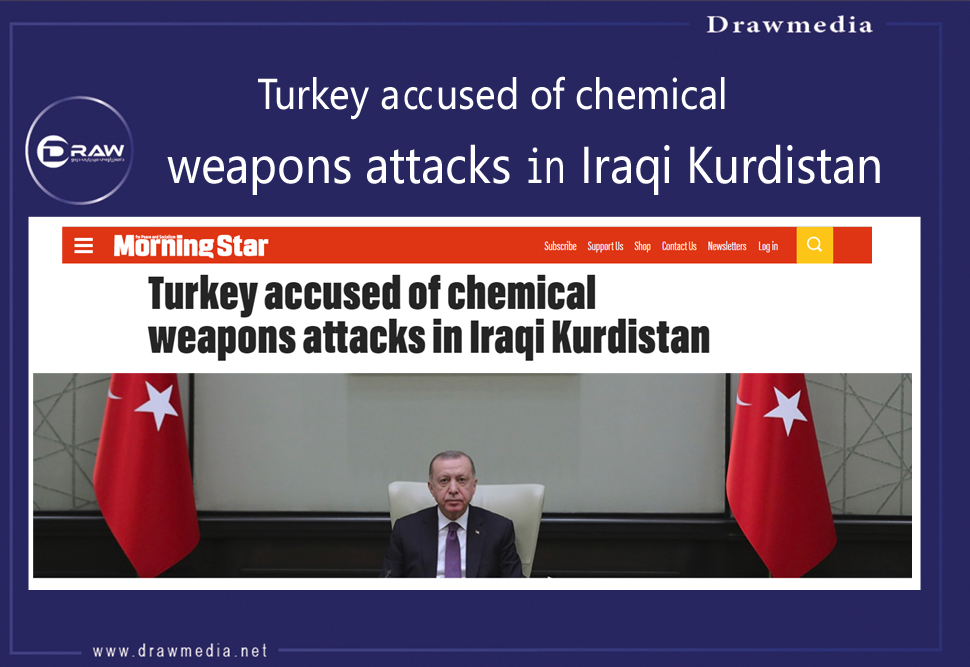
Read moreTurkey accused of chemical weapons attacks in Iraqi Kurdistan
DRAW: by Steve Sweeney - Morning star TURKEY has used chemical weapons three times in the autonomous Kurdish region of Iraq in the past three days, a senior Kurdish official told the Morning Star today. Kurdistan Communities Union (KCK) spokesman Zagros Hiwa claimed that chemicals had been used during Turkish bombing of the Amedi district, in the mountainous region of Duhok, which borders Turkey. “They used chemical weapons in the Mamresho hills overlooking Basyan river, and Marvanos hills overlooking the Avashin river,” he said. “They have used the chemicals against the tunnels there,” Mr Hiwa added, referring to the underground system used by Kurdistan Workers’ Party (PKK) guerilla fighters. Some 76 villages in Amedi district were cut off from electricity due to Turkish bombing today, which has also destroyed acres of forest land as the invasion intensifies. Mr Hiwa said that “at least 38 Turkish soldiers have been killed” in confrontations with PKK fighters since it launched a ground invasion on April 24. “It is part of a genocidal campaign against the Kurds deliberately timed to coincide with the 106th anniversary of the Armenian genocide,” he said. “The message to Kurds is clear. We will kill you just as we killed the Armenians in the beginning of the 20th century. Now it’s your turn.” Turkey has a long history of using chemical weapons against Kurds. In the 1930s Sabiha Gokcen, the adopted daughter of former president Mustafa Kemal Ataturk, dropped gas on Kurds in Dersim during the uprising there. In February 2018 its forces were suspected of using chlorine gas during Operation Olive Branch, the illegal invasion and occupation of Afrin. And in October 2019 Turkey was accused of using white phosphorus in an attack on the town of Sere Kaniye in the northern Syrian enclave known as Rojava. The Morning Star reported from the site of an alleged chemical attack on the UN-administered Makhmour refugee camp in northern Iraq last year. The international community has refused to investigate the allegations, leaving Turkey to act with impunity. At least 55 people have now been detained since a protest called by the Tevgara Azadi group in the city of Slemani on Sunday. Spokesman Nerman Ehmed said today that local Asayish officials were instructed to detain everyone who took part in the action. A source told the Star that “this was the work of Turkey and the Kurdistan Democratic Party (KDP)” who are afraid of the PKK.
Read moreKurdistan Region of Iraq: Flawed Trial of Journalists, Activists
DRAW: Appeals Court Should Consider Flagrant Irregularities (Beirut) – A court in the Kurdistan Region of Iraq sentenced three journalists and two activists to six years in prison on February 16, 2021, in deeply flawed proceedings, Human Rights Watch said today. The authorities continue to hold two other people despite a court ruling that there was insufficient evidence to try them. Human Rights Watch is publishing its research into the trials now because of the likelihood of an imminent appeals decision. The proceedings in the Erbil Criminal Court were marred by serious violations of fair trial standards as well as high-level political interference. Authorities involved in the appeal should consider these violations when deciding whether to oppose the appeal. Authorities from the Erbil and Dohuk areas of the Kurdistan Region arrested two of the men in August 2020 and the other five in October, reportedly for planning unauthorized demonstrations. From May to October, activists and teachers in the Dohuk area had organized protests calling for payment of government salaries that authorities had delayed. “Flawed trials in the Kurdistan Region are nothing new,” said Belkis Wille, senior crisis and conflict researcher at Human Rights Watch, “But flaunting the most basic principles of justice to punish people for allegedly planning protests is a new low.” One lawyer, a relative of one detainee, and another independent source who was present during the proceedings shared detailed information about fair trial concerns. The journalists sentenced are Ayaz Karam Brushki, Kohidar Mohammed Zebari, and Sherwan Ameen Sherwani. The other two, Shivan Saed Omar Brushki and Harwian Issa Ahmed, are activists who frequently criticize government practices and call for reforms. The five men were sentenced in a joint trial under articles 47, 48, and 49 of the Iraqi Penal Code and article 1 of Law No. 21 of 2003, amending article 156 of the penal code, which criminalizes acts intended to infringe on the security, stability, and sovereignty of government institutions. The convictions have been appealed. The three sources also said that the government had not provided sufficient evidence to charge the other two men, Badal Barwary, an activist, and Omid Haji, a journalist, and returned the case to the investigative judge. But the authorities have refused to release them while awaiting further evidence from the prosecution. The sources said that Sherwani, who was arrested on October 7, was held incommunicado for a week. Shivan Brushki’s relative said that after security forces arrested him at his home on October 22, the family tried repeatedly for two months to find out where he was. He finally was allowed to call his wife and reveal that he was held by the Asayish – the Kurdistan Regional Government’s (KRG) security forces – in Erbil. The three sources said that all seven were detained for months without access to their lawyers, including during interrogations and the investigative hearing. In March, after the Committee to Protect Journalists issued a report raising concerns around the trial of two of the men, Dindar Zebari, the KRG’s coordinator for international advocacy, responded in a March 14 email that he shared with Human Rights Watch that “they [Zebari and Sherwani] had access to their lawyers while awaiting trial.” However, the three sources denied this claim and said that authorities only allowed the lawyers to speak with them for the first time for a few minutes before the trial sessions on February 15 and 16. They said that the detainees also had limited access to their families, only seeing them once for a few minutes since they were detained. Shivan Brushki’s relative said that his father was allowed to visit him once for about five minutes in January, and Asayish officers were in the room during the meeting. The lawyer said that he and the other lawyers defending the men tried to obtain access to the case files before the trials began, but that the Asayish, who held the files, refused to hand them over despite letters from the court granting permission. He said that they only found out about the trial dates seven days beforehand. “We had been told the judge was sick and so we should expect postponements but suddenly the trial was announced and none of us were prepared,” the lawyer said. Brushki’s relative said his family was unable to attend the trial because of the short notice. The relative said that when security forces arrested Brushki, his wife and children saw the security forces beat him. At the trial, Sherwani was unable to stand, seemingly because of an injury, the lawyer said. He told the judge that security forces had threatened him and also threatened to sexually abuse his wife and mother if he didn’t sign a confession, the lawyer said, “The judge didn’t respond to his allegations even though he couldn’t stand,” he said. The lawyer and the independent source said the judge and prosecutor repeatedly mentioned information from “secret informants” who did not appear in court that the defendants were spies. Since they did not appear in court, there was no opportunity for the defense to cross-examine them. Both sources who were at the trial said that an Asayish officer who was not part of the prosecution team would occasionally stand and raise his hand, after which the judge would allow him to present new evidence that the defense had not previously seen. The judge did not allow the defense to cross-examine him. All three sources raised concerns about the basis of the charges against the men. For example, the two sources who were in court said that the Asayish member pointed out a photo that Sherwani had posted on social media with a caption saying that flights between Turkey and the Kurdistan region, which had been suspended for some time, had resumed and asserted that this was evidence he was a spy. All three said that the evidence presented by the prosecution and a representative of Iraqi Kurdistan’s security council during the trial was largely circumstantial and the lawyers were not allowed to review it. The Kurdistan speaker of parliament raised concerns with the trials on April 16. Asos Hardi, a prominent journalist and media rights activist, said he believed all seven men were only being prosecuted because they had tried to protest against the regional government: “There is a law guaranteeing the right to demonstrate and if they broke that law, they should be prosecuted under it,” he said. “If instead they violated the press law as journalists, then they should be tried under that law. There is no reason they should be charged with attempting to destabilize the security of the region with the support of foreign parties. The prosecution has not presented any real evidence of that. This trial ultimately proves how low protections of free expression have fallen in the Kurdistan Region.” All three sources also raised concerns about political interference. Zebari stated in his March email that the court is independent of the government and apolitical and that the KRG had not interfered in any way with the proceedings. However, a week before the trial, KRG Prime Minister Masrour Barzani stated in a news conference that the detainees “are neither activists nor journalists. Some of them were spies, they spied for other countries… Some were saboteurs.” This prejudicial statement issued shortly before the trial is inappropriate high-level political intervention in the cases and violates the presumption of innocence, Human Rights Watch said. The lawyer said that his team is awaiting the appeals court response to their appeal. Government authorities involved in the appeal should consider these gross fair trial violations when deciding whether to support the lower court decision at the appeals court. “These recent convictions only further compound the Kurdistan Region's worsening reputation as a place where people can face unfair criminal trials merely for critiquing government policies they object to and expressing concerns about the political elites,” Wille said.
Read moreTHE LOOMING GENOCIDE AGAINST THE KURDS: HISTORY SHOULD NOT REPEAT ITSELF
DRAW: BY VEYSI DAG - KURDISTANC While the world is busy with COVID-19, Recep Tayyip Erdogan’s regime is actively engaged with its pan-Islamic and nationalistic ambitions in eliminating the most “disloyal” segments of the Kurdish population. The Turkish military has launched military operations called “Claw-Tiger” and “Claw Eagle” in June 2020 against the Kurdish militant forces in Northern Iraq, following its military operation, named “Operation Peace Spring” in October 2019 and “Operation Olive Branch” against the Kurds in Northern Syria in January 2018 as well as uninterrupted crackdown against the Kurds Turkey. Using drone strikes, the Turkish air force has recently killed at least two Kurdish refugee women in the Maxmur Refugee Camp, left a number of civilian casualties in Kuna-Massi, a tourist resort, killed five civilians in Sheladize and a number of Yezidi activists in the Sinjar region of Iraq. Moreover, the Turkish drone strike killed three civilian women in Kobane, and the Turkish military killed hundreds of civilians and displaced hundreds of thousand of civilians in Afrin in Northern Syria. These Turkish military operations are part of an extermination policy against the Kurdish population which includes the purging of Kurdish politicians, journalists and activists in Turkey. In order to understand the logic of current Turkish politics, it is helpful to explore the politics of the Community of Union and Progress (CUP) and the Young Turks during the period between 1915 and 1923. Championing the ideals of pan-Islamism and Turkish nationalism, the Young Turks adopted an extraordinary politics that side-lined international laws and treaties. Communities or forces that became obstacles in their construction of a Turkish identity and threatened their interests of re-imagining and establishing a Turkish state were categorically rejected and eliminated. Ziya Gokalp, prominent sociologist of the time and Head of the CUP, purported the idea that the revitalisation of the Turkish state required indeed the elimination of its non-Muslim elements. This reference to the Armenians, Assyrians, Greeks, Jews is telling of the fate that awaited these communities. During the First World War, Turkish forces systematically exterminated Armenians and other Christian communities such as Greeks and Assyrians. These diverse populations were subjected to genocidal atrocities as they did not fit into the religious and nationalistic vision of the Young Turks for two reasons: Firstly, these Christian communities rejected assimilation and the adoption of an Islamic identity, which is the precondition for the constructed Turkification. The second reason is due to the demands of these communities to create a space for non-Muslim representation within the new Turkey that had begun to take shape in the late nineteenth and early twentieth century. Demands from the Armenian community for a pluralistic and democratic society that posited power for non-Muslim groups was viewed negatively and threatened the interests of the CUP and the Young Turks. The response to these demands was brutal as the paranoia around a perceived ‘disloyalty’ of these communities meant that they were not accepted into the folds of Turkish society. Systematic and long- term genocidal practices were employed to not only politically, economically and socially marginalise the Armenian community, but to also mentally and physically threaten its existence. Collective killing of men, robberies, rapes and the forced deportation of thousands of Armenians by the Turkish forces and mercenaries such as the Hamidian Cavalry were not prevented by the international community and rules. While the Turkish state questions the borders enforced in the 1920s, it repeatedly violates the sovereignty of other countries Erdogan’s regime consisting of an ultra-nationalist and radical Islamist alliance continues to preserve the heritage of the Turkish ancestry to eliminate what is perceived as ‘disloyal’ forces to the Turkish version of pan-Islamism and Turkish nationalism. Primarily this is to concentrate power in the hands of these groups and to revitalise a “New Turkey” within the borders of Kuva-yi Milliye (Turkish nationalist forces) that, according to Turkish politicians, includes Kirkuk and Mosul in Iraq. The Turkish president frequently evokes nationalistic feelings in Turkish citizens by invoking the slogan “for one nation, one flag, one homeland, one state” referring to a homogenous Turkey. He constantly questions the borders demarcated by the Lausanne Treaty, implying that the period between 2015 and 2023 is crucial for this imagined “New Turkey”. However, whilst the Turkish state questions the borders enforced in the 1920s, it repeatedly violates the sovereignty of other countries. Benefitting from internal conflict and weak governance, the Turkish state has invaded Syria, Libya and Iraq. It has ignored UN resolutions, and the Turkish regime has actively recruited, trained, and made use of Arab and Turkmen mercenaries in Libya and Syria. Under the banner of the Syrian National Army, also known as the Turkish-backed Free Syrian Army, these groups have terrorised, displaced and killed native populations in these regions. The mercenary politics of the current Turkish regime is reminiscent of its antecedent, the Hamidiye Cavalry, who indiscriminately raped, deported and killed Armenians. Alongside the Turkish army, these mercenaries have advanced deep into Syria and Iraq and attacked Kurdish forces and civilians. Hundreds of thousands of Kurdish civilians in Afrin and Serekaniya have already been displaced, and several of villages in the Kurdistan Region of Iraq have been evacuated as a result of Turkish airstrikes. The Turkish regime has justified these attacks to the world by legitimising them as attacks on the Kurdistan Workers Party (PKK). However, what is questionable is where the Turkish regime is carrying out these attacks. Many of these attacks have been on civilian targets where the PKK is absent. The president’s spokesperson Ibrahim Kalin has explained that the Turkish president has adopted a strategy to eliminate belligerents before they have a chance to attack. This pretence is perplexing since the Turkish state has not been attacked. The Turkish regime seems to deliberately invent “belligerents” in order to portray a Turkish state under attack and legitimise its assaults on Kurdish regions and its invasions in neighbouring countries. Turkey currently has one of the highest percentages of political prisoners in the world and a large proportion of these prisoners are of Kurdish background To the Turkish state, the Kurds; with their multi-ethnic, multi-religious and sometimes secular ideals, are seen to be disloyal and a threat to the ‘values’ that the Turkish state uses to push through its own agenda. They are a threat to the cultural homogeneity that is sought by the Turkish state and which underpins Turkish nationalism and pan-Islamism. The Kurds have been a target of the Turkish regime for decades. Turkish institutions within the country have also been utilised to subjugate and punish the Kurdish population that reside within Turkey. A tenth of the Kurdish mayors who were democratically elected have been ousted and replaced with ‘trustees’. Domestic laws have been largely ignored and or intentionally bypassed to imprison thousands of Kurdish citizens, politicians, journalists and activists. Turkey currently has one of the highest percentages of political prisoners in the world and a large proportion of these prisoners are of Kurdish background. The repression and onslaught of the Turkish regime towards the Kurdish population within the current Turkish borders, or in Syria and Iraq indicate genocidal acts that occur systematically and over a long period of time. The rhetorics, practices, and ambitions of the Turkish regime resemble the politics of the CUP which led to a genocide against Armenians. The Kurdish population has refused to comply with the assimilation politics of the Turkish regime since the foundation of the Republic of Turkey. They face genocidal politics that might rise to their peak by 2023 when the Lausanne Treaty turns 100 years old. While the Turkish state and its mercenaries use extermination, repression, and ethnic cleansing, leading Kurdish actors cannot remain idle. The Kurdish population could be spared from the fate of the Armenians and the Jews if Kurdish actors shoulder the responsibility to stand collectively against the Turkish forces and its supported alliances that have been merciless in their onslaught across the region. The success of the Kurdish actors against Turkish genocidal politics will have an impact on the liberation of the Kurdish population from Turkish colonisation. Most importantly, it will produce a flourishing political landscape and a secure and stable environment in the Middle East, which could harbour multi-ethnic and multi-religious communities, and allow minorities to coexist peacefully. This article is originally published by OpenDemocracy
Read moreFriend or Foe? Group on terror list details US military meeting
DRAW: Matthew Petti and Hadeel Oueiss - Responsible Statecraft Cemil Bayik has a $4 million U.S. counterterrorism bounty on his head. But the Kurdish guerrilla leader says his forces have been meeting with U.S. troops — and he’s ready to make amends. Bayik is part of the three-man council leading the Kurdistan Workers Party, usually known by its Kurdish initials, PKK. The militant group has fought a decades-long struggle against the Turkish government, earning it a place on the U.S. State Department’s terrorist list. A contradiction in U.S. policy has given his group an opening. U.S. forces have relied on PKK-aligned militants, including the Sinjar Defense Units of Iraq and the Syrian Democratic Forces, to fight the Islamic State across the Middle East. And so the PKK has been pushing for closer relations with the United States, over the objections of NATO ally Turkey. Responsible Statecraft was granted a rare, exclusive opportunity to interview one of the PKK’s elusive leaders. Hiding from Turkish drones in the Kandil mountains, Bayik provided answers to a series of questions sent to him in writing. “We used to exchange indirect messages via Rojava and Sinjar,” Bayik said, referring to regions of northeast Syria and northwest Iraq controlled by Kurdish forces. “We have already sent letters to all U.S. presidents. Through different mediators, some of our units have had a few meetings with U.S. units at the local level.” “They might have wanted to learn our views,” Bayik added, although he declined to provide further details about these meetings. After years of helping Turkey fight the PKK in the name of counterterrorism, the United States may now be talking to the group — also in the name of counterterrorism. U.S. strategy in the Middle East, which has swung from fighting the Islamic State to countering Russian and Iranian influence, relies on the goodwill of Kurdish militants who are considered sworn enemies of an ally dating back to the Cold War. Such a meeting was rumored to have taken place in August 2020, after Turkey launched air raids against the PKK on Iraqi soil. U.S. government sources denied the allegations at the time, according to the Washington-based news outlet Al Monitor. U.S. forces did visit the area, as the Turkish airstrikes had “ruffled some feathers” among U.S.-backed Kurdish forces, and Washington wanted to reassure its partners, according to Aaron Stein, research director at the Foreign Policy Research Institute. But Stein was not sure whether U.S. units had actually met with their PKK counterparts. U.S. Central Command, which oversees U.S. forces in the Middle East, gave a blanket denial of having met with the PKK. “CENTCOM was not involved in, nor is aware of, any such meetings,” U.S. Army Major John Rigsbee told Responsible Statecraft. U.S. European Command, which oversees U.S. forces in Turkey, declined to comment. The Pentagon’s main press office did not respond to a request for comment. Turkey has repeatedly accused the United States of supporting the PKK’s terrorism. The Turkish embassy did not respond to a request for comment as of press time, but told Responsible Statecraft via email that it would reach out “if we have something.” The U.S. State Department has listed the PKK as a foreign terrorist organization since the 1990s, when the group was led by Marxists and embroiled in a guerrilla war against the Turkish government. That war killed tens of thousands of people, with both sides allegedly committing war crimes. Years later, the United States found itself on the same side as the PKK in its war against the Islamic State in Iraq and Syria. U.S. forces re-entered Iraq in mid-2014 when it looked like the Yezidi people — who were being defended by the PKK on Mount Sinjar — were about to face genocide. The Obama administration then partnered with a collection of Kurdish militias now known as the Syrian Democratic Forces in a counteroffensive against the Islamic State. Turkey sees the Syrian Democratic Forces as an extension of the PKK and accuses the United States of supporting terrorism. Bayik denied that his group has “any organizational link” with the Syrian Democratic Forces, but claimed that “thousands of PKK sympathizers from all walks of life, undeterred by the attacks and obstacles of the Turkish army and police forces, marched over the border fences and joined the anti-ISIS fight.” He admitted that many former PKK fighters of Syrian origin joined the Syrian Democratic Forces because they wanted to “wage struggle for the protection of their people and the freedom of their own lands, where they had been born.” At the time that the U.S. partnership with the Syrian Democratic Forces began, the PKK and Turkey were engaged in peace talks. But the negotiations broke down in 2015, and the United States has since struggled to balance between its NATO ally and its Kurdish partners. The Trump administration green-lit limited Turkish interventions against Syrian Kurdish forces and slapped multimillion-dollar counterterrorism bounties on PKK leaders — Bayik called the bounties “utter injustice and disrespect” — but also kept up U.S. support for the Syrian Democratic Forces. Nicholas Heras, a senior analyst at the Newlines Institute, said that the United States “would naturally engage with the PKK” during the pre-2015 peace process, and “would still have the ability to engage with the PKK” after the breakdown of Turkish-Kurdish talks, “especially as it relates to seeking to clarify the role that the PKK would play in determining the choices made by America’s closest Syrian partners.” “The United States has a clear interest in resolving the longstanding conflict between its NATO ally, Turkey, and the PKK,” added Heras, who has advised the U.S.-led coalition in Iraq and Syria. “This conflict destabilizes a core, strategic area of the Middle East, and it contributes to the authoritarianism that is expanding within Turkey’s political culture.” Ben Friedman, policy director at Defense Priorities, disagrees that talking to the PKK is a good idea. “I’m generally not too worried about the United States offending Turkey, but this seems to be a prize issue for them, and I’m not clear on what benefits it gains for us by meeting with the PKK,” he told Responsible Statecraft. “It speaks to how totally unclear it is what U.S. forces are up to in Syria, what the goal we’re trying to achieve by having this modest force is.” The PKK argues that revoking the U.S. terrorism designation and the bounties on its leaders is part of the solution. “Our guerrilla forces have never made any military action, direct or indirect, against the United States of America,” Bayik declared. “If the United States makes policies in favor of the solution of the Kurdish question and democratization, we will never oppose them.” President Joe Biden “knows we have waged the greatest struggle against ISIS,” he claimed. The PKK would not be the first group to make it off the U.S. terrorist list in recent years. In January, the Trump administration designated the Houthi movement of Yemen a terrorist group, which the incoming Biden administration quickly reversed. Last month, PBS published an interview with Al-Qaida’s former leader in Syria arguing that he, too, should be taken off the list. Bayik added that the PKK now promotes “democratic socialism” rather than “such concepts as proletarian dictatorship.” “From the 1990s on, our freedom movement has undergone great transformations,” he claimed, but the United States “has largely upheld the visions, arguments and policies characteristic of the Cold War era.” Bayik said that his group is interested in a negotiated solution that involves democratizing Turkey as a whole, but the Turkish government only wants to “subject the Kurds to genocide.” Turkey maintains that Kurds are not discriminated against. President Recep Tayyip Erdoğan said in a speech last year that the PKK is “the biggest enemy of our Kurdish brothers.” The aftermath of a February battle in Mount Gara in Iraq revealed how U.S. policy has left both Turkey and the Kurdish movement unhappy. Turkish forces had attempted to rescue 13 prisoners of war being held by the PKK, but the operation left all of them dead. Turkey accused the PKK of executing the prisoners — and blamed the United States for its alleged soft line on Kurdish militancy. “You said you did not support terrorists, when in fact you are on their side and behind them,” Erdoğan said in a February speech. “If we are together with you in NATO, if we are to continue our unity, then you will act sincerely towards us. Then, you will stand with us, not with the terrorists.” Bayik, however, used that battle at Mount Gara as an example of how the PKK has rendered the West’s “high-tech weapons null and void.” He claimed that the prisoners were killed when Turkish forces used poison gas to assault the PKK base. “Turkey uses all the weaponries of NATO. The USA and some European countries provide Turkey with all kind [sic] of support,” he said. “Despite this, our struggle has, for many times, taken the Turkish state to the verge of collapse.” The PKK leader also chimed in about various regional political issues. Bayik supported “the democratization of Iraq,” which “will make it hard for others to intervene in its internal affairs” but claimed that new prime minister Mustafa al-Kadhimi is “not in a position to [oppose] Iran and Turkey.” He also commented on the 2015 nuclear deal between the United States and Iran, which the Biden administration is negotiating to re-enter. “The success of the 2015 agreement would have positive results for all the peoples of the Middle East,” Bayik said. “Given the fact that democratization is the best approach to solve the problems in Iran, the public opinion, both at home and abroad, should not get engaged solely in the nuclear issue. The Islamic Republic of Iran needs to undergo a democratization process.” And he expressed skepticism that the United States would ever lose interest in the Middle East. “Today, Europe is, in a way, integrated with the Middle East. There is no decline in the strategic importance of neither Europe nor the Middle East,” Bayik asserted. “We don’t want to elaborate on the positive and negative dimensions of the changes in the United States’ focal points of interest. We don’t think that there will be a decline in the significance of the Middle East.” Stein, however, warned that there is an “inherent contradiction” in U.S. policy in the region which cannot be resolved. “As a matter of policy, the United States government supports the Turkish government’s right to strike the PKK, including the PKK leadership, and assists those strikes,” he told Responsible Statecraft, but “the entirety of U.S.-Syria policy is dependent on a PKK affiliate.” “War is messy,” Stein added.
Read moreUkrainians held hostage by PKK militants in Iraqi Kurdistan over arms trafficking scam
DRAW Amberin Zaman- al-monitor Al-Monitor sheds light on how two Ukrainian men were taken hostage by a Kurdish militant group that was scammed by Ukrainian crooks in a million dollar plus arms trafficking deal. KYIV — On a recent morning in Schevchenko Park in central Kyiv, Ukraine, a tall man wearing dark sunglasses, a black crew neck jumper and matching shoes draws on a Sobranie cigarette, distinguishable by its signature gold foil filter as he scans the crowd. The scene feels like something out of a Cold War spy thriller, and the saga in which he’s enmeshed is the stuff of one too. Yevgeny Fomenkov, 47, a self-described “Robin Hood,” was held captive along with fellow Ukrainian Alexander Sanpiter, 46, by militants of the outlawed Kurdistan Workers Party (PKK) in the mountains of Iraqi Kurdistan for three and a half years until they were freed in December 2020. They are lucky to be alive. On Feb. 10, Turkish special forces backed by attack helicopters and fighter jets launched a massive attack on Gare, a mountainous region south of the Turkish border in Iraqi Kurdistan and a strategic foothold for the PKK. The purpose of the operation appeared to be twofold — to chase the rebels out of Gare and to rescue 12 Turkish security personnel, military conscripts, policemen and intelligence officers who were being held there in a cave. The result was a blood-drenched mess. All 12 Turkish hostages and a man later identified as an Iraqi Kurdish informant were killed. The Turkish government insists they were shot dead by the PKK. The PKK says the men perished when Turkish F-16s dropped bombs on the cave — the very same subterranean complex where Fomenkov and Sanpiter were being held before the militants let them go. “I can confirm that our comrades held the Ukrainians in that cave before setting them free in last December near a village in Dahuk,” a PKK commander authorized to speak on the matter told Al-Monitor in a March 17 interview via Signal. “They had a narrow escape,” the commander said. Image Yevgeny Fomenkov, a Ukrainian entrepreneur who was held hostage by the PKK, is pictured at a cafe in Kyiv during an interview with Al-Monitor. Had the Turkish government agreed to negotiate with the rebels for its citizens’ freedom, “they would still be alive as well.” Had the Ukrainian government done that for Fomenkov and Sanpiter? Not quite. Al-Monitor’s two-month-long investigation into the events that led a pair of small-town Ukrainians to end up in the hands of a militant group that has been waging an armed campaign against the Turkish state since 1984 reveals a trail of corruption and deceit topped with poor judgment in the murky underworld of arms trafficking. Dirty deals Fomenkov and Sanpiter’s introduction to the PKK began through a certain Oleg Kalashnikov, described by Ukrainian media as a former intelligence official who headed the government department for combatting the illegal transfer of drugs and weapons in the town of Kharkiv in northeastern Ukraine. His partner was Taras Savin, a fellow Ukrainian who had dabbled unsuccessfully in local politics in a pro-Russian party. In May 2017, the pair allegedly met with PKK operatives in Kyiv to arrange the purchase and transfer of weapons and ammunition, including Russian Igla MANPADS, sniper rifles, night-vision goggles, thermal imagers and frequency jammers from the local market. A deal was struck. The Ukrainians promised to deliver the equipment in a cargo plane to the city of Sulaimaniyah in Iraqi Kurdistan, once the PKK gave them a million-dollar advance. The PKK agreed, but they had one rock-hard condition: The rebels would hold two of their Ukrainian associates as collateral until they took possession of the goods. Savin approached Fomenkov and Sanpiter, telling them there was a lucrative oil contract to be struck in Iraq. It was fast and easy money. Would they be interested? They were. Savin said nothing about weapons. On June 13, Savin arrived in Sulaimaniyah with Fomenkov and Sanpiter in tow. The PKK made the million-dollar payment in Savin’s presence. It is unclear whether the transaction was made in cash or electronically. The PKK commander declined to comment. Savin took off, assuring the Kurds that the weapons would arrive the following day. They never did. No surprises there. Kalashnikov and Savin would have hardly been able to arrange the transfer of weapons to the PKK, which is designated as a terrorist entity by the United States, the European Union and the United Nations, through legal channels and on a plane. The PKK had been scammed. The PKK commander corroborated the conditions and timeline of the deal, though he did not identify either Savin or Kalashnikov by name, referring to them merely as “the Ukrainian fraudsters.” He confirmed that PKK operatives had seized Fomenkov and Sanpiter from their hotel in Sulaimaniyah once it became clear the weapons would never arrive. Weeks had gone by since Savin had disappeared with the money and Kalashnikov had stopped answering the PKK’s calls. The PKK took Fomenkov and Sanpiter to one of their bases in the province of Kirkuk further north. Their three-and-a-half-year ordeal had begun. An Iraqi Kurdish official familiar with the scheme told Al-Monitor, “This isn’t the first time the PKK’s been played like this.” He declined to elaborate. It’s unclear why the Kurds would have turned to Ukraine for weapons to begin with. The former Soviet state enjoys strong diplomatic and trade ties with Turkey, particularly in the fields of security and defense. Ukraine produces engines for Turkey’s Akincis, the high-altitude, long-endurance drones that are proving lethally effective in Turkey’s campaign against the PKK. Ukraine has deported Turkish nationals accused by Ankara of terrorism, most recently in January. Rights groups denounced the move as an illegal rendition. The outbreak of the conflict in eastern Ukraine in 2014 between Ukraine and Russian-led forces has led to the proliferation and trafficking of weapons within the country. Matt Schroeder, a senior researcher at the Small Arms Survey, a Geneva-based outfit monitoring illicit weapons flows, who co-authored a January 2021 report on Ukraine, said, “There are cases of diversion in which aircraft are used to illicitly transport large quantities of arms and ammunition to armed groups in foreign countries, but these transfers are less common than people think.” “MANPADS are generally the most tightly guarded conventional weapons system in a country’s arsenal. I have seen no reports of international trafficking of Igla MANPADS from Ukraine,” Schroeder added in emailed comments to Al-Monitor. Image From left to right: Yevgeny Fomenkov, Nahro Ali (a Syrian Kurdish doctor from Ukraine), Alexander Sanpiter and Farhad Ali Shakir at a roadside restaurant en route from Dahuk to Erbil following the Ukrainians' release in December 2020. (Photo courtesy of Nahro Ali) In any case, a flourishing black market of military equipment exists in Iraq, including “some more advanced weaponry that the PKK relies on,” said Aliza Marcus, the author of “Blood and Belief,” the most authoritative book on the PKK in the English language. “They also capture weapons in clashes with Turkish soldiers. So certainly, weapons are not a problem, and the PKK has the funds to buy them,” she said. Where does the money come from? “Taxes on smugglers crossing PKK-held territory, and so-called donations from businesses in areas where the PKK is active, particularly in Turkey,” she explained. Marcus continued, “I have no doubt that the Turkish state’s crackdown on the PKK inside Turkey has had an impact on the group’s ability to gather money, but as people in the PKK have long explained to me, running a guerrilla war is cheap. Think about it — a PKK fighter gets some uniforms, guns and that’s it. There’s no salary.” ‘Heval Jiyan’ On March 3, Fomenkov sat down for his first-ever interview with a journalist at the Bubble Cafe in Shevchenko Park. It took over a month to get him to agree. His face twitched and his hands shook as he raised an espresso cup to his lips. “We thought we were going to do honest business in Iraq. We had no idea what these swindlers were up to,” he recalled, speaking through a Russian interpreter. How was life in captivity? Was he ill-treated by the rebels? “No. They never hit us.” Does he know that the cave they were being held in had been bombed by the Turkish military? “No.” Had he seen any Turkish captives or other foreigners in the cave? “No.” Had they been moved around to different places? “No.” The PKK commander told Al-Monitor that the men had been moved around “from mountain to mountain” as a “security precaution.” Fomenkov had said he was ready to tell his story prior to the meeting, but now he says his lips are sealed, that he cannot provide any details of his ordeal until a government investigation he said was being carried out on Kalashnikov and Savin was completed. “If justice isn’t delivered,” he added “I will expose everything, I mean everything, even at the cost of my life. It will be like a bomb. Are you ready for it?” Could he at least describe the surroundings, the food, how they spent their time? “How do you think three and a half years in a dark cave, with no sunlight, could be?” The PKK commander said the men were occasionally allowed outside “when there were no Turkish drones lurking in the air.” Had they picked up any Kurdish? He starts speaking in Kurmanji, the main Kurdish dialect spoken by the Kurds of Turkey and northern Syria. Al-Monitor’s ethnic Turkish-Bangladeshi reporter responds in her own pidgin Kurmanji. It feels surreal. The food was “Kurdish food, you know how it’s like.” He lost eight teeth, he says, pulling his lips back to reveal the gaps. In the early days of their captivity, the PKK had allegedly put nails in the Ukrainians’ food. The PKK commander dismissed the claim, saying Fomenkov’s teeth were likely broken by “stones in the bulgur that went undetected by our comrades. It happens to us too.” Fomenkov offered no explanation. His sympathy for the rebels begins to seep through. “They are proud people, fighting for justice, like me. I help people who cannot defend themselves, women who are abused.” He says he has read the ramblingly obscure treatises of Abdullah Ocalan, the imprisoned PKK leader, who champions gender equality. “He is writing very wise books. I gained wisdom,” Fomenkov said. Had the PKK given him a code name? His face lights up for the first time. “Yes, the hevals called me ‘Jiyan.’ It means ‘life,’” he said. “Heval” is the Kurdish term for “comrade.” Sanpiter was accorded the more prosaic “Iskender,” the Arabized version of Alexander. "All I can tell you for now," Fomenkov said, “is that my experience in the mountains was like my first love: unforgettable.” Sanpiter declined Al-Monitor’s repeated requests for an interview. The whistleblower For a full year and a half, only a handful of people were aware of the Ukrainians’ plight. In August 2017, Sanpiter had been allowed a phone call to the Ukrainian Embassy in Baghdad, one of his last before his mobile was confiscated by the rebels. Earlier he made several calls to his wife, Tatiana, in Kharkiv. Sanpiter told them he and Fomenkov were being held by an unidentified armed group. The government had to save them. Fomenkov is divorced and estranged from his only child, a daughter. He had nobody to call. Their story did not surface until Evgeny Schevchenko, a veteran volunteer in Ukraine’s war against the Russians in the Donbass region, revealed it in a Jan. 29, 2019, blog on the Ukrainian censor.net news site. Schevchenko, who runs “a security business,” had heard about the pair from his Kurdish contacts during a trip to Sulaimaniyah in 2018. Following his return to Ukraine, Schevchenko had, together with former Ukrainian lawmaker Semyen Semenchenko, contacted Ukraine’s “foreign intelligence service” for help. (It later emerged that Schevchenko was the source of the claims that the PKK had been spiking their captives’ food with nails.) Sanpiter’s wife had already lodged a criminal complaint with local authorities in Kharkiv soon after learning of her husband’s plight. “A joint group of the National Police, the Security Service of Ukraine, the Ministry of Defense, the Foreign Intelligence Service and the Ministry of Foreign Affairs was established to investigate the affair. Kalashnikov protested his innocence. In the end, this group of investigators came to a simple conclusion: Neither Kalashnikov nor any other person was involved in the scam, and the money was stolen by the same Kurds who came to Ukraine because they were not the buyers of the weapons but only intermediaries. For some reason, no one is interested in the fate of the Ukrainian hostages,” Schevchenko wrote. Following his interrogation, Kalashnikov allegedly threatened Sanpiter’s family, telling Tatiana she would be “unable to protect their children.” Schevchenko made no mention of the PKK. The Ukrainian media, which picked up his story, didn’t either. In a March 16 interview with Al-Monitor via WhatsApp video, Schevchenko acknowledged he knew the PKK had been holding his compatriots. He had succumbed to COVID-19 and was coughing a lot. He said he had traveled to Sulaimaniyah in the hopes of landing a contract with the US-led coalition to protect oil fields in northeastern Syria controlled by the Kurdish-led Syrian Democratic Forces, which have close ties to the PKK. The coalition had successfully repelled an attack by Russian mercenaries from the Wagner Group in February 2018, and the Syrian Kurds were looking for Western partners to modernize the dilapidated oil infrastructure and boost production. They would ideally provide security as well. Moti Kahana, a Jewish American entrepreneur, was lobbying for just such a deal and had introduced Syrian Kurdish officials to Erik Prince, the controversial US security contractor and former CEO of Blackwater, in January 2019 in Washington, DC, Al-Monitor has learned. Ilham Ahmed, the executive co-chair of the Syrian Democratic Council, confirmed to Al-Monitor via WhatsApp that she had met with Prince at the Marriott Hotel in Washington, DC, but that “no agreement of any kind was made.” Schevchenko said he had failed to strike one as well. The negotiator On June 5, 2018, the PKK shot two separate videos of Fomenkov and Sanpiter that found their way to Sanpiter’s wife. In one of them, Sanpiter addresses Savin. “You took me and exchanged me for money, and now it turns out you are threatening my family. I will definitely be back soon. If even so much as a hair falls off my family’s head, if even so much as a chestnut falls on them as they are walking down the street, you will regret it very much,” he warns. In the other, Fomenkov says, “I am Evgeny Fomenkov, and I am still alive. Until the money is found, I apparently will be here.” Image Still from a proof of life video shot June 3, 2018, by the PKK showing Yevgeny Fomenkov and Alexander Sanpiter. The PKK was, however, beginning to accept that the money was gone for good. “We realized these guys were innocent and had been used by the fraudsters, and that the money wasn’t ever going to come,” the PKK commander said. “So we told the Ukrainian authorities that if they wanted their citizens to be freed they’d need to prosecute and jail those fraudsters first. We demanded justice.” There was no direct contact between the PKK and the Ukrainian government. Four months after the video was filmed, the message was relayed by a Syrian Kurdish PKK operative who went by the name “Sipan,” the commander said. Sipan met with Schevchenko at the revolving rooftop restaurant of the Grand Millennium Hotel in Sulaimaniyah on Oct. 11. Another Syrian Kurd was present at the meeting, Schevchenko said. His name was Farhad Ali Shakir, a Syrian Kurdish businessman and Ukrainian national who introduced himself as Ukraine’s honorary consul in Erbil. A senior Iraqi Kurdish official said Shakir was not recognized as Ukraine’s consul by the Kurdistan Regional Government. “We have informed the Ukrainian Embassy in Baghdad of this matter. He is Syrian, not Iraqi, and is close to the PKK.” Ukrainian intelligence had approached the Kurdistan Democratic Party (KDP), one of the two main political groups holding power in the Kurdistan Regional Government, for help. But the KDP had declined to involve itself, having already failed to secure the release of the Turkish hostages, according to sources familiar with the affair. KRG officials declined to comment. Whether he was "close to" the rebels or not, Shakir’s access to the PKK proved a boon. He stepped in and began to negotiate. “I secured the release of Fomenkov and Sanpiter,” Shakir said in a WhatsApp exchange with Al-Monitor. The PKK commander and Schevchenko confirmed that Shakir deserved the credit. Pressed for details, Shakir said he would have to “seek permission from Ukrainian intelligence” in order to say more. When contacted anew, he offered instead to talk about how he had arranged the repatriation of nine Ukrainian women and children from Al Roj camp in northeastern Syria, one of two facilities where the families of Islamic State fighters are held. “Permission” had apparently not been granted. Shakir subsequently said he was in the hospital and has not responded to further messages. Free at last On Dec. 9, 2020, the office of Ukrainian President Volodymyr Zelensky, the comedian turned politician who was elected on an anti-corruption platform in 2019, announced that “two citizens captured in Iraq in 2017 have returned to Ukraine.” Their return had been made possible by “the joint work of the Office of the President of Ukraine, the country’s Foreign Ministry and other government agencies,” it said. There was no mention of either Shakir or the PKK. The men had been taken from the cave in Gare to an area known as Deralog, 30 kilometers south of the Turkish border, where they were met by Farhad, the PKK commander said. From there they were escorted to Sulaimaniyah. Ukrainian security officials who had arrived for the handover accompanied Fomenkov and Sanpiter on a commercial flight to Istanbul, where they spent 12 hours before flying home to Kyiv. “Our expectation remains that Ukrainian authorities arrest and punish the perpetrators of this fraud,” the PKK commander said. Zelenksy’s office referred Al-Monitor’s queries about whether Kalashnikov and Savin were currently under investigation as Fomenkov claimed as well as on the circumstances of his and Sanpiter’s release to the Ukrainian Embassy in Washington. The embassy did not respond to Al-Monitor’s request for comment. Reports in the Ukrainian press said Savin and Kalashnikov “remained at large.” Schevchenko said he wasn’t aware of any ongoing investigation of either Kalashnikov or Savin and he was unaware of their whereabouts. On March 24, Ukraine’s national intelligence service (the SBU) announced that Schevchenko and his ex-lawmaker friend, Semenchenko, had been arrested in connection with an “illicit weapons supply scheme” and the creation of “an illicit private army” that consisted of more than 150 people, and that there was “evidence of contracts between them and representatives of various organizations in the Middle East.” Schevchenko and Semenchenko deny the accusations and claim they are being framed by “pro-Russian” forces. Fomenkov has been offline since March 13.
Read more