Draw Media
News / Kurdistan

Civilian casualties of Turkish operations in the Kurdistan Region

Draw Media, CPT Press Release: Turkish forces are killing children, wounding farmers and targeting villages under the auspices of 'Claw-Lock' operation Map of civilian casualties of Turkish military operation ‘Claw-Lock’ (June 2022). Community Peacemaker Teams and its partners denounce the killing of children, wounding of farmers and targeting of villages by Turkish Forces in northern Iraq under the auspices of 'Claw-Lock' operation Turkish Armed Forces (TAF) launched a new military campaign codenamed ‘Claw-Lock’ within Iraqi Kurdistan on 17 April 2022, with the aim of attaining total military control over the mountainous border region spanning roughly 180kms from east to west and up to 15kms south of the Iraq-Turkey borderline. Within the last month, 21 May to 21 June 2022, Turkish military operations have claimed the lives of 3 children and 2 adult civilians, as well as caused physical harm to 15 civilians in northern Iraq. 'Claw-Lock' aims to occupy the estimated 20% of the mountainous border regions currently uncontrolled by the Turkish Armed Forces. The campaign began with massive aerial bombardments and deployments of special forces troops up to 12-15km south of the Turkey-Iraq border in the areas of Zap and Avashin that have previously been cleared of the civilian population. While fighting against Kurdistan Workers’ Party (PKK) insurgents in those areas, the TAF began conducting targeted drone strikes against PKK members as far south as Kalar, 280 km from the Iraq-Turkey border.  Two drone strikes have resulted in civilian deaths, including one child.  The first civilians killed during 'Claw-Lock' were 43-year-old Aram Haji Kaka Khan and his 50-year-old brother-in-law Ismaeel Ibraheem in the village of Tutaqal, 140km south of the Iraq-Turkey border. At 5:15am on 21 May, Aram Haji, Tutaqal's mukhtar (chieftain), heard a Turkish airstrike in the village. Several hours later, he and Ismaeel set out to investigate the site of the explosions. They discovered a number of badly wounded PKK members and attempted to transport them to a hospital. A TAF drone fired a missile into their car, killing Aram, Ismaeel and the combatants. By targeting a civilian vehicle that was carrying civilians and wounded combatants, the Turkish Armed Forces committed war crimes. The two brothers-in-law were survivors of Saddam Hussein’s genocidal Anfal campaign in the 1980s, which was especially brutal in the area around Tutaqal. Following the 21 May incident, 8 out of 10 families have fled the village for fear of further bombings. On 15 June, in Sinune sub-district in Sinjar (Shangal), a Turkish drone bombed the headquarters of Shangal Resistance Unit (YBŞ), an organization related to the PKK. The explosion destroyed and damaged nearby houses, including a bookstore. In the bookstore, a 12-year-old Yezidi boy, Salih Khdir was killed while helping his father take care of the books. Salih Khdir’s grandfather and eight other civilians were injured in the strike. The Turkish bombardment of a built-up residential neighborhood constitutes a war crime. The area of the attack is predominately inhabited by the survivors of the 2014-2015 ISIS genocide against the Yezidi population. Since 2018, Turkish forces have been building bases on mountain peaks and ranges from the Sidakan area on the Iraq-Iran border to Haftanin in Zakho. Between the beginning of 'Claw-Lock' on 17 April and 25 April, the TAF constructed four new bases - two in Avashin and two in Zap. On 16 June, construction began on a new base on Kurazharo mountain above Shiladze.  The Turkish military has also developed a network of roads connecting the military bases and Turkish territory to facilitate resupply and reinforcement and strengthen their matrix of control over the occupied areas. From the mountain emplacements, Turkish artillery began firing on civilians living in and working on the agricultural lands in the valleys. On 15 and 17 June, in the border regions, Turkish soldiers wounded five civilians in two villages by firing at them from their bases.  The agricultural village of Parakhe sits in a valley 8km from the Iraq-Turkey border in the Darkar sub-district region. Thirty families permanently call the village home, with others returning to work their familial land seasonally. In the past two years, Turkish forces have constructed two bases in the mountains overlooking Parakhe. At 3:49pm on 15 June, 53-year-old farmer Nazir Omer and his son, 24-year-old Mohammad Nazir were irrigating their fig and pomegranate orchard when artillery fire from a nearby Turkish base crashed around, injuring both men. Nazir Omer told CPT that during the explosions, he fainted and woke up at a hospital in Zakho with two shrapnel wounds in his back. His relatives had rescued the unconscious men and rushed them to hospital in Zakho. Mohammed had suffered a shrapnel wound to the palm of his hand.  Community Peacemaker Teams (CPT) visiting Nazir Omer in Zakho Emergency Hospital, 17 June 2022 From his hospital bed, Nazir Omer told CPT that in October 2021, around 150 Turkish soldiers descended on Parakhe from their newly constructed base above. The soldiers proceeded from house to house, warning residents that if they collaborated with PKK, the village would be fired upon.  While the residents of Parakhe state that the PKK members do not operate in the village, they have reported hearing artillery shells land twice around Parakhe in the months preceding the recent attack. The shelling on 15 June was the first bombardment to target the village directly, with Nazir Omer and Mohammed the first Parakhe residents to be wounded. In addition to committing a war crime by directly targeting civilians, CPT-IK fears that the Turkish military intends to pressure Parakhe villagers into abandoning their homes and lands creating a landscape 'cleansed' of the civilian population around Turkish military bases. This practice has been observed in areas adjacent to dozens of bases throughout the border regions. Such forced civilian displacements and restrictions on access to livelihood are breaches of international humanitarian law.  At 5:10pm on 17 June, Turkish soldiers fired multiple bursts of heavy machine gun fire at civilians on the lands of Kesta village. Located in Kani Masi sub-district, Amedi district, the Kesta is 9km south of the Turkey-Iraq border. The injured were three local women, 28-year old Kazhin Taha Saeed, 49-year-old Nazira Abdulstar Ahmad and Nazira's 24-year-old daughter-in-law Fawzya Diyar Omer, who were enjoying a Friday picnic. The gunfire came from a Turkish base on Zneri Kesta mountain overlooking Kesta. After building the base in April 2021, the Turkish military began to repeatedly fire upon the village - forcing its entire population into displacement. In 2022, some families started to return to tend or visit their abandoned farms.     On 26 May, 1000 people, originating from Zewe Sery, met together in the town of Bamarne in the Amedi district. It was the first time in three years that the former residents, and their relatives, were able to hold their festival - an annual event to bring together the Zewe Sery's families who were forced into displacement in the 1990s due to the Turkey-PKK conflict.  In the late afternoon, three boys were playing football at the edge of the gathering. Without warning, at least three mortar shells exploded in rapid succession metres from the boys. 13-year-old Yousif Kovan and 11-year-old Avand Hishyar were killed. 8-year-old Sipan Farhad was severely wounded.  Kovan, Hishyar and Farhad, the fathers of killed and injured boys of the 26 May attack holding phones with pictures of Yousif and Avand on them, Shiladze, 16 June 2022. According to the Kurdistan Region’s Directorate General of Counter Terrorism’s (CTD) narrative, which was widely shared by the political parties' media, the mortars were fired by the PKK. However, analysis of the attack location and of the evidence collected by CPT-IK instead points to the Turkish Armed Forces as the probable responsible party. Relatives of the killed boys reported to CPT-IK that they heard drones hovering over the crowd during the day. The proximity of the gathering (800m) to the large Turkish military base in Bamarne, the ballistic precision of the munitions combined with the drone surveillance suggests that gathering was deliberately targeted as a warning or for lethal effect. Additionally, Metina mountain, the PKK alleged firing position, is under the control of the Turkish and the Kurdistan Regional Government military forces. Since 2015, the Turkish Armed Forces have killed up to 129 civilians and wounded up to 180 civilians in northern Iraq. ‘Claw-Lock’ is another in a succession of Turkish military operations which has visited death and displacement upon the people of this region. Community Peacemaker Teams together with the partners of the international ‘End Cross Border Bombings’ campaign denounce each death and the harm that has been done to civilians by the Turkish Armed Forces.  Protect civilian lives! Bring life back to the border regions - Let civilians return to their villages! 

Read more

Khor Mor is stuck between the PUK and KDP projects

Draw Media Two missile attacks on the Khor Mor field in the Kurdistan Regional Government (KRG) have threatened the sources of gas in the Kurdistan Region. There is suspicion of Hashd al-Shaabi forces. Bafel Talabani will go to Baghdad this week. Khor Mor gas is stuck between exports to Turkey and pipelines to households and local factories. Where were the katyusha directed from, and what is the message behind the missiles? More details in this report. Who's attacking? Katyusha missiles were fired twice in two days at Khor Mor field in Qadir Karam district of Chamchamal district. No group has claimed responsibility for the attacks, and the PUK security forces, which control the area, have not pointed the finger at anyone. According to Darw, PUK officials suspect that Shiite armed militias in Duzkhurmatu are behind the attack. Military officials have determined the direction of the Katyushas. The rockets were fired at the village of Qalganlu in Nawjul, a district in Duzkhurmatu, which is only 5 kilometers away from the Khor Mor gas field. There is a security gap between the Peshmerga and Hashd Shaabi in the area. According to Draw information, the PUK president Bafel Talabani is to visit Baghdad on Sunday to talk to Iraqi government officials about the attacks on the Khor Mor field. Why Khor Mor? On May 5, the Northern Oil Company, which belongs to the Iraqi Oil Ministry, issued a statement saying that the Kurdistan Regional Government has exceeded the oil fields belonging to the Northern Company, including (Khurmala, Avana, Safiya, Khor Mor). Khurmala is the largest oil field under the control of the Kurdistan Regional Government (KRG), within the Kurdistan Democratic Party (KDP) zone, which produces 175,000 barrels of oil per day. In the PUK zone, the Khor Mor field, the largest gas field in the Kurdistan Region and supplies gas to domestic households and power plants, is also in trouble, and Iraq is demanding it. The Northern Oil Company (NOC) has filed a lawsuit against the Kurdistan Regional Government (KRG) in the Iraqi courts over the Khurmala and Khor Mor oil fields. The Iraqi Oil Ministry has recently sent a letter to all companies operating in the oil and gas sector in the Kurdistan Region following the failure of negotiations with the Kurdistan Regional Government (KRG) to implement the decision of the Federal Supreme Court. They asked them to renew their contracts with the Iraqi government within three months, otherwise they would be blacklisted. Some believe that this situation has led Iraqi armed groups to shift their attacks from diplomatic positions to the Kurdistan Region's oil and gas facilities within the jurisdiction of the PUK and KDP. There is another view that the reason behind the attacks on Khor Mor is linked to a legal dispute between the UAE's Dana Gas and the Iranian government over gas the 25-year agreement was signed in 2005. Dana Gas won the first part of the case against Iran, worth $608 million. The court is scheduled to decide on the second part of the case in October. Iran is suspected of moving its war with UAE's Dana Gas to the Khor Mor field through Iraqi Shiite militias to send a message to the UAE that it could damage their economy. Kurdistan exports gas! In February, Kurdistan Regional Government President Nechirvan Barzani arrived in Ankara unexpectedly and was photographed with Turkish President Recep Tayyip Erdogan. "I discussed with Kurdistan Regional Government (KRG) President Nechirvan Barzani about exporting gas to Turkey," Erdogan told reporters after the meeting. Erdogan's statement was enough to put the Kurdistan Region under strong pressure from the Iraqi and Iranian governments, especially in those days when the director of Dana Gas said: “We can supply fuel to Iraq and Turkey with Chamchamal gas.” In the same month that Nechirvan visited Turkey (February), the Iraqi Federal Supreme Court suddenly ruled on a complaint filed by the Iraqi Oil Ministry, overturning the Kurdistan Region's oil and gas law and ordering the region to hand over its oil and gas to Baghdad. Gas pipeline over Bafel Talabani's dead body! The gas from the Khor Mor field is stuck between two projects, the KDP's project to export it to Turkey and the PUK's project to pipe the gas to households and local factories. On April 28, 2013, Bafel Talabani, the PUK leader, met with representatives of diplomatic envoys of and international organizations and agencies in Erbil, in this meeting on the issue of exporting Kurdistan gas Talabani said that "Gas won't go out of Kurdistan the way the oil has, with that level of mismanagement and lack of transparency," he also emphasized that, "If any attempt goes beyond these demands, the gas pipeline must be exported over the dead body of Bafel Jalal Talabani." Khor Mor... Kurdistan Gas Resources Khor Mor is located in the west of Qadir Karam district. Until 1976, this district belonged to Khurmatu district, which means that it was included in Kirkuk province, but that year it was added to Salahaddin province. Khor Mor was under the control of the Iraqi government until 2003. After the fall of Saddam Hussein, the field fell back to the Kurdistan Regional Government in 2015, gas was produced in the field and piped to the Chamchamal and Erbil power plants. The current production of the farm is as follows: • Natural gas: 452 million cubic feet per day • Condensate: 22,000 barrels per day are transported by tankers to Khurmala station and mixed with Kurdistan Regional Government oil in order to improve its quality • (LPG): 1050 tons. Dana Gas sells it to local companies for $315 per ton. (South Kurdistan) company buys it and distribute it. Gas in the Kurdistan Region According to the official website of the Ministry of Natural Resources, the Kurdistan Region has 200 trillion cubic feet (5.7 trillion cubic meters) of natural gas reserves, which is 3% of the world's average gas reserves. However, this is the unproven reserves because the proven natural gas reserves of the region, according to US energy reports, is only (25 trillion) cubic feet. PUK controlled area reserves • Khor Mor field: 8.2 trillion cubic feet • Chamchamal field: 4.4 trillion cubic feet • Miran field: 3.46 trillion cubic feet • Palkana field: 1.6 trillion cubic feet KDP controlled area reserves • Banabawe field: 7.1 trillion cubic feet • Khormala field: 2 trillion 260 billion cubic meters • Sheikhan field: 900 billion cubic feet • Pirmam field: 880 billion cubic feet  

Read more

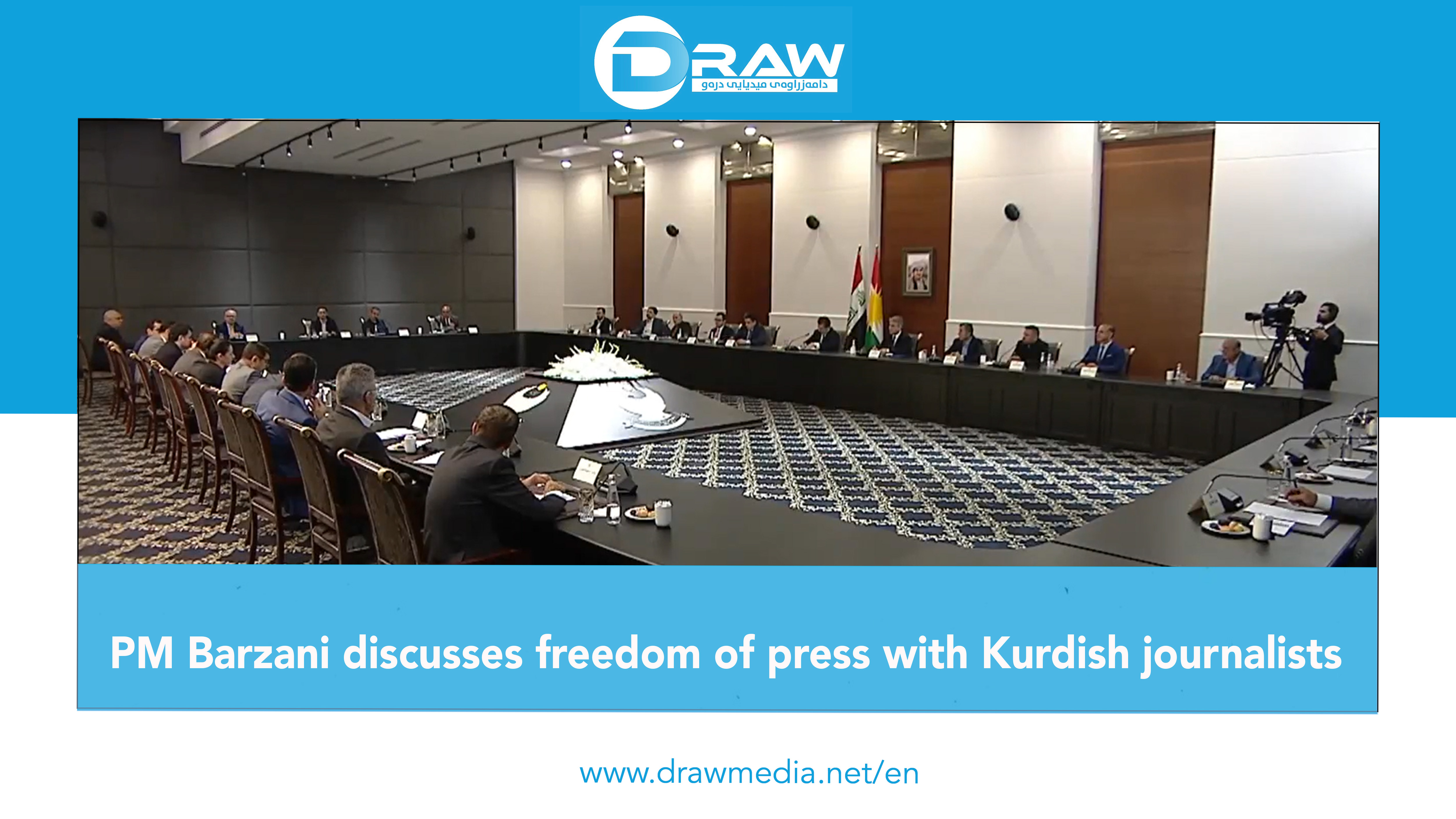
PM Barzani discusses freedom of press with Kurdish journalists 

Draw Media, Kurdistan 24 Prime Minister Masrour Barzani held a candid discussion about freedom of the press with journalists from numerous media establishments in the Kurdistan Region on Monday. Barzani and the Kurdish journalists spent over three hours discussing a wide range of topics related to corruption, freedom of the press and speech, the reform process, Erbil-Baghdad relations, and relations between the media and the Kurdistan Regional Government (KRG). Freedom of press, Kurdish media landscape “Journalism is a sacred mission,” Prime Minister Barzani told the journalists at the beginning of their lengthy discussion, adding that he is a firm believer in free expression and press freedom in the Kurdistan Region. Later in the discussion, Barzani opened the floor for journalists to ask questions and share their views on the state of affairs in the Kurdistan Region. One issue repeatedly raised by multiple journalists was restrictions on press freedom. They said that the freedom of the press is “receding,” with people even facing jail time for “writing a comment”. Harassment of journalists or their family members was also mentioned by a member of the press, who said his wife had been one of the victims. Barzani explained that there is a distinction between a journalist doing their job and defamation, stressing that the latter cannot be tolerated as people’s reputations and rights are at stake. Barzani said, “one person’s freedom ends when another’s begins,” and stressed that a person’s right to free expression does not permit them to defame others. The prime minister denied that he owns any “unofficial media” or has attacked anyone personally through such platforms, as one journalist alleged in the discussion. Public discontent Another issue discussed was public discontent in the Kurdistan Region with the government and political process. A number of the attending journalists acknowledged the “negative atmosphere” in the media regarding people’s grievances over the day-to-day issues they face regarding the delivery of basic services. While acknowledging the issues the Kurdistan Region faces, Barzani charged that some of the media organizations had played a role in making people “disappointed” not only with the government but the Kurdistan Region itself, which negatively affected their sense of patriotism toward their homeland. “Loving the homeland should not be equated with endorsing the government,” he said. KRG Reforms The KRG’s ongoing reform process was also discussed, with some journalists expressing discontent with its progress. Mohammad of Rauf the editor-in-chief of Draw Media mentioned that the margin of freedom of the press has declined significantly in this cabinet, especially we were worried about the case of the Badinan journalists. The arrest of Sherwan Sherwani and his friends, who are still in jail, made us uncomfortable and unsecure about our journalistic works.  He added that corruption has increased and smuggling is openly carried out at the borders and no corrupt officials have faced arrest. Barzani responded by saying his cabinet’s fight against corruption is about reforming the system to make it resilient against corrupt practices rather than focusing on putting corrupt officials on trial. If the system is not reformed, it would be prone to such malign practices, he argued, adding that his reform program will take time to bear results.  

Read more

The Board of Supreme Audit and the Commission of Integrity in the Audit of the Reform Law

Draw Media The Board of Supreme Audit and the Commission of Integrity, two institutions in the Kurdistan Region to monitor the integrity and control corruption, have not escaped safely from the audit of the reform law. In the Board of Supreme Audit (39) employees, and in the Commission of Integrity (11) employees have been given positions illegally who were previously transferred from the organizations to these two institutions.   Board of Supreme Audit in the Reform Report According to the third report of the Coordination and Monitoring Committee on the implementation of the reform law, a copy of which was obtained by (Draw): • The Board of Supreme Audit, which is an institution affiliated to the Kurdistan Parliament, has (389) employees. The audit of all employees of this institution has been completed and it was found that (39) employees have been illegally promoted and (31) employees have been given additional salaries illegally. The report indicates that due to the reform in the file of employees of the Board of Supreme Audit, the amount of (13 million 907 thousand) dinars has been returned to the general treasury. The monthly salary expenditure of this board is 749 million dinars.   Commission of Integrity in the reform report According to the third report of the Coordination and Monitoring Committee on the implementation of the reform law: • Commission of Integrity, which is a body under the Kurdistan Parliament, has 202 employees. The audit of all employees of this commission has been completed and it was found that 11 employees have been given ranks illegally and 7 employees have been paid salaries illegally. According to the report, the amount of (3 million 137 thousand) dinars returned to the general treasury due to the reforms made in the case of employees of this Commission. The monthly salary expenditure of the employees of the Commission is (267 million) dinars. According to Draw Media, the employees who were illegally promoted were previously in the organizations and were transferred to the two institutions. outcome: 17 million and 44 thousand dinars have been returned to the general treasury due to the audit of the files of employees of the two institutions.    

Read more

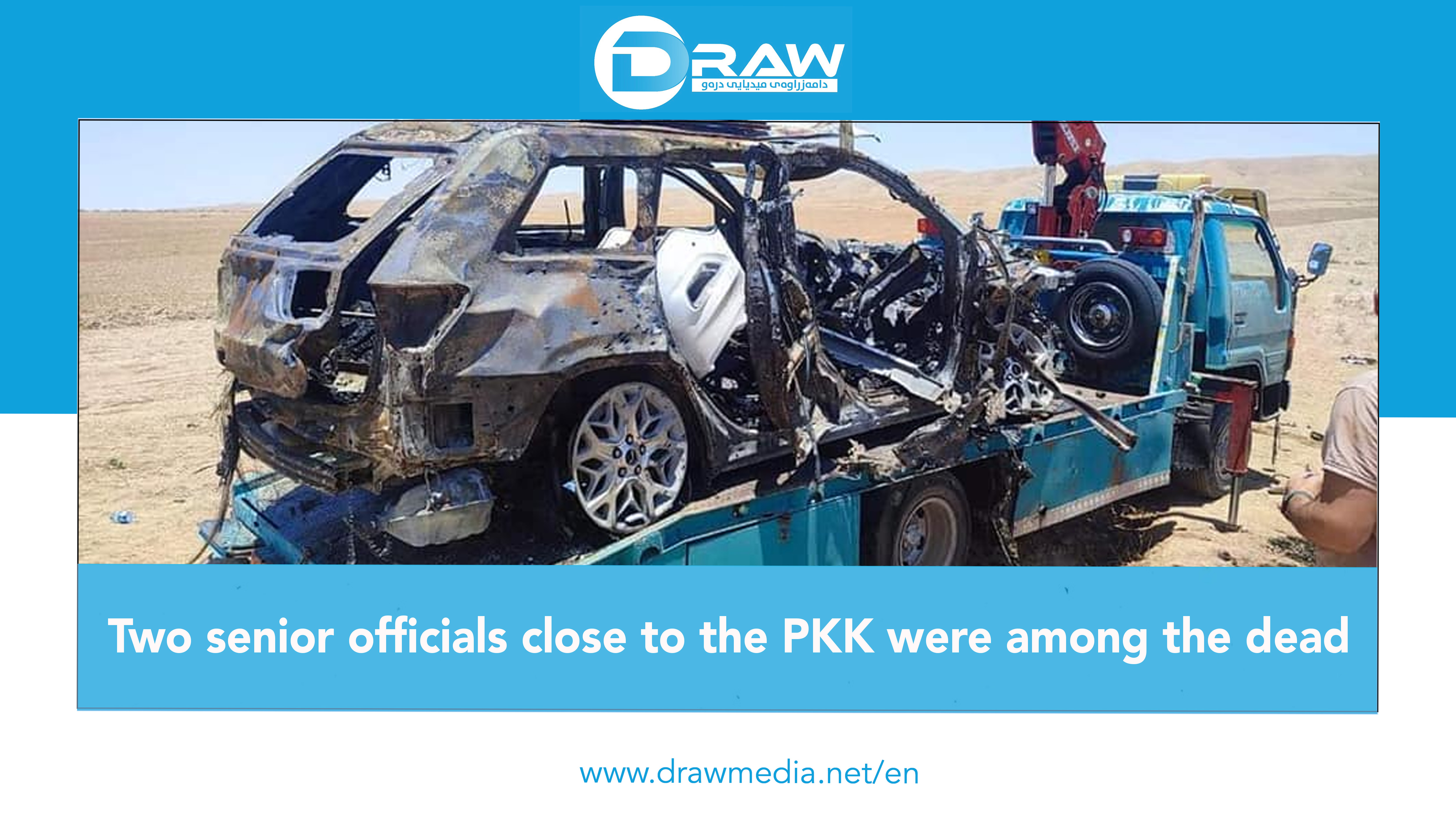
Two senior officials close to the PKK were among the dead

Draw Media Two senior officials close to the PKK were in the vehicle that was targeted by Turkish drones near Kalar, they are (Farhad Derk and Haval Raperin). Turkish drones targeted a vehicle carrying five people, three women and two men, four of them were killed and one seriously injured near Kalar today. According to the investigations of (Draw Media) among the dead were: • Ms. Haval Raperin, member of the Kurdistan People's Congress close to the Kurdistan Workers' Party (PKK). • Farhad Derk, a member of the leadership of Tevdem, close to the Kurdistan Workers' Party (PKK). The driver of the vehicle was seriously injured and is in hospital. The Turkish drone bombed the vehicle three times until it hit the target. According to the investigations of (Draw), these people have come to the Kurdistan Region from West Kurdistan and have been in Kalar for two days.  

Read more

Investment in the 9th cabinet

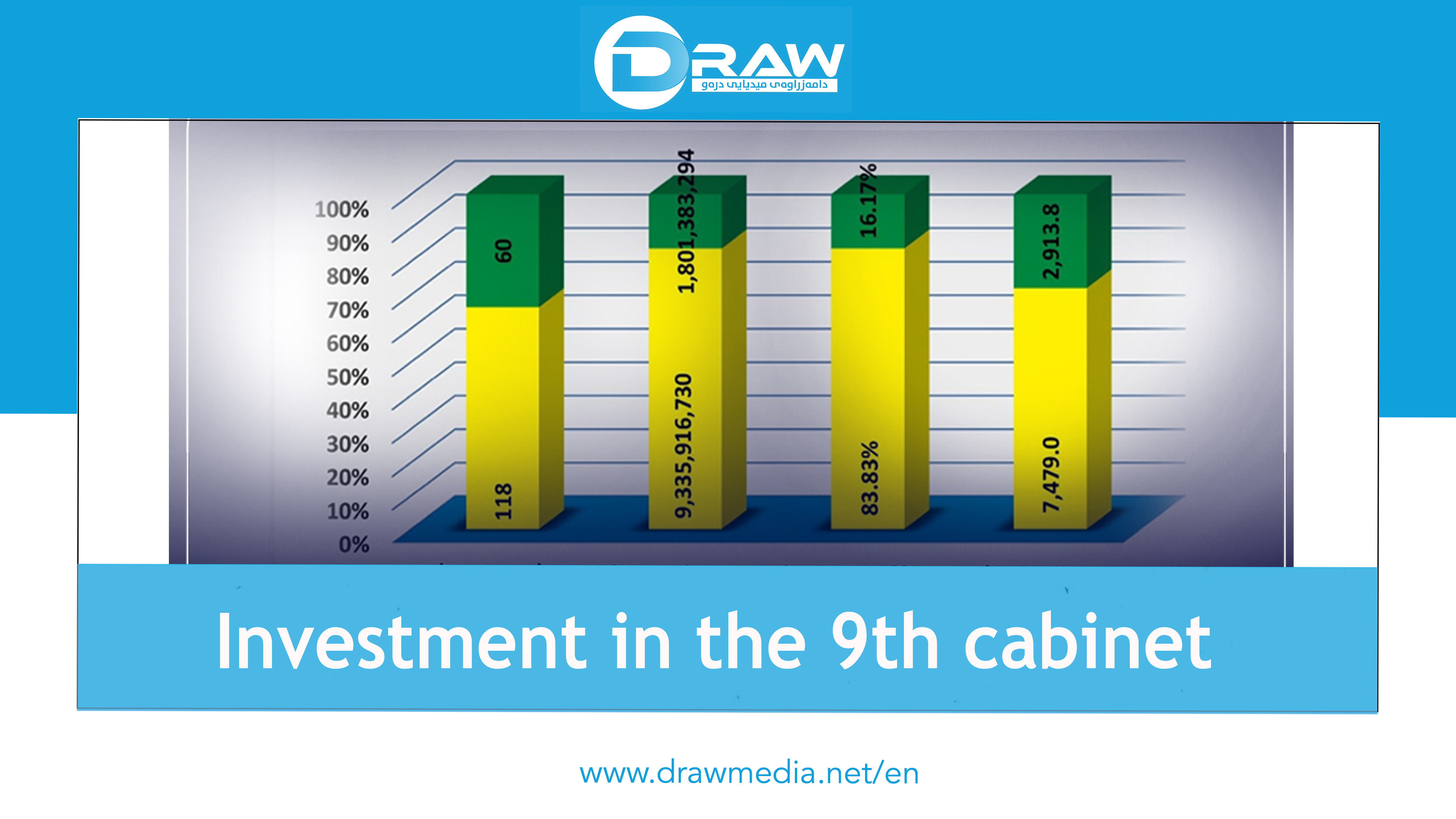
Draw Media The Kurdistan Regional Government’s 9th cabinet has licensed 178 investment projects with a capital of more than 11 billion dollars, on an area of ​​more than 10,000 dunams of land. (118) of the projects located into the KDP’s zone, with a capital of more than (9 billion) dollars, which is (83%) of all the projects, on ​​(7.5 thousand) dunams of land. However, only 60 out of 178 investment projects located into the PUK zone, with less than $2 billion, which is only 16% of the capital of all the investment project within KRG, on an area of 3,000 dunams. First, investment in both zones - yellow (KDP) and green (PUK) According to the data of the Investment Board of the Kurdistan Regional Government in the ninth cabinet, which has released between (July 28, 2019 to April 5, 2022). It has licensed 178 investment projects with a capital of 11 billion 137 million 300 thousand 24 dollars, on an area of ​​10 thousand 393 dunams of land. Based on Draw Media analysis, 118 of the projects licensed by the Investment Board are located in Erbil and Duhok provinces. The amount of (9 billion 335 million 916 thousand 730) dollars has been spent for those projects at a rate of (83.83%) of the whole KRG investment projects, on an area of (7 thousand 479) dunams of land. In the same period of time, only (60) projects out of (178) investment projects are located in Suleimani, Halabja, Garmian and Raperin provinces. The amount of (1 billion 801 million 383 thousand 294) dollars has been spent at a rate of (16.17%), on an area of (2 thousand 914) dunams of land. Second, investment at the provincial and city levels 1. Erbil Province; (76) projects with a capital of more than (8.7 billion) dollars an average of (78.7%), on an area of ​​(4.7 thousand) dunams of land. 2. Halabja Province; (1) Project with a capital of more than (6.8 million) dollars, an average of (0.06%), on an area of ​​(7.2) dunams of land. 3. Garmian Administration; (9) Projects with a capital of more than (331.5 million) dollars, an average of (3%), on an area of ​​(935) dunams of land. 4. Raperin Administration; (4) Projects with a capital of (123.3 million) dollars, an average of (1.11%), on an area of ​​(117.5) dunams of land. 5. Sulaimani Province; (46) projects with a capital of more than (1.33 billion) dollars, an average of (12%), on an area of ​​(1,854) acres of land. 6. Duhok Province; (42) projects with a capital of about (569 million) dollars, an average of (5.11%), on an area of ​​(2 thousand 718) acres of land. Third, investment by different sectors 1. Commercial sector; (41) projects with a capital of (573 million) dollars, an average of (5.14%), on an area of ​​more than (537) dunams of land. 2. Banking sector; (1) Project with a capital of more than (315) dollars, an average of (0.14%), on an area of ​​less than (1) dunams of land. 3. Health sector; (11) projects with a capital of (89.5 million) dollars at a rate of (0.80%), on an area of ​​(14.6) dunams of land. 4. Industrial sector; (49) projects with a capital of (1.620 billion) dollars at a rate of (14.55%), on an area of ​​(1,190) dunams of land. 5. Service sector; (2) Project with a capital of (57.8 million) dollars at a rate of (0.52%), on an area of ​​(968) dunams of land. 6. Tourism sector; (29) projects with a capital greater than (7 billion) dollars at (64%), on an area of ​​(2 thousand 856) dunams of land. 7. Education sector; (18) projects with a capital of about (220) million dollars, an average of (2%), on an area of ​​(533) dunams of land. 8. Agricultural sector; (8) Projects with a capital of (363.48 million) dollars, an average of (3.26%), on an area of ​​(3 thousand) dunams of land.9. Housing Sector; (11) projects with a capital of more than (1 billion) dollars, an average of (9%), on an area of ​​(1,256) acres of land. 10. Arts Sector; (1) Project with a capital of (9 million 234 thousand) dollars, an average of (0.08), on an area of ​​(10) dunams of land. 11. Sports Sector; (7) Projects with a capital of about (58 million) dollars, an average of (0.52%), on an area of ​​(25) dunams of land. Fourth: investment capital in the ninth cabinet of the Kurdistan Regional Government Out of the 178 projects, 174 projects are being implemented by domestic investors with a capital of $6 billion and 193 million, which is 55.6% of the total investment capital since the ninth cabinet took office. However, only one Chinese company has received an investment license with a capital of $5 billion, an average of 44 percent of the total investment capital. (3) projects have been licensed jointly by Iraqi, Chinese, Turkish, Egyptian and Canadian companies with a capital of about (37 million 384 thousand) dollars, which is (0.34%) of the total investment capital. Fifth: Investment based on the Years 1. With the inauguration of the ninth cabinet from (28/7/2019) to (1/1/2020), licenses have been given to (16) projects with a capital of more than (485 million) dollars. 2. (1/1/2020 to 1/1/2021), licenses have been given to (77) projects with a capital of more than (2 billion and 18 million) dollars. 3. (1/1/2021 to 1/1/2022), licenses have been given to (69) projects with a capital of more than (8 billion 509 million) dollars. 4. (1/1/2022 to 5/4/2022), licenses have been given to (16) projects

Read more

Gas price between two cabinets

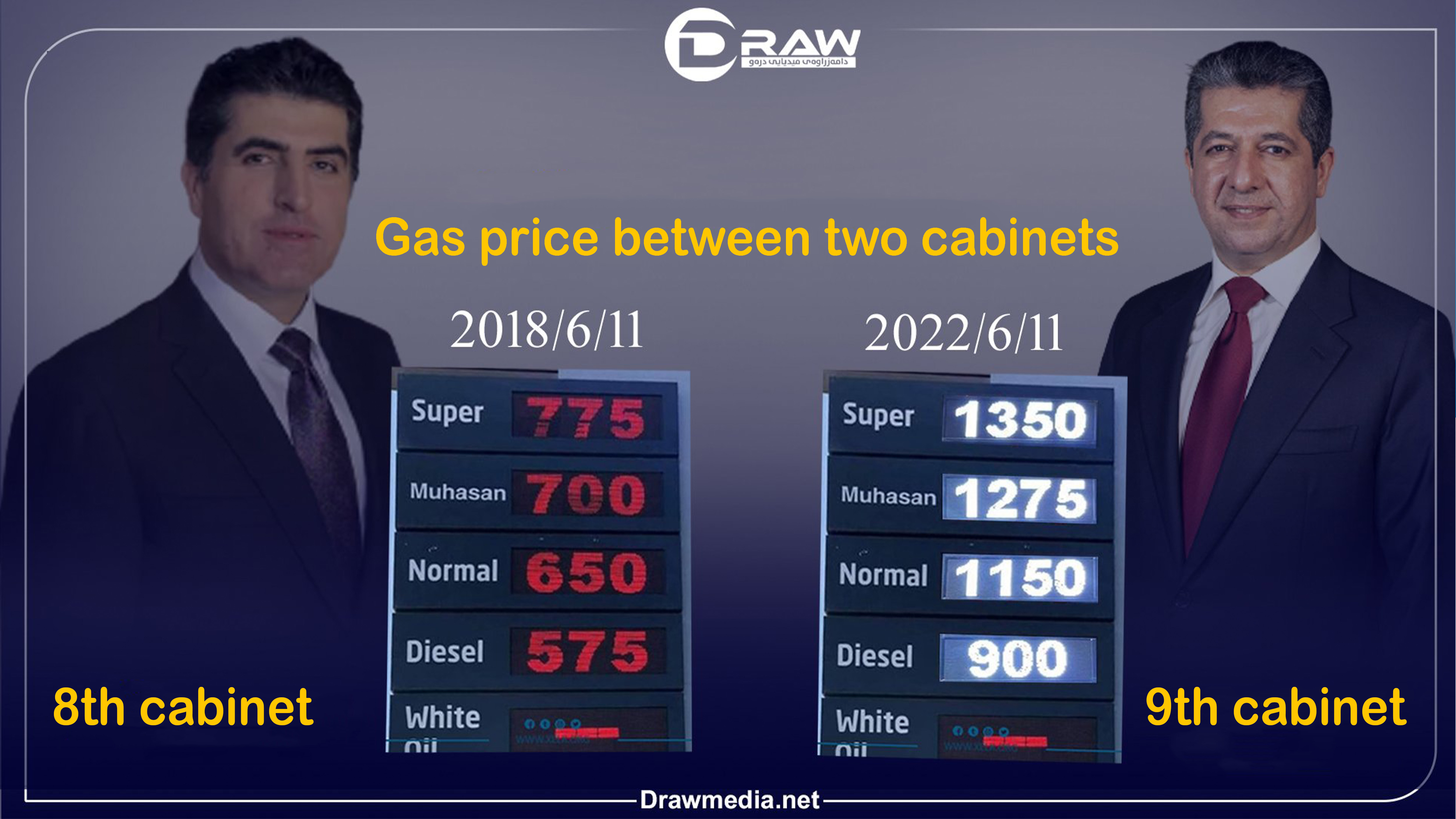
Draw Media In the Kurdistan region there are three gas quality types (Super, Muhassan-Midgrade, Normal) The gas price increased significantly since 2018 in the KRG. The Super quality increased by (74%), Muhassan-Midgrade by (82%) and Normal by (77%).   ?Gas prices on June 11, 2018 during the 8th cabinet: ?Super: 775 IQD ? Muhassan-Midgrade: 700 IQD ?Normal:  650 IQD   ?Gas prices on June 11, 2022 during the 9th cabinet: ?Super: 1350 IQD ? Muhassan-Midgrade: 1275 IQD ?Normal: 1150 IQD   ?Increase in gas prices in the 9th cabinet: ?Super: from (775 to 1350)IQD which is increased 575 IQD by (74%) ? Muhassan-Midgrade: from (700 to 1275)IQD which is increased 575 IQD by (82%) ?Normal: from (650 to 1150)IQD which is increased 500 IQD by (77%) That means, in the past 4 years the gas price increased significantly in the Kurdistan region of Iraq. The Super quality increased by (74%), Muhassan-Midgrade by (82%) and Normal by (77%).

Read more

KRG: Oil and Gas Do Not Fall Under the Purview of the Federal Court

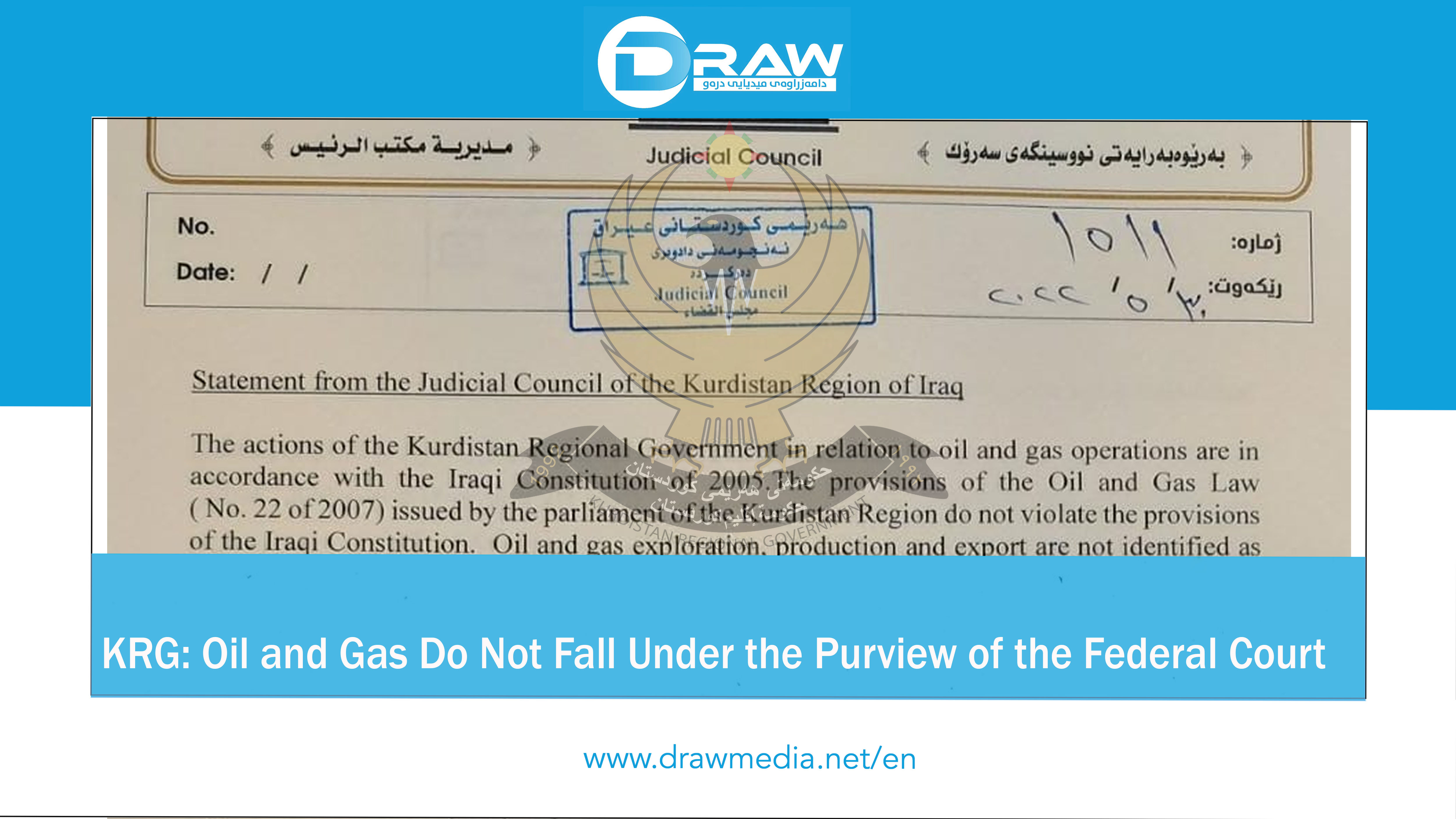
Draw Media Kurdistan’s judicial council said in a statement that the region's oil law would remain in force and will not change. :Statement from the Judicial Council of the Kurdistan Region of Iraq The Kurdistan Regional Government's tenure on the issue of oil and gas exploration on its territory is in accordance with the 2005 Iraqi Constitution. The provisions of Law No. 22, 2007, issued by the Kurdistan Regional Parliament, do not violate the Iraqi Constitution and therefore should be recognized as standing laws. The oil and gas sector do not fall under the exclusive purview of the Federal Government of Iraq as stated in Article 110 of the Iraqi Constitution, underpinned by Article 112 of the Iraqi Constitution which states the Federal Government is to manage oil and gas exploration of discovered fields, in conjunction with regional governments and oil-producing provinces. Of that, revenues are supposed to be distributed equally among the population of Iraq. Article 112 refers to existing oil wells and fields prior to the ratification of the Constitution in 2005. As such, oil fields discovered in the Kurdistan Region since 2005 fall under the jurisdiction of the Kurdistan Region and the Kurdistan Regional Government. Accordingly, the texts of the Kurdistan Regional Government’s Oil and Gas Law No. 22, 2007, remain in line with the provisions of the Iraqi Constitution. Past regimes have made regions unduly suffer and deprived them of their fair share of the revenue from oil and gas exploration in Iraq, limiting their progress and opportunities to prosper. The allocation of national oil and gas revenues should be regulated by law to prevent this from happening again.

Read more

KRG revenue in May was 1.2 trillion dinars

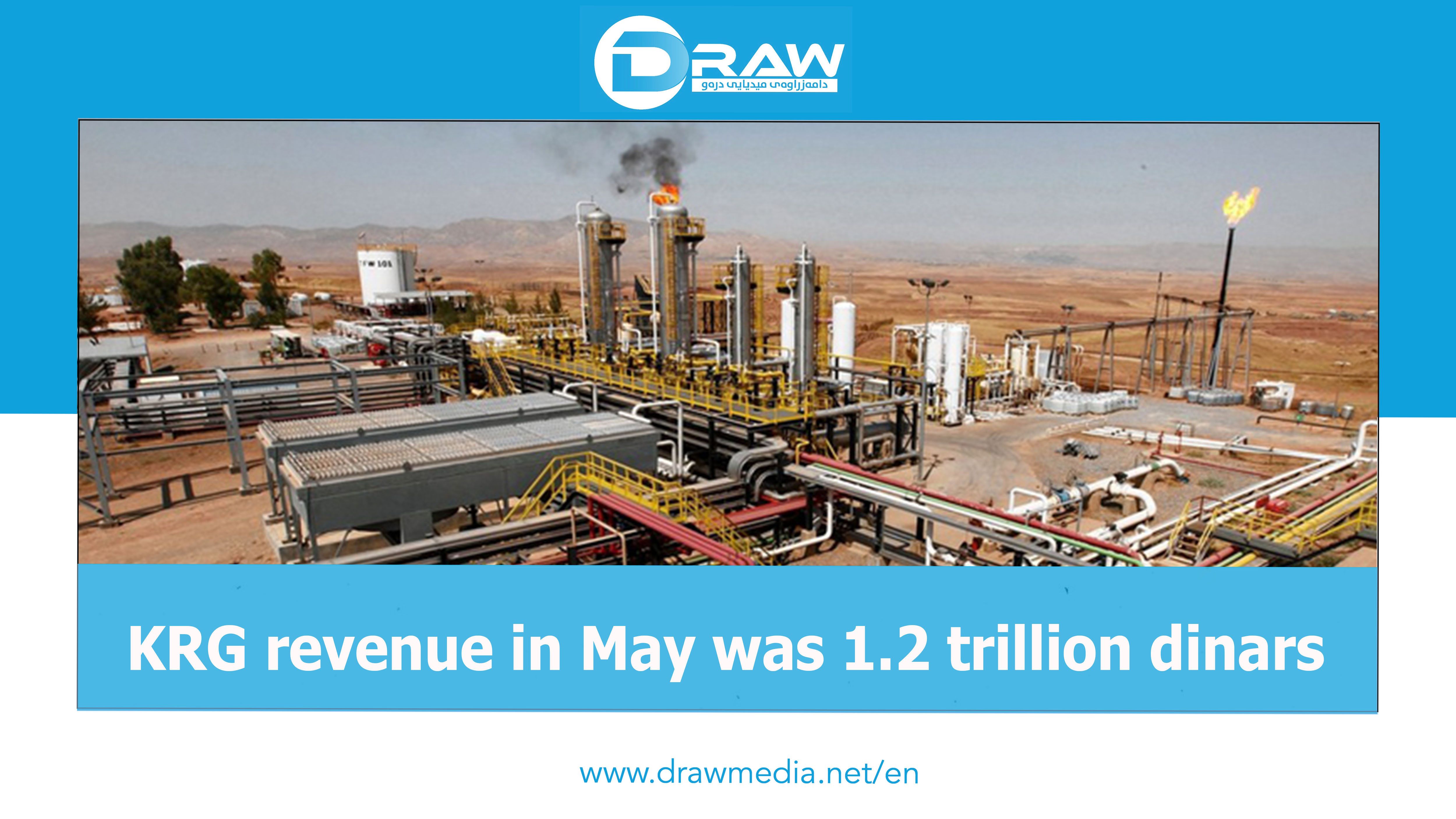
Draw Media The total revenue of the Kurdistan Regional Government (KRG) in May was 1 trillion 213 billion dinars. Last May, the Kurdistan Region sold 12 million 730 thousand barrels of oil at $100 per barrel, earning 1 trillion 859 billion dinars. Only 818 billion dinars of that amount went for the government treasury. Non-oil revenues • Non-oil revenues for May = (164 billion) dinars (which will be spent on salaries, otherwise according to information, the amount is almost double) • Coalition financial aid to the Peshmerga forces = (31 billion 500 million) dinars • Kurdistan Region's share of the Iraqi budget = (200 billion) dinars Oil revenues (pipeline exports) • In May 2022, the Kurdistan Region exported 12 million 730 thousand barrels of oil through the Turkish Port of Jayhan • The average price of Brent oil for May is ($112.73). • Because the region sells its oil at $12 less, it sells oil at an average of $100.73 So: (12 million 730 thousand) barrels X (100.73) dollars = (1 billion 282 million 292 thousand 900) dollars. In dinars, it is: (1 billion 282 million 292 thousand 900) dollars X (1450) dinars = (1 trillion 859 billion 324 million 705 thousand) dinars. • According to the latest Deloitte report, 56% of oil revenues are spent on expenditures and 44% remains with the Ministry of Natural Resources. - So: (1 trillion 859 billion 324 million 705 thousand) dollars X (56%) = (718 million 84 thousand 24) dollars go to the cost of oil production process. In dinars, it is: (718 million 84 thousand 24) dollars X ((1450 dinars = (1 trillion 41 billion 221 million 834 thousand 800) dinars oil expenditure. - (1 trillion 859 billion 324 million 705 thousand) dollars X (44%) = (564 million 208 thousand 876) dollars of revenue remain for government. Oil revenue in dinars is: (564 million 208 thousand 876) dollars X (1450) dinars = (818 billion 102 million 870 thousand 200) dinars. Total Revenue in May 2022 (in Dinar) • (818 billion 102 million 870 thousand 200) oil revenue + (200 billion) share of the Iraqi budget + (164 billion) local income + (31 billion 500 million) from allies = (1 trillion 213 billion million 870 thousand 200) dinars.    

Read more

300 Kurdish, Albanian and Bangladeshi refugees will be deported

Draw Media, Daily Mail Ministers are planning a mass deportation next week of foreign criminals and migrants who are in the UK illegally. The carefully choreographed operation, involving up to 300 foreign nationals, is believed to be the biggest deportation exercise ever attempted on one day. Charter flights booked by the Home Office are bound for Iraqi Kurdistan, Albania and Bangladesh on Tuesday. Those being deported are being held at immigration removal centers including Colnbrook, near Heathrow Airport, as they await the flights. They have been rounded up from all over Britain by immigration enforcement officers and detained over the past month. Each received a Home Office letter last weekend while in detention, giving details of their flight. The deportations will include the first ‘returns’ flight to the turbulent area of Iraqi Kurdistan in a decade, immigration lawyers say. It comes after the Nationality and Borders Bill became law last month, allowing easier removal of those living in the UK illegally because they are visa overstayers, failed asylum seekers or criminals sentenced to more than a year in prison. Earlier this month, killers, rapists and paedophiles were among those who dodged deportation to Jamaica with a series of last-minute legal challenges – and just seven boarded the plane. Last night, the Home Office said: ‘We make no apology for removing foreign criminals and those with no right to be in the UK. This is what the public rightly expects.’ It comes after the Government made a separate deal to send certain asylum seekers to Rwanda. While the department refused to comment on the details of Tuesday’s flights, the Daily Mail understands the deportees include Iraqi-Kurds, Albanians and Bangladeshi nationals. They will be flown, respectively, to their country’s capital cities: Erbil in Iraq’s autonomous Kurdistan region, Tirana and Dhaka. The New Arab, a media outlet based in London, reported that Iraqi-Kurd politician Arian Taugozi said the operation followed a ‘secret deal’ between the Kurdistan Regional Government (KRG) and the Home Office. The ministry said a visit by the KRG’s prime minister Masrour Barzani last month was to ‘strengthen joint efforts to address migration challenges.    

Read more

KRG oil in the control of two women

Draw Media When he first received the position, Kamal Atroshi threatened to tear to pieces those who are corrupt, but in the end, He knelt before two women close to the Barzani family. Kamal Atroshi, the man who said, “I will distribute oil to all the villages myself.” But during his service, the people died in cold. He talked about solving the gasoline problem and gasoline prices reached the highest level during his time. Did Kamal Atroshi resign due to illness or did he resign because he got disappointed? More details in this report. Is he sick or disappointed? A statement issued by the office of Prime Minister Masrour Barzani attributed the resignation of Kamal Atroshi to the health condition of the minister, but according to (Draw) information, the reason for the resignation is related to the interference in the affairs of his ministry. In particular, the influence of Dr. Ranya Majid, Masrour Barzani's assistant for economic affairs, in the affairs of the Ministry of Natural Resources. (Draw) has learned, that another part of Kamal Atroshi's concerns and his resignation from the Ministry of Natural Resources is related to the unlimited interference of another woman named Dr. Ghazala, the Director-General of Contracts and Companies in the Ministry of Natural Resources. When Atroshi took over as the minister of natural resources, his first promise was to change the structure of the ministry, as he said, “he wants to create an international structure for his ministry.” In late 2021, Kamal Atroshi left the ministry for a while, when there were rumors of his resignation, but later denied it, saying he had gone abroad for medical treatment. KRG oil in the control of two women Before and after the resignation of Kamal Atroshi, the KRG oil dossier is controlled by two women, all of whom are close to the Barzani family. Omid Sabah, the Cabinet Office Chief, who is Masrour Barzani's shadow in the government, is responsible for bringing back the KRG oil revenue from Citibank in the USA to the Egyptian bank in Dubai. After bringing BACK the money to Kurdistan, the oil revenue goes to RT Bank, the director of this bank is a woman named Hamela Abdulstar Gardi. Then she transfers the oil revenue to the Minara Bank for salary expenses. (Hamela Gardi),(Dr. Ghazala), as three women close to the Barzani family, dominate the oil dossier and revenues of the Kurdistan Region and no oil minister can encroach on the power of these three women in Masrour Barzani’s cabinet.  

Read more

Plasschaert gathers the Kurdish leaders 

Draw  The head of the United Nations Assistance Mission for Iraq, Jeanine Hennis-Plasschaert will meet with Kurdish leaders at the UN headquarters in Erbil next week, a senior source told Draw Media

Read more

KRG Oil revenues have increased by 42%

Draw Media The total oil revenue of the Kurdistan Region in the first quarter of 2022 increased by 42% compared to the first quarter of 2021. In a way that the revenue rose from $2.536 billion to $4.341 billion. And in the first quarter of 2022 compared to the first quarter of 2021 the net revenue returned to the KRG after deducting expenditures increased by 42% from $1.142 billion to $1.970 billion. First, the revenue and amount of oil exported from December 1 to April 1 According to Deloitte, the Kurdistan Regional Government (KRG) sold 50 million 644 thousand and 230 barrels of oil through the Turkish port of Jayhan in the first quarter of 2021. According to the data the average crude oil price in that period was 50$ per barrel. That means, the total revenue from oil sales through pipeline was (2 billion 536 million 358 thousand 78) dollars, but an average of (54.6%) of this revenue have spent to the cost of the process which was (1 billion 394 million, 149 thousand and 925 dollars. According to this, the net oil revenue of the Kurdistan Regional Government was 1 billion 142 million 208 thousand 154 dollars by 45.4% of the total income. Second: The revenue and amount of oil exported from December 11 to April 1, According to the statistics available to Draw Media, the Kurdistan Regional Government (KRG) in the first four months of 2022 sold 49 million 56 thousand barrels of oil through the Turkish Port and the average crude oil price in that period was 88$ per barrel. The total revenue from oil sales through pipeline was $4 billion, 341 million, 348 thousand and 280 dollars. According to Deloitte's 2021 data, an average of 54.6 percent of revenue went to oil process expenditures. If we take the same amount of expenditure for the months of 2022, the amount of expenditure is (2 billion 370 million 376 thousand 161) dollars, thus (45.4%) of the total oil revenue, handed over to the Kurdistan Regional Government Kurdistan, which is (1 billion 970 million 972 thousand 119) dollars. Third, compare oil revenues for the first four months of 2021 to 2022 The Kurdistan Regional Government (KRG) sold oil worth $2 billion 536 million 358 thousand 78 in the first four months of 2021. However, in the first four months of 2022, the amount of revenue increased by 42%, so that the total value of oil sold was (4 billion 341 million 348 thousand 280) dollars. This means that the revenue from oil exports increased by (1 billion 804 million 990 thousand 202) dollars. Revenue received by the Kurdistan Regional Government The Kurdistan Regional Government (KRG) has received $1 billion 142 million 208 thousand 154 from oil sales in the first four months of 2021. However, in the first four months of 2022, the amount of revenue increased by (42%), so that the net oil revenue received by the Kurdistan Regional Government was (1 billion 970 million 972 thousand 119) dollars. This means that the net oil revenue received by the Kurdistan Regional Government has increased (828 million 763 thousand 965) dollars.    

Read more

Iraq bids to control Kurdistan oil revenue with contract switch

Draw: Reuters  By Rowena Edwards and Amina Ismail Iraq has made a fresh attempt to control revenue from the semi-autonomous region of Kurdistan by asking oil and gas firms operating there to sign new contracts with state-owned marketer SOMO rather than the Kurdistan Regional Government (KRG). Oil minister Ihsan Ismael on May 7 said Iraq's oil ministry would start implementing a February federal court ruling that deemed the legal foundations of the Kurdistan region's oil and gas sector unconstitutional. read more A letter seen by Reuters shows that the oil ministry appointed international law firm Cleary Gottlieb Steen and Hamilton to approach some oil and gas firms operating in the Kurdistan region to "initiate discussions to bring their operations into line with applicable Iraqi law." Implementing the court decision "will require changes to the contractual regime" for the companies, the letter added. Other firms received a letter directly from the oil minister, one source said. The KRG has repeatedly rejected the federal court ruling. The letters, which were sent on May 8, mark the first direct contact between the ministry and oil firms operating in the Kurdistan region. The move follows years of attempts by the federal government to bring KRG revenues under its control, including local court rulings and threats of international arbitration. The implications of the latest move are not fully clear as more than seven months since elections in Iraq, the formation of a government is still underway. An Iraqi oil ministry legal adviser, who spoke on condition of anonymity, told Reuters that a joint government committee, including representatives from the oil ministry including the minister, Iraq’s National Oil Company (Inoc) as well as the Federal Board of Supreme Audit (FBSA), will conduct a contractual review. The aim is to eventually sign contracts with the central government and not the KRG, the adviser added. Foreign oil firms present in the Kurdistan region including Genel Energy (GENL.L) , Chevron and Gulf Keystone (GKP.L) , and Cleary Gottlieb declined to comment, while Iraq’s oil ministry and oil and gas firm DNO did not immediately respond to requests for comment. The oil ministry has yet to receive responses from the companies concerned and could take further legal measures in the case of no response, one oil ministry official said, without elaborating. Foreign oil firms are unlikely to engage with Baghdad directly without coordination with the KRG, one oil firm representative told Reuters. TENSIONS FLARE UP Baghdad’s persistent attempts to implement the ruling has the capacity to worsen already fraught tensions with Erbil. Iraq’s state-owned North Oil (NOC) claimed on Saturday that KRG forces took control of some oil wells in the disputed region of Kirkuk but the KRG denied the allegation, claiming it was designed to create chaos. read more On May 12, Inoc published an analysis detailing how the KRG’s production-sharing contracts are financially worse for both the government and foreign oil firms than federal Iraq’s own technical service contracts. Meanwhile, Iraq has struggled to attract major fresh investments into its federal energy industry since signing a flurry of post U.S.-invasion deals over a decade ago. read more The Iraqi government has cut oil output targets repeatedly as international oil companies that signed those initial deals leave due to poor returns. Ismael on Monday said Iraq now plans to boost its crude production capacity from around 5 million barrels per day (bpd) to 6 million bpd of crude capacity by the end of 2027, a sharp downward revision from a previous target of 8 mln bpd by that year.

Read more

Masoud Barzani paid a secret visit to Iran

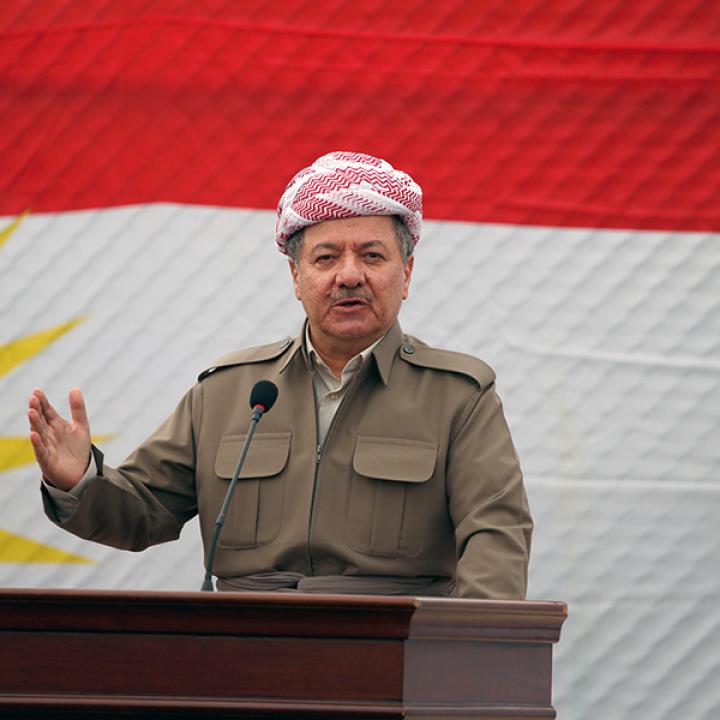
The head of the Kurdistan Democratic Party, Masoud Barzani, has been in Iran in the past two days and yesterday evening returned back to Kurdistan. A source from the KDP’s Political Bureau confirmed the information for Draw Media and said that Masoud Barzani had visited Iran for two days and returned to the Kurdistan Region today. Barzani's visit was to pave the way for his expected initiative, which is decided to be announced in next a few days. The Initiative focuses on solving the political deadlock in Iraq and the Kurdistan Region.

Read more

All Contents are reserved by Draw media.
Developed by Smarthand